






The Cleanest Village in Asia
Long before sustainability became a global buzzword, the village of Mawlynnong was living it. Nestled in the East Khasi Hills of Meghalaya, it earned the title of “Asia’s Cleanest Village” from Discover India magazine in 2003, a distinction it has fiercely
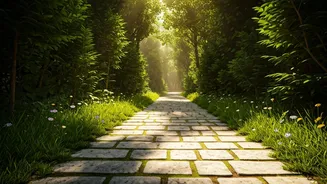
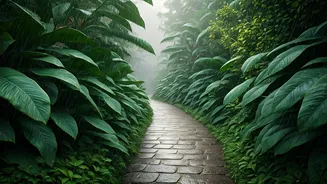
maintained. But this isn't the result of a top-down government mandate; it's a way of life woven into the community's fabric. Every street corner is adorned with conical, hand-woven bamboo dustbins. Residents, from young children to elders, participate in daily cleaning, sweeping fallen leaves from the stone-paved paths and tending to the lush, overflowing flowerbeds that line every home. There’s no litter, not a single piece. The air itself feels pure, scented with orchids and damp earth. This commitment to cleanliness creates a profound sense of peace and order, making a simple walk through the village feel like a meditative experience.
Living Architecture, Woven by Hand
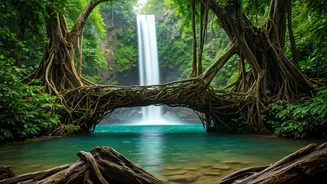
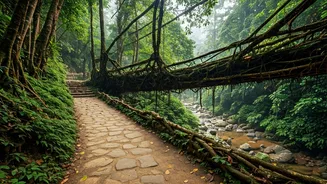
Meghalaya is famous for its living root bridges, and the area around Mawlynnong is home to one of the most accessible and stunning examples. A short walk from the main village, in neighboring Riwai, a single-decker bridge stretches gracefully across a stream. These are not constructed objects but living organisms. For generations, the Khasi people have guided the aerial roots of the Ficus elastica tree across rivers and chasms, patiently weaving them together over years and decades until they form a strong, durable, and ever-growing structure. Walking across one is a surreal experience. The floor is a lattice of tangled, powerful roots, solid underfoot. A living canopy rustles overhead. It feels less like crossing a bridge and more like shaking hands with nature itself—a testament to a partnership between humanity and the environment that feels ancient and deeply wise.
A View from the Clouds
The name Meghalaya translates to “Abode of the Clouds,” and Mawlynnong offers a front-row seat to this atmospheric spectacle. For a truly breathtaking perspective, visitors climb the Sky View, a towering 85-foot-high viewing platform made entirely of bamboo. The climb itself, spiraling up a creaking but sturdy bamboo staircase, is part of the adventure. At the top, you are rewarded with an unobstructed, panoramic view. On a clear day, the lush, rolling hills of the Khasi landscape stretch out before you, eventually giving way to the vast, flat plains of neighboring Bangladesh shimmering in the distance. More often, you are literally in the clouds, with wisps of mist drifting past, obscuring and then revealing the landscape in a dreamlike dance. It’s a moment that feels suspended in time, reinforcing the village’s otherworldly charm.
The Keepers of the Garden
What truly makes Mawlynnong special is its people. The village is inhabited by the Khasi tribe, a community known for its matrilineal society, where lineage and inheritance are passed down through the women. This cultural framework seems to foster a deep sense of community and respect. Hospitality is genuine and warm, offered with quiet smiles rather than commercial fanfare. The villagers are the guardians of this pristine environment, viewing the forest and its resources not as something to be exploited, but as a sacred trust. Their entire philosophy is visible in the manicured gardens, the spotless paths, and the living bridges—a quiet but powerful lesson in how to live in harmony with the world around them. Visiting Mawlynnong is about more than just seeing a beautiful place; it’s about experiencing a different, more thoughtful way of being.