








More Than Just Rain
For those in the West, a rainy evening might conjure images of cozying up with a book or a movie. In India, the monsoon is a far more dramatic and deeply sensory season. It’s a welcome, life-giving force that breaks the oppressive grip of summer heat.
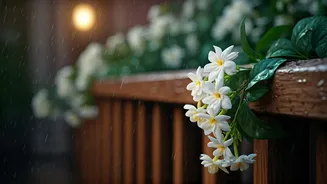
But it also brings a pervasive dampness, a grayness that can settle over the spirit. The air becomes thick with the smell of wet soil and decaying leaves. The constant drumming of rain can feel both meditative and relentless. For those in the West, a rainy evening might conjure images of cozying up with a book or a movie. In India, the monsoon is a far more dramatic and deeply sensory season. It’s a welcome, life-giving force that breaks the oppressive grip of summer heat. But it also brings a pervasive dampness, a grayness that can settle over the spirit. The air becomes thick with the smell of wet soil and decaying leaves. The constant drumming of rain can feel both meditative and relentless. This is the backdrop against which the seemingly simple act of bringing jasmine into the home becomes not just a preference, but a perceived necessity. It’s a fragrant counterpoint to the earthy musk of the monsoon. Where the rain brings a sense of enclosure and introspection, the sharp, sweet scent of jasmine is an act of deliberate beauty, a way to perfume the air and lift the mood. It’s a small ritual that transforms the atmosphere from one of damp gloom to one of fragrant sanctuary.
A Flower Steeped in Tradition
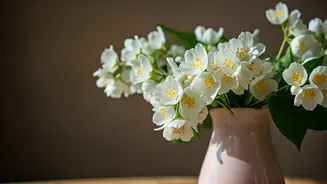
The jasmine in question is typically *Jasminum sambac*, known by various regional names like mogra in the north, mallige in Karnataka, or malli poo in the south. This isn't just any flower; it is woven into the very fabric of Indian culture. In Hindu mythology, it’s associated with gods and is a common offering, or *puja*, in temples and home altars. The tiny, potent white buds are seen as symbols of purity, love, and good fortune. Women have adorned their hair with *gajras*—strings of tightly woven jasmine buds—for centuries. The fragrance is a personal perfume that activates with body heat, blooming throughout the day and into the evening. It's a scent tied to femininity, celebration, and daily ritual. By bringing these same flowers into the home, the tradition extends from personal adornment to shared space. The fragrance isn’t an artificial spray from a can; it’s a living, breathing part of the cultural landscape, as familiar and beloved as the taste of chai.
The Evening Ritual
The ritual itself is beautifully simple. As dusk approaches, a vendor might pass by, calling out with a basket full of freshly picked jasmine, strung into long, delicate garlands. A handful of these strands, purchased for a few rupees, is all it takes. They might be placed in a small bowl of water on a table, draped over a picture frame, or left near a window where the damp evening breeze can carry their scent through the rooms. As the sun sets and the lights come on, the closed buds begin to slowly unfurl, releasing their powerful fragrance. This olfactory bloom coincides with the time of day when families gather, when the work day is done, and the home becomes a haven. The scent of jasmine becomes inextricably linked to this feeling of peace and togetherness. It signals a transition from the chaos of the outside world to the calm of the domestic sphere. It’s an aromatic signal that you are home, safe, and surrounded by a quiet, intentional beauty.
A Scent That Travels
The power of this tradition is so strong that it transcends geography. For the vast Indian diaspora living in the United States and across the world, the smell of jasmine is one of the most potent triggers of nostalgia. A jasmine-scented candle or a flowering plant on a balcony in a New York apartment can instantly transport someone back to their grandmother’s home in Chennai or a rainy evening in Mumbai. It’s a connection to a place, a time, and a feeling that words often fail to capture. This universal power of scent memory is what makes the headline’s claim—that Indian homes *need* jasmine—so understandable. The need is not physical, but emotional and psychological. It’s the need for connection, for memory, for the comfort of a tradition that has been passed down through generations. It’s a way of carrying one’s heritage and creating a sense of home, no matter how far one has traveled.