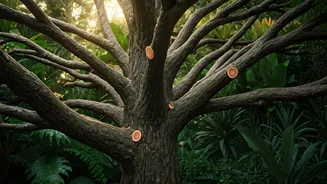







Understanding the Monsoon Threat
A monsoon storm isn’t just any rainstorm. It’s characterized by sudden, violent downdrafts—also known as microbursts—that can produce winds exceeding 60 miles per hour. Unlike a steady gale, these winds come from above and slam downward and outward, putting
unique and intense stress on tree canopies. For a tree that is overgrown or has structural weaknesses, this downward force can be catastrophic. The goal of pre-monsoon pruning isn't just about tidying up; it's about strategically preparing your landscape for this specific, seasonal assault from Mother Nature.
The Dangerous “Sail Effect”
Think of a dense, unpruned tree canopy as a giant sail on a boat. When a powerful gust of wind hits it, the tree catches that force, and all the energy is transferred down to the branches and trunk. If the force is too great, something has to give. This is when you see large limbs snap, or in worst-case scenarios, entire trees uproot, potentially falling on your house, car, or power lines. Proper pruning thins this “sail,” allowing wind to pass through the canopy rather than push against it. By selectively removing branches, you reduce the overall surface area and dramatically decrease the risk of breakage.
What to Target for Pruning
Your mission is to thin, not to butcher. Focus on the three D’s: removing branches that are dead, damaged, or diseased, as they are the most likely to fail. Next, look for branches that are crossing or rubbing against each other, which creates weak points. Finally, selectively thin the overall canopy to improve airflow. This is called “crown thinning.” A good rule of thumb is to never remove more than 25% of a tree's live foliage in a single year. Avoid the outdated and harmful practice of “topping,” where large branches are cut back to stubs. This encourages weak, fast-growing sprouts that are even more prone to breaking in future storms and can ruin the tree's long-term health.
Timing Is Everything
The headline says it all: prune now. The ideal window for this work is in the late spring and early summer, during the dry period just before the monsoon season typically kicks off in June or July. Pruning during this time allows the tree's cuts to heal quickly in the dry air, minimizing the risk of fungal or bacterial infections. Once the rains begin, the high humidity creates the perfect environment for diseases to spread, and fresh pruning wounds are open invitations for pathogens. Furthermore, pruning a tree that is already stressed by summer heat and storm activity can do more harm than good. Get it done before the first storm clouds gather.
DIY or Call a Certified Arborist?
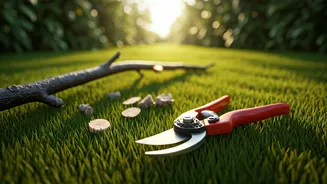
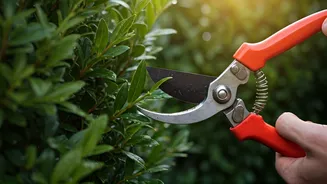
For small, ornamental trees and shrubs, a homeowner with the right tools (sharp bypass pruners, a pruning saw) can often handle the job. If you can keep both feet safely on the ground, it may be a DIY project. However, for large, mature trees—especially those near your home, utility lines, or public walkways—hiring a professional is a must. A certified arborist has the training, insurance, and specialized equipment to safely remove heavy limbs and properly assess a tree's structural integrity. They can spot risks you might miss and perform the work without endangering themselves or your property. The cost of a professional pruning is a tiny fraction of the cost of removing a fallen tree from your living room.