





The Hills of the Gods
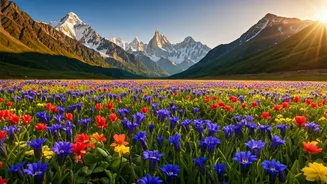
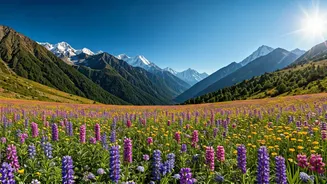
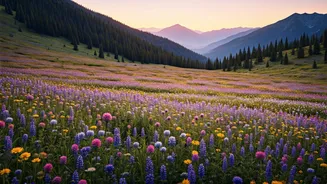
For most Americans, the Himalayas conjure images of Mount Everest and Nepal. But nestled in the northern Indian state of Uttarakhand lies a different, more accessible slice of the world’s highest mountain range: Kumaon. This is a region of rolling green
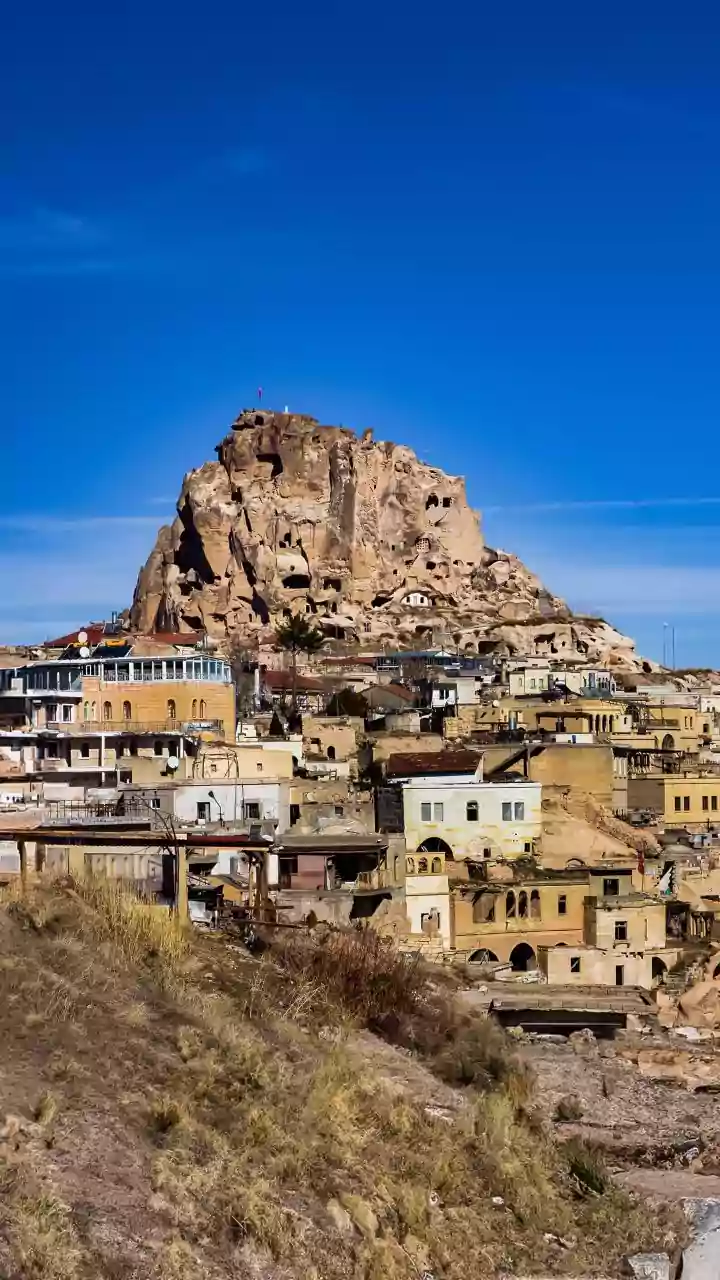
hills, ancient forests, and terraced farms that climb impossibly steep slopes. It’s a place where towns like Almora, Nainital, and Ranikhet—once colonial British hill stations—cling to ridges with thousand-foot drops, offering panoramic views of snow-capped peaks. Known locally as Devbhumi, or “Land of the Gods,” Kumaon has a deep spiritual resonance, its landscape dotted with temples and ashrams. It’s a place that invites contemplation, where the rhythm of life is dictated by the seasons and the formidable power of nature.
Nature’s Grandest Overture
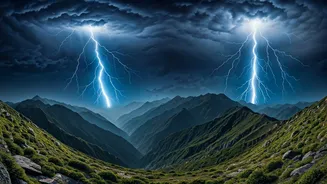
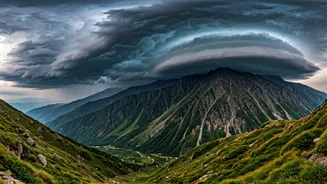
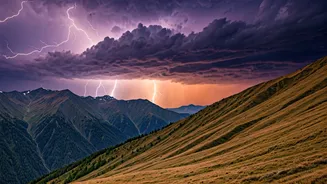
From April to early June, just before the full-blown monsoon arrives to drench the subcontinent, Kumaon hosts one of nature's most spectacular light shows. This is the pre-monsoon season. The plains below have been baking for months, sending plumes of hot, unstable air upward. When this hot air collides with the cool, high-altitude atmosphere of the Himalayas, the result is explosive. The sky becomes a battlefield. Towering cumulonimbus clouds, dark and menacing, build over the course of an afternoon. Unlike the steady, soaking rains of the monsoon itself, these pre-monsoon storms are violent, dramatic, and relatively brief. They are a declaration of power—an overture before the main performance—defined by ferocious winds, sometimes hail, and, most breathtakingly, a staggering amount of lightning.
An Electric Pursuit
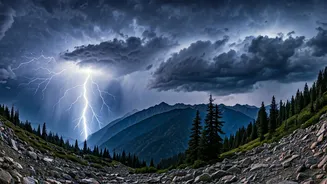
“Chasing” storms in Kumaon is a far cry from the high-tech, van-based pursuits of Tornado Alley. This isn’t about racing down grid-like roads to intercept a supercell. Here, the chase is more a game of patience and positioning. It’s about finding the perfect vantage point—the porch of a guesthouse in Mukteshwar, a cliff-side cafe overlooking a deep gorge, or the ridge of an ancient fort—and waiting. The geography does the work for you. As the storms roll in from the plains, they are forced upward by the hills, creating a multi-layered, three-dimensional spectacle. You’re not just looking at a storm; you’re often inside the clouds or looking down upon them. Forked lightning illuminates entire valleys below your feet, while distant thunder echoes between the mountains like a conversation between titans. The thrill comes not from the speed of the pursuit, but from the profound, humbling feeling of being present for such raw, elemental power.
A Rhythm of Anticipation
For the people of Kumaon, these storms aren’t just a tourist spectacle; they are a vital and anxiously awaited part of the year. They mark the end of the long, dry winter and the 'forest fire season.' The first rains wash the dust from the air, turning the parched landscape a vibrant, electric green. The smell of petrichor—the intoxicating scent of rain hitting dry earth—is the smell of relief and renewal. The lightning and thunder are seen as a celestial announcement that the life-giving monsoon is near. Farmers watch the skies, preparing their fields for planting. The storms are woven into the fabric of local folklore and daily life, a dramatic and essential transition that resets the ecological clock. To witness it is to tap into a rhythm of anticipation that has defined life in these hills for centuries.