




An Event Beyond the Beaten Path
When Americans dream of India, they often picture the Taj Mahal’s ivory domes or the bustling markets of Delhi. But one of the country's most profound and gigantic annual events happens in a place many Westerners couldn't point to on a map: Puri, a coastal
city in the state of Odisha. On one specific day each summer—a date that varies by the lunar calendar but has fallen on dates like June 23 in the past—this city becomes the epicenter of a human migration so immense it dwarfs many of America’s largest gatherings. This is the day of Rath Yatra, the Festival of Chariots, an ancient Hindu tradition that transforms the streets into a sea of devotion, color, and sheer humanity.
The Festival of Chariots Explained
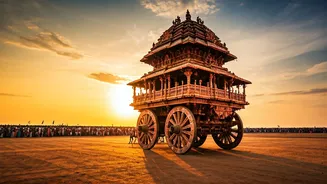
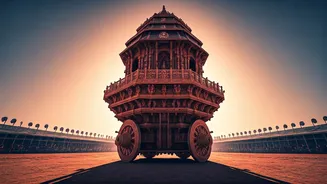
So, what exactly is Rath Yatra? At its heart, it’s a public journey. The festival centers around three deities from the city’s famous Jagannath Temple: Lord Jagannath (a form of Vishnu), his brother Balabhadra, and sister Subhadra. For this one day, the deities, who are normally cloistered within the temple walls and accessible mainly to Hindus, are brought out into the open for everyone to see, regardless of caste or creed. They are placed on three colossal, brightly decorated wooden chariots that are essentially mobile temples. The largest, for Lord Jagannath, stands about 45 feet tall and moves on 16 massive wheels. The procession then makes its way along a two-mile route to a neighboring temple, where the deities will rest for nine days before their return journey. It’s a divine vacation, and the entire city is invited.
A Spectacle of Devotion and Scale
The phrase “biggest travel day” isn’t hyperbole. Imagine the crowd for every NFL game on a Sunday combined, and you’re still not close. On the main day of Rath Yatra, an estimated one million people descend on Puri, a city with a regular population of just over 200,000. These are not tourists in the typical sense; they are pilgrims. They come from every corner of India and beyond, packing trains, buses, and roads for days. The main event involves devotees pulling the immense chariots with thick, long ropes. The belief is that simply touching the ropes or helping to pull the chariots is an act of immense piety that can cleanse sins. The energy is electric—a thunderous roar of chants, bells, and drums that creates a soundscape unlike anything else on Earth. It’s a logistical undertaking so vast that it requires months of planning, from building the chariots anew each year to managing the immense crowds.
More Than Just a Parade
While the spectacle is undeniable, the spiritual significance runs deeper. Rath Yatra is a powerful symbol of equality and inclusion. For centuries, access to Hindu temples was often restricted by caste. But on this day, the gods come to the people. Everyone, from the wealthiest to the poorest, stands side-by-side in the street, sharing the same experience. This act of pulling the chariots together represents a collective spiritual effort, blurring social lines in a powerful display of communal faith. The festival is a living, breathing piece of cultural heritage that has been celebrated for centuries, its traditions passed down through generations. It’s a reminder that some of the world’s most powerful moments of human connection are rooted in ancient rituals that continue to thrive in the modern age.