





First, What Does HFSS Mean?
Let’s start with the basics. HFSS is an acronym you’ll see in public health circles worldwide, and it stands for food that is 'High in Fat, Salt, or Sugar.' Think sodas, chips, cookies, sugary cereals, and many processed meals. These are the products
that health experts link to rising rates of obesity, diabetes, and heart disease. While the U.S. has its own nutrition labels on the back of every package, many countries are deciding that's not enough. They’re moving key health information to the front, making it impossible to miss. India's new rules are the latest and arguably one of the most significant examples of this global trend.
So, What Are India's New Rules?
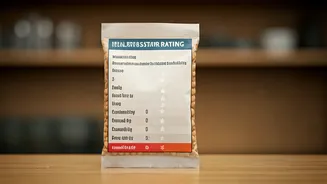
India’s food safety authority, the FSSAI, has mandated a new 'Front-of-Pack Nutrition Labeling' (FOPNL) system. Instead of the dense, text-heavy 'Nutrition Facts' panel we’re used to in the U.S., this system uses a simple, at-a-glance star rating. It’s called the Indian Nutrition Rating (INR), and it assigns packaged foods a rating from half a star (least healthy) to five stars (healthiest). The rating is calculated based on the product’s levels of saturated fat, sugar, and sodium, while also giving credit for positive nutrients like protein, fiber, and fruits or vegetables. The idea is simple: a shopper in a hurry can compare two brands of breakfast cereal and instantly see which one gets more health stars without having to decipher grams and percentages on the back.
Why Is This Happening Now?
Like many developing nations, India is facing a dual health crisis. While still dealing with malnutrition in some areas, it's also seeing a massive spike in diet-related, non-communicable diseases (NCDs) like type 2 diabetes and hypertension, particularly in its growing urban middle class. The shift from traditional diets to processed, convenient HFSS foods is a major driver. Public health officials believe that simply telling people to 'eat better' isn't working. Instead, they’re changing the environment where people make food choices. The star-rating system is designed to 'nudge' consumers toward healthier options and incentivize food companies to reformulate their products to earn a better star rating. It’s a massive public health intervention disguised as a simple label.
How Does This Compare to the U.S.?
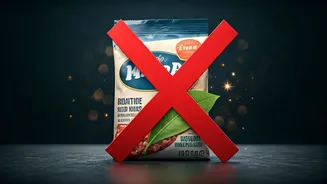
The American approach has historically been about providing comprehensive information, but leaving the interpretation to the consumer. Our 'Nutrition Facts' panel is a masterclass in detail, but it requires time and a certain level of nutritional literacy to be truly useful. While the U.S. doesn't have a mandatory federal front-of-pack system, the FDA has been actively researching and discussing it for years. You may have seen voluntary systems that companies use, like the 'Facts Up Front' icons or various checkmarks from health organizations. However, India's star system is more like what's used in Australia and New Zealand. It's a stark contrast to the model used in countries like Chile and Mexico, which feature black-and-white 'warning' labels that explicitly state if a product is 'High In Sugar' or 'High In Calories.' The global food industry is watching India closely, as its success or failure could influence the direction the FDA eventually takes in the U.S.