


A Shelter for the Senses
Let's be clear about the word “safest.” It isn't about armed guards or reinforced doors. The safety a cafe offers is emotional, sensory, and wonderfully reliable. The moment you push open the door, a wave of warm, coffee-scented air washes over you. It’s
an immediate, primal contrast to the damp chill you just escaped. The hiss of the espresso machine, the clink of ceramic on saucer, the low hum of conversation—it’s a symphony of comfort. In a foreign city or even a domestic town you’ve never visited, these sensory cues are instantly recognizable. They signal a place of rest, warmth, and civilized respite. You haven’t just escaped the rain; you’ve entered a pocket of universal coziness. It’s a guaranteed upgrade from huddling under an awning, watching your walking shoes get soaked.
The Practical Oasis
Beyond the atmospheric comfort lies a hub of pure, unadulterated practicality. A cafe is a travel multitool. First and foremost, it offers shelter for an indefinite period for the price of a single cappuccino. It has a bathroom. It almost certainly has Wi-Fi, the modern traveler’s most critical resource. This is where the “detour” becomes a “command center.” You can pull out your phone, plug into a precious wall outlet, and start re-planning your day. You can look up indoor museum hours, book a movie ticket, or simply text your companions to coordinate a new meeting spot. It’s a place to rest your tired feet, shed a damp jacket, and regroup. A museum might have a strict closing time and a shop might give you side-eye for loitering, but a cafe’s business model often invites you to stay. This logistical support system is what makes it a truly “safe” bet.
A Window into Local Life
Here’s where the real magic happens. A forced cafe stop isn’t a failed travel day; it’s a pivot to a different, often more authentic, kind of tourism. From your small table, you are granted a front-row seat to the rhythm of the neighborhood. You see regulars greet the barista by name, students hunched over laptops, friends catching up over pastries, and business people taking a quick break. You’re not just looking at the city; you’re sitting in the middle of it. This isn't the curated experience of a famous landmark; it's the real, unscripted flow of daily life. This kind of people-watching provides a texture and depth to your travels that a packed itinerary often misses. You’re no longer a tourist rushing from point A to point B. You’re a temporary local, an observer participating in the quiet, daily ritual of a coffee break.
An Invitation to Slow Down
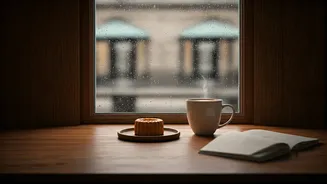
Modern travel is often a frantic exercise in optimization, a checklist of sights to be seen and photos to be captured. A rainy-day cafe detour is a rebellion against that pressure. It’s a forced pause, an instruction from the universe to simply sit still. It’s an opportunity to do the things you never make time for on vacation: write in a journal, read a few chapters of a book, or just stare out the window and let your mind wander as you watch the raindrops race down the glass. The best travel memories are often not the ones meticulously planned, but the unexpected moments of connection and peace. The cafe provides the perfect container for such moments. It reframes a logistical problem (rain) as a gift (time). It proves that sometimes, the best thing to do on vacation is almost nothing at all.