


The Drainage Debacle
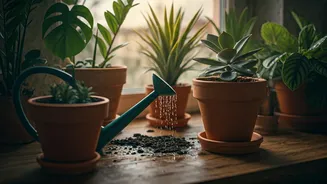
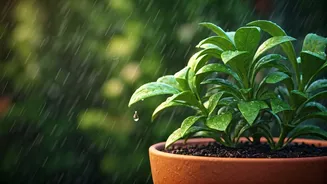
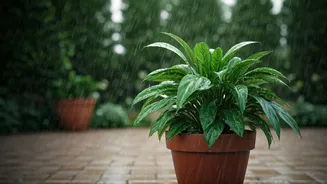
The biggest and most immediate danger is overwatering. Your garden beds are designed by nature to handle heavy rain; water seeps deep into the soil and disperses. A potted plant is a closed system. Even with a drainage hole, a container can become completely
saturated during a sustained shower. Most potting mixes are designed to retain moisture, which is great for your weekly watering routine but a liability in a deluge. When the soil becomes waterlogged, oxygen can't reach the roots. This creates an anaerobic environment where root rot, a fungal disease that is often a death sentence for houseplants, can take hold with surprising speed. A light sprinkle might be fine, but leaving a plant out in a steady rain is asking for trouble.
The Shock of the New
Your indoor plants are accustomed to a life of luxury. They enjoy stable temperatures, indirect light, and gentle breezes from a window or fan. Placing them outside abruptly exposes them to a host of new stressors. A cool spring rain can cause temperature shock to a tropical plant that has only ever known the climate-controlled comfort of your living room. The change in light intensity, even on a cloudy day, can be jarring. Furthermore, wind accompanying the rain can thrash delicate leaves and stems, causing physical damage that a plant must expend energy to repair. This sudden, multi-faceted environmental shift can stress a plant, leaving it vulnerable to other issues.
Uninvited Pests and Pathogens
Your home is a relatively sterile environment for plants. The outdoors, however, is a bustling ecosystem filled with insects, bacteria, and fungal spores, all of which are easily transported by wind and rain. When you place your plant outside, you're essentially setting out a welcome mat for pests like aphids, spider mites, and slugs that might be looking for a new home. Rain can splash soil-borne pathogens onto the leaves, introducing diseases like black spot or powdery mildew. When you bring the plant back inside, you could be unknowingly introducing an infestation into your home, putting your entire indoor plant collection at risk. A ten-minute "natural shower" can lead to a months-long battle with pests.
When Rain Isn't Just Water
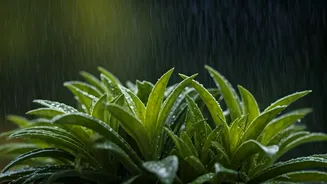
In many urban and industrial areas, rainwater is not as pure as we'd like to imagine. It can carry airborne pollutants and have a more acidic pH than the filtered or tap water your plants are used to. While most plants are fairly adaptable, a sudden shift in soil pH can affect their ability to absorb nutrients. For particularly sensitive species, this acidic shift can cause visible signs of stress. Furthermore, the sheer force of heavy raindrops can be surprisingly destructive. It can tear the delicate leaves of plants like calatheas, compact the top layer of soil in the pot, and wash away essential nutrients from the topsoil.
How to Give a Safe Rain Bath
Does this mean you should never let rain touch your plants? Not necessarily. You just need to be the supervisor. The best way to use rainwater is to collect it in a clean bucket or rain barrel. This allows the water to come to room temperature and gives you full control. You can then use it for your regular watering schedule, providing the benefits of naturally soft, mineral-rich water without any of the risks. If you are set on placing plants outside, choose a very light, gentle shower—not a thunderstorm. Place them in a sheltered location, like under a covered porch, where they will get misted but not drenched. Never leave them out for more than 15-20 minutes. Before bringing them back inside, carefully inspect the leaves, stems, and soil for any new pests. Wiping down the leaves can’t hurt. It's all about control.