

It Creates Effortless Flow
Look at any busy kitchen and you’ll see the invisible paths people take from the fridge to the sink to the stove. A traditional rectangular island often creates rigid, sometimes tight, corridors. People bump into corners, and the flow of movement can
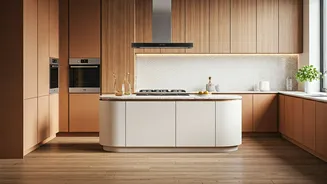
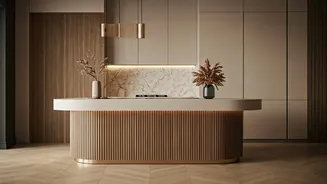
feel constricted, especially when you have multiple people helping with dinner or guests mingling. A rounded island completely changes this dynamic. By eliminating sharp 90-degree corners, it encourages a more natural and fluid traffic pattern. It gently guides movement around it, creating a sense of ease and openness. This isn't just an aesthetic trick; it's a functional improvement you feel every single day, turning a potential bottleneck into an elegant thoroughfare. For open-concept homes where the kitchen bleeds into the living area, this seamless transition is even more critical.
Softer Lines, Safer Spaces
There’s a practical, undeniable benefit to curved edges: safety. For anyone with young children, the idea of a toddler running full-tilt into a sharp granite corner is a constant, low-grade source of anxiety. A rounded island erases that specific hazard, making the kitchen a fundamentally more family-friendly space. But the benefit goes beyond just preventing bumps and bruises. Visually, curves soften a room that can be dominated by hard surfaces and boxy appliances. Our eyes are naturally drawn to gentle lines, which can make a space feel more welcoming and organic. A curved island breaks the monotony of the grid—the square tiles, the rectangular cabinets, the linear backsplash—and introduces a touch of sculptural grace that feels both modern and timeless.
The Ultimate Social Hub
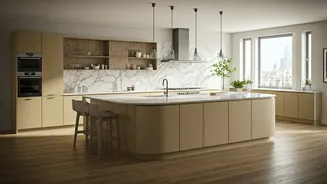
A standard island often seats people in a straight line, like patrons at a diner counter. It’s functional for a quick breakfast, but it’s not ideal for conversation. You have to crane your neck to talk to the person two stools down, creating a slightly disconnected experience. A rounded island, on the other hand, subtly angles its occupants toward one another. Whether it’s a gentle arc or a full half-moon, the curve facilitates engagement. It turns the island into a conversational hub, perfect for kids doing homework while a parent cooks, or for guests enjoying a glass of wine and chatting with the host. It transforms the island from a mere food-prep surface into the true social heart of the home, encouraging connection in a way a straight counter simply can't.
A Statement of Elevated Design
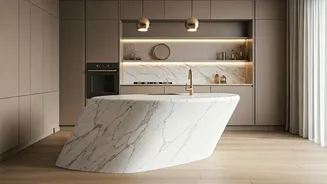
Let’s be honest: a curved island has a 'wow' factor. Because it requires more specialized craftsmanship and materials—stone must be custom cut, and cabinetry often needs to be specially fabricated—it immediately signals a higher level of design intent. It feels less like a stock component and more like a piece of bespoke furniture. This is where the “heavy initial investment” comes in, but it pays off in creating a space that feels unique and luxurious. A rounded island serves as a powerful focal point, an anchor for the entire room's design. It can make a standard kitchen look architectural and thoughtfully composed. In a world of cookie-cutter renovations, it’s an opportunity to make a lasting statement that elevates the entire home.