
So, What Exactly Is Makhana?
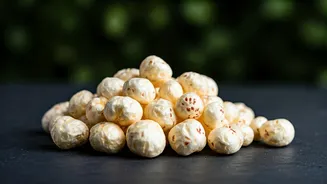
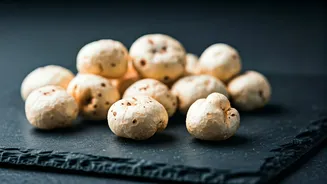
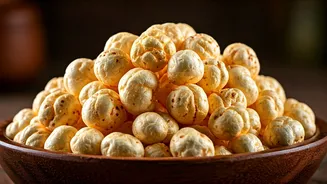
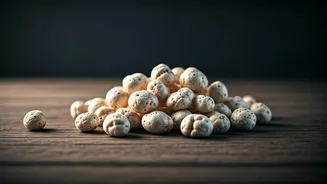
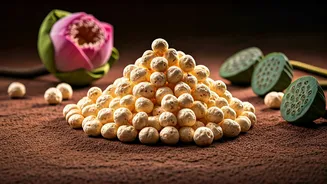
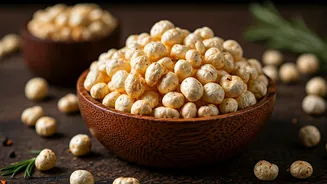
At first glance, makhana looks like a puffier, more rustic cousin of popcorn. These white, bite-sized balls are actually the popped seeds of the water lily plant, also known as fox nuts or Euryale ferox. For centuries, they've been a staple in India,
harvested from the ponds and wetlands of the eastern regions. The process is labor-intensive: seeds are collected from the bottom of the pond, dried, and then roasted at a high heat until the black outer shell cracks open, revealing the puffy white kernel inside. Unlike popcorn, there's no hard kernel left to get stuck in your teeth. The result is an incredibly light, airy puff with a unique, satisfying crunch that’s less aggressive than a chip but more substantial than a cheese puff.
The 'Healthy Snack' Credentials
The term “superfood” gets thrown around a lot, but makhana makes a strong case. These puffs are naturally gluten-free, low in calories and fat, and surprisingly high in plant-based protein and fiber, which helps keep you full. They're also a good source of essential minerals like magnesium, potassium, and phosphorus. In Ayurvedic traditions, makhana is prized for its 'cooling' properties and is considered easy to digest, making it a popular food during fasts and for new mothers. For the modern American snacker, this translates into a guilt-free indulgence. You can polish off a big bowl without the nutritional baggage that comes with potato chips or other processed snacks. It’s the kind of snack that delivers on crunch without derailing your wellness goals.
But How Does It Taste?
On its own, plain roasted makhana has a very neutral, subtle, earthy flavor—think of it as a blank canvas. This is its secret weapon. Its porous texture is perfect for soaking up flavors. Traditionally in India, it’s often simply roasted in ghee (clarified butter) and sprinkled with salt and black pepper. Sometimes it’s used in curries, desserts like kheer (a sweet pudding), or trail mixes. But the “upgrade” mentioned in the headline is all about modern flavor innovation. Today’s brands are coating makhana in everything you can imagine: Himalayan pink salt, spicy peri-peri, tangy cheddar, sweet and smoky BBQ, and even dark chocolate. The texture is the star—it starts with a crisp crunch that quickly melts in your mouth, making it addictively poppable.
An Ancient Seed's Modern Glow-Up
While makhana has been a household staple in parts of India for generations, its journey to the American snack aisle is a recent phenomenon. This glow-up is driven by a new wave of food entrepreneurs, many of them Indian-American, who saw the potential to introduce this beloved childhood snack to a wider audience. They’ve packaged it in bright, modern bags, given it catchy brand names, and positioned it as the perfect alternative for health-conscious consumers looking for something new. It taps into several major food trends at once: plant-based snacking, gluten-free options, global flavors, and a desire for minimally processed, functional foods. It’s the perfect story of an ancient ingredient finding a new identity in a globalized world.
Finding Your Makhana Fix
Just a few years ago, you’d have to visit a dedicated Indian grocery store to find makhana. Now, it's popping up everywhere. You can find bags of pre-flavored makhana in the snack aisles of major retailers like Whole Foods, Sprouts, and even some Target and Walmart locations. Brands like AshaPops, Bohana, and Taali are leading the charge. You can also easily buy plain or flavored versions online through Amazon or directly from the brands. Once you have a bag, the possibilities are endless. Eat them straight from the bag on movie night, toss them into salads for a gluten-free crouton alternative, or use them as a crunchy topping for yogurt or soup. You can also buy plain makhana and roast it yourself at home with your favorite spices for a custom snack.