








Meet the Contenders
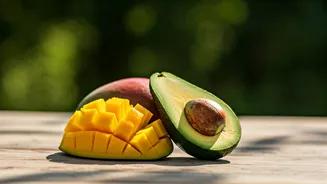
In one corner, we have the avocado. Technically a large berry, it's the darling of the wellness world, celebrated for its creamy texture and rich, savory flavor. It's the foundation of guacamole, a star on toast, and a surprisingly versatile addition
to smoothies and even desserts. In the other corner is the mango, the undisputed king of tropical fruits. Dripping with sweet, fragrant juice, its vibrant orange flesh is summer in a bite. It's a staple in salsas, salads, and smoothies, offering a burst of pure sunshine. Both are nutritional powerhouses, but they bring very different strengths to the table.
Round 1: The Calorie and Fat Fight
This is where the two fruits diverge most dramatically. An avocado is an energy-dense food, primarily due to its high fat content. A one-cup serving (around 150 grams) packs about 240 calories and a whopping 22 grams of fat. Before you panic, this is the “good” fat—mostly monounsaturated fat, the same heart-healthy kind found in olive oil, which can help lower bad cholesterol levels. A cup of chopped mango, by contrast, contains around 100 calories and less than 1 gram of fat. If you’re strictly counting calories or managing your fat intake, mango is the lighter option by a long shot. But if you’re looking for a food that will provide lasting energy and keep you feeling full, the avocado's healthy fats are your friend.
Round 2: The Carb and Sugar Showdown
The tables turn completely when we look at carbohydrates and sugar. Mango is a classic fruit, meaning it's full of natural sugars that give it its signature sweetness. That one-cup serving has about 25 grams of carbs, with 23 of those grams being sugar. This makes it an excellent source of quick energy, perfect for a pre-workout snack. Avocado, on the other hand, is a low-sugar anomaly in the fruit world. The same size serving has around 13 grams of carbs, but an incredible 10 of those grams are dietary fiber, leaving only about 1 gram of actual sugar. For anyone on a low-carb or ketogenic diet, or for those managing their blood sugar, avocado is the clear winner here.
Round 3: The Fiber Factor
Fiber is a crucial nutrient for digestive health, blood sugar control, and satiety—that feeling of fullness that keeps you from overeating. Both fruits are good sources, but one is exceptional. A cup of mango provides about 2.6 grams of fiber, which is a respectable contribution to your daily goal (around 25-30 grams). However, avocado is a fiber superstar. That one-cup serving delivers a massive 10 grams of fiber, nearly a third of your recommended daily intake. This is why a little avocado can feel so satisfying and keep you full for hours. For pure digestive benefits and appetite control, the avocado handily wins this round.
Round 4: Vitamins and Minerals
This is where both contenders truly shine, but in different ways. Mango is a vitamin C and vitamin A powerhouse. A single cup provides nearly 70% of your daily Vitamin C, which is essential for immune function and skin health. It also delivers over 20% of your daily Vitamin A, crucial for vision and cell growth. Avocado brings its own unique profile of micronutrients. It's an excellent source of Vitamin K (for blood clotting and bone health), folate (vital for cell repair and during pregnancy), and potassium. In fact, an avocado contains more potassium than a banana, which helps regulate fluid balance and blood pressure. The winner here depends entirely on which vitamins you’re looking to boost.