/images/ppid_59c68470-image-17658075500806755.webp)

“People were shooting videos and clicking pictures and watching documentaries... but what about the music? There was music. There was rhythm in the chants, the river, the temple bells and even the quiet moments that we captured live,” Bhatia explains.
Sounds of Kumbha is now in the race for a Grammy in the Best Global Music Album category, taking Indian spiritual music to the world stage. It is competing with Anoushka Shankar’s
Power of authentic soundscapes
“My vision was to let the Mahakumbh speak for itself,” says Bhatia, highlighting the core musical philosophy behind the album.
Rather than recreating the Mahakumbh's atmosphere artificially, Bhatia and team recorded real sounds from Prayagraj: temple bells, river currents, pilgrim chants, and dawn silences and then layered them with contemporary global textures.
“The Mahakumbh has a natural rhythm of movement and silence, and we simply followed that rhythm. The result is a musical experience where ancient India meets the modern world in a very natural way,” adds Bhatia.
Bhatia also mentioned one particular moment that shaped the album profoundly. “There was one morning at the Sangam where thousands were walking, yet everything felt still. That stillness made its way into several tracks. The sound of boats cutting through the river inspired the rhythm in one piece. The chants from a group of pilgrims became the starting point for another. Even the silence of early dawn, when the crowds paused in prayer, became a part of the album’s final moments. These were not planned ideas. They were lived experiences,” adds Bhatia.
Power of a global collaboration
The project brought together over 50 artists worldwide, including spiritual leader Sri Sri Ravi Shankar, Grammy-winning guitarist Jim 'Kimo' West, and rapper Raja Kumari. The biggest challenge? The timeline. Bhatia and team had about 50 days to complete the album across 10 studios, but eventually everything fell into place. Bhatia says the curation happened through "intuition" and "intention’" and how the artists did not join because of genre or popularity, but because they connected to the spirit of the Mahakumbh.
“What surprised me most was how seamlessly everyone adapted to the spiritual intention of the album. There was no ego, only contribution,” says Bhatia, adding how Sri Sri Ravi Shankar's participation transformed its scope from a simple project to a global offering.
“When he agreed to come on board, he too saw a vision bigger than a music album. He saw that Sounds of Kumbha would give a glimpse of the Mahakumbh to the listeners in the comfort of their homes. The album shifted from being a simple music project to a global spiritual offering,” adds Bhatia.
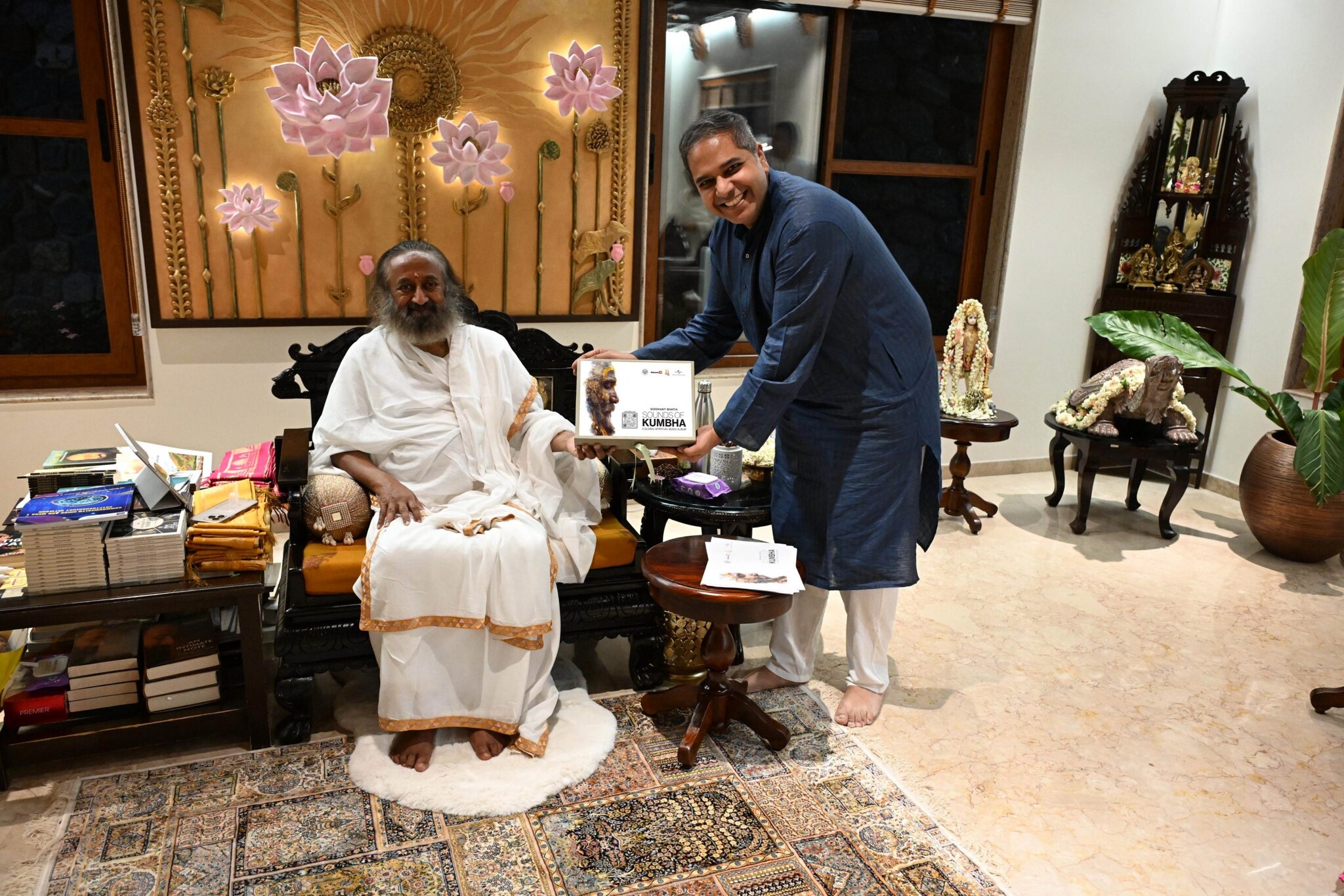
Siddhant Bhatia with Gurudev Sri Sri Ravi Shankar
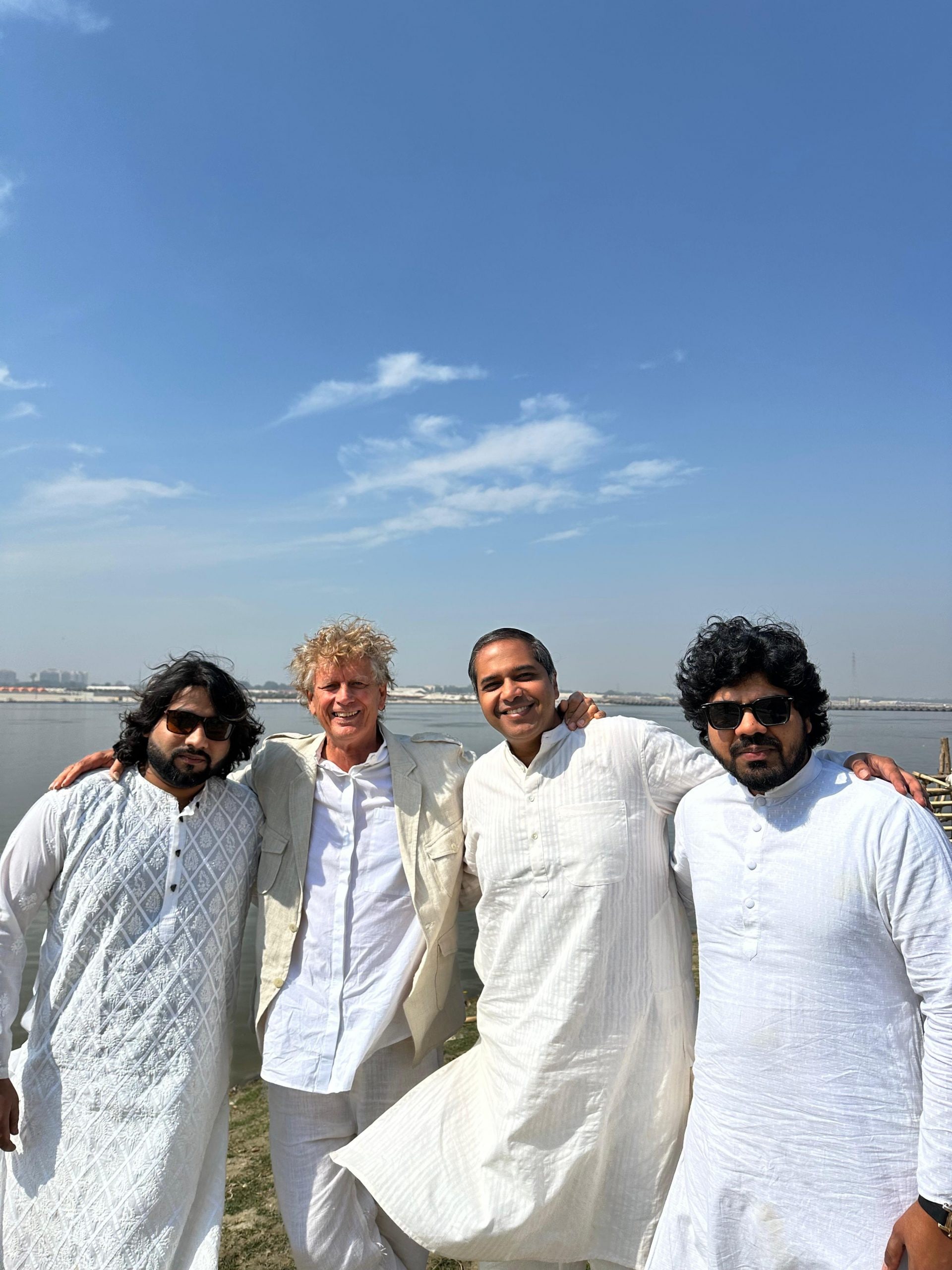
Adnan Khan, Jim Kimo West, Siddhant Bhatia, Zuheb Ahmed Khan
Industry support and institutional backing
The ambitious project was commissioned by the Uttar Pradesh government, produced by Network18 and distributed by Universal Music India. “A project of this scale needs both creative space and strong platforms. Network18 and HistoryTV18 helped shape the story and bring the Mahakumbh to the world with the respect it deserves. Universal Music India provided the global infrastructure to take this album beyond borders. Without these partners, the project would not have reached listeners across continents with this impact,” says Bhatia, highlighting how strong institutional backing and partnerships provided both creative infrastructure and global reach.
Science, spirituality and cultural recognition
Bhatia's approach combines artistic vision with scientific understanding. Holding a research degree on the healing effects of sound through frequencies, he designed the album to be felt, not just heard.
“My work with healing frequencies and immersive sound taught me that music is not just heard. It is felt in the body and in the mind. I did not want the listener to just hear the Mahakumbh. I wanted them to feel it. Music should touch consciousness, not just the ear,” says Bhatia.
The Grammy nomination represents validation for Indian spiritual traditions on the global stage. “This recognition shows that Indian spiritual music is a global language. When an album rooted in Indian philosophy, tradition and heritage stands beside the world’s biggest music projects, it sends a message that our cultural strength is universal,” adds Bhatia.
On a concluding note, I asked if he had any words of advice for young musicians and composers aiming for the global stage. His advice was straight and simple, “Stay real. Stay honest. The world is not looking for imitation. It is looking for authenticity. India has a deep cultural and musical heritage. Use it with pride. Experiment boldly, collaborate widely, but let your foundation remain Indian. And most importantly, create with sincerity. When intention is pure, the world responds in surprising ways.”
ALSO READ | Bhanushali Studios 'creatively collaborating’ with Michael Bay for upcoming project
/images/ppid_a911dc6a-image-177081457256338436.webp)

/images/ppid_a911dc6a-image-177081453463993301.webp)
/images/ppid_a911dc6a-image-177081453893074122.webp)