/images/ppid_59c68470-image-177807257873679302.webp)


What is the story about?
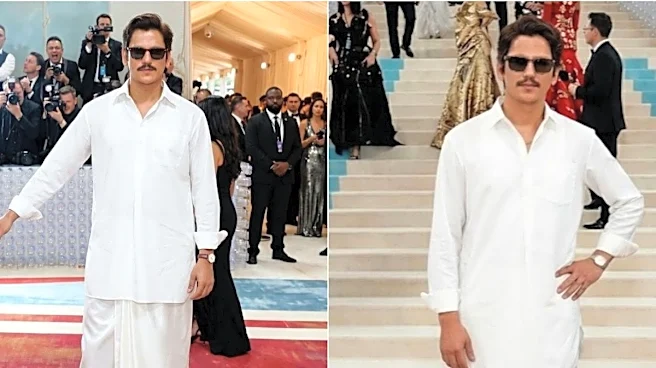
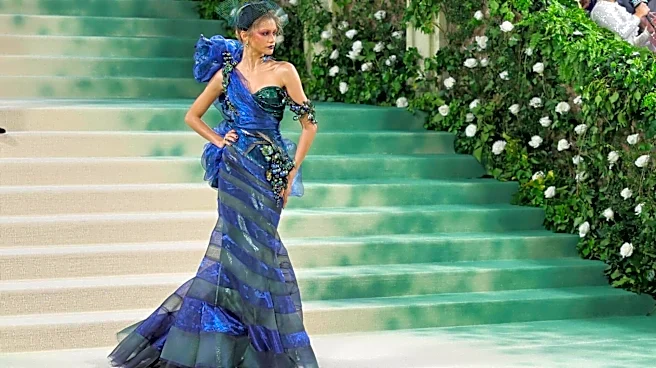
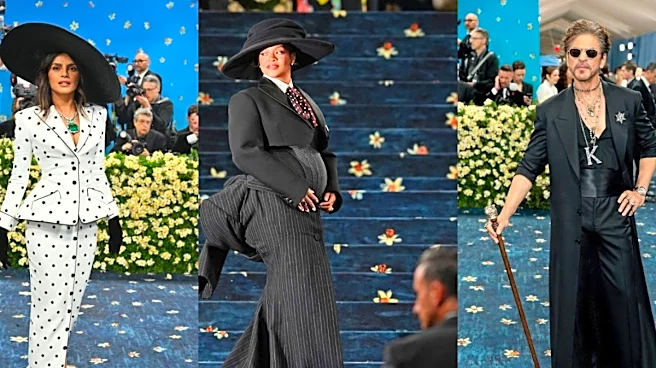
The iconic Met Gala carpet has been rolled out in New York, but its journey began thousands of kilometres away in Kerala. For the 2026 edition of the Met Gala, the base carpet has once again been produced by Neytt Homes by Extraweave. The company has handled this work multiple times in the past, including recent editions, continuing a long-standing association with the global fashion event.
The process begins with natural sisal fibres that come from Madagascar. These fibres are strong and durable, which makes them suitable for large carpets. Once they reach Kerala, workers clean and sort them by hand. The fibres are then turned into yarn, twisted into threads and smoothed out.
ALSO READ | Indian stars turn the Met Gala into a runway of art, heritage and drama
After this, the yarn is wound onto bobbins and placed on looms. The weaving process then begins, where the material is carefully crafted into large carpet rolls. For 2026, around 500 artisans worked continuously for nearly 90 days to complete the order. The final output includes 57 rolls, each measuring about 4 metres in width and 30 metres in length.
The company is led by Sivan Santhosh, whose family has been involved in the carpet business for over a century. The business traces its origins back to 1917, when his grandfather began exporting specialised rugs globally. Over time, the brand evolved into Extraweave, building expertise in large-scale, high-quality carpet production.
This year, the requirement was to create a plain white base for the theme ‘Fashion is Art.’ The base is designed so that designers can use it as a clean background. To improve quality, the fibres used this time are thinner and more refined.
ALSO READ | Met Gala 2026: When and where to watch fashion’s biggest night live
This helps reduce damage from heavy foot traffic. The weave is also tight, so high heels do not get stuck. A softening treatment has been added to make the surface smoother.
Quality checks are done at every step. Even small defects can be easily seen once the carpet is laid out, so the team ensures a consistent finish throughout.
The carpet was shipped to New York City in November 2025. After the event, parts of the carpet are either reused or auctioned, keeping sustainability in mind.
The process begins with natural sisal fibres that come from Madagascar. These fibres are strong and durable, which makes them suitable for large carpets. Once they reach Kerala, workers clean and sort them by hand. The fibres are then turned into yarn, twisted into threads and smoothed out.
ALSO READ | Indian stars turn the Met Gala into a runway of art, heritage and drama
After this, the yarn is wound onto bobbins and placed on looms. The weaving process then begins, where the material is carefully crafted into large carpet rolls. For 2026, around 500 artisans worked continuously for nearly 90 days to complete the order. The final output includes 57 rolls, each measuring about 4 metres in width and 30 metres in length.
The company is led by Sivan Santhosh, whose family has been involved in the carpet business for over a century. The business traces its origins back to 1917, when his grandfather began exporting specialised rugs globally. Over time, the brand evolved into Extraweave, building expertise in large-scale, high-quality carpet production.
This year, the requirement was to create a plain white base for the theme ‘Fashion is Art.’ The base is designed so that designers can use it as a clean background. To improve quality, the fibres used this time are thinner and more refined.
ALSO READ | Met Gala 2026: When and where to watch fashion’s biggest night live
This helps reduce damage from heavy foot traffic. The weave is also tight, so high heels do not get stuck. A softening treatment has been added to make the surface smoother.
Quality checks are done at every step. Even small defects can be easily seen once the carpet is laid out, so the team ensures a consistent finish throughout.
The carpet was shipped to New York City in November 2025. After the event, parts of the carpet are either reused or auctioned, keeping sustainability in mind.