/images/ppid_59c68470-image-176829003550636506.webp)

/images/ppid_59c68470-image-177055504034887098.webp)

What is the story about?
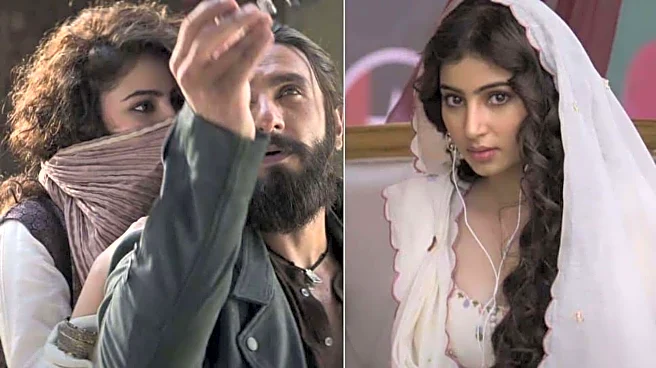
Ikkis is a war drama set around the 1971 Battle of Basantar but it will remind you more of Veer-Zaara (2004) than the other war films that you may have seen.
In a zeitgeist overladen by incendiary, divisive, performative patriotism, Ikkis asks you to question and assess the true cost of war. Primarily celebrated for smart, moody thrillers, Sriram Raghavan refuses to be predictable. With Ikkis, he takes the classic war film template and uses it to structure a movie that is a thoughtful takedown of populist notions of potent ideas such as enemy and nationalism.
In telling the story of India’s youngest Param Vir Chakra awardee Arun Khetarpal who died at the age of 21 in the Indo-Pak War of 1971, Raghavan issues a clarion call for peace.
In 2.5 hours, Ikkis follows two timelines. One is set in 1971. It captures Arun's journey from the National Defence Academy (NDA) to becoming a tank commander in the 17 Poona Horse Regiment and eventually getting killed on the line of duty. The other is set 30 years later in 2001, fresh after Kargil War. It follows Arun’s father Brigadier ML Khetarpal (Dharmendra) who visits Lahore to attend his college reunion, see his childhood home, and the place where Arjun was felled.
Also Read: Trailer of Rani Mukerji's Mardaani 3 out, new release date confirmed
Raghavan along with writers Pooja Ladha Surti and Arijit Biswas makes several laudable creative choices that makes Ikkis an antidote to the deafening war cries that have been resounding in Hindi film theaters lately. Take the movie’s title for instance. It does not glorify the protagonist or the event nor does it glamorise men killing each other. Instead it focuses on the tragedy that is the premature snuffing out of a light which would have blazed bright. It does not demean the enemy country.
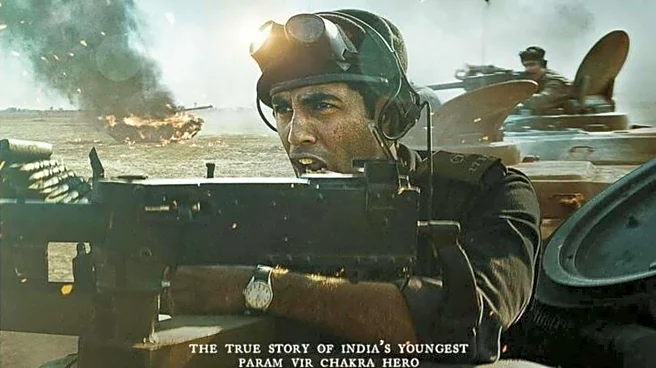
Another striking move is the decision to cast Agastya Nanda as Arun Khetarpal. Nanda’s boyish charm lends itself naturally to the role of a strapping young lad shaped by his family’s legacy who is eager to prove himself. His soft physicality and refined elegance is so unlike typical war heroes and champions Raghavan’s message in a way that’s impossible to ignore.
Raghavan is stubborn in his resistance to portray Pakistan as the deviant other or its people as sub-humans as has lately become the norm in mainstream Hindi cinema. At no point does Ikkis villainise or take sides. In fact, it is replete with sequences that do the opposite of othering or dehumanising those on the other side of the border. In ML Khetarpal, Raghavan creates a paragon of pacifism, who, despite losing a son to war, doesn't think twice before hugging people on the Pakistani soil and asking crucial questions such as “Kaun dushman?”
The movie makes clear that no matter who wins, there are no winners in war. Ikkis is reflective, meditative enough to understand this unvarnished truth and acknowledge it.
In a post Tiger-Pathaan-Dhurandhar India, it is a minor miracle that a Hindi film with a secular heart the size of Dharmendra’s all-enveloping hugs gets to exist. It feels fitting that one of Hindi cinema’s biggest titans chose to spread the message of love and tenderness in his swansong. Yash Chopra would have been proud.
Ikkis has the same tinge of retro nostalgia and easter-egg cinephilia that colours all of Raghavan’s films. Amid the guns, tanks, blood and warfare, there’s also readings of Ernest Hemingway’s For Whom The Bell Tolls (1940) and movie screenings of John Guillermin's The Bridge at Remagen (1969) and Billy Wilder’s Irma la Douce (1963).
Made on an estimated ₹60 crore, this gentle anti-war period drama has raked in an approximate 28.75 crore (India net) in 11 days. It has no bullets flying or limbs flaying in slow motion to rejigged, hysteria-fueling BGM. It is slightly old-fashioned and immensely brave in the way it stresses on kindness in an increasingly polarising milieu. It will shatter no box office records but it will warm and win your heart.
In a zeitgeist overladen by incendiary, divisive, performative patriotism, Ikkis asks you to question and assess the true cost of war. Primarily celebrated for smart, moody thrillers, Sriram Raghavan refuses to be predictable. With Ikkis, he takes the classic war film template and uses it to structure a movie that is a thoughtful takedown of populist notions of potent ideas such as enemy and nationalism.
In telling the story of India’s youngest Param Vir Chakra awardee Arun Khetarpal who died at the age of 21 in the Indo-Pak War of 1971, Raghavan issues a clarion call for peace.
In 2.5 hours, Ikkis follows two timelines. One is set in 1971. It captures Arun's journey from the National Defence Academy (NDA) to becoming a tank commander in the 17 Poona Horse Regiment and eventually getting killed on the line of duty. The other is set 30 years later in 2001, fresh after Kargil War. It follows Arun’s father Brigadier ML Khetarpal (Dharmendra) who visits Lahore to attend his college reunion, see his childhood home, and the place where Arjun was felled.
Also Read: Trailer of Rani Mukerji's Mardaani 3 out, new release date confirmed
Raghavan along with writers Pooja Ladha Surti and Arijit Biswas makes several laudable creative choices that makes Ikkis an antidote to the deafening war cries that have been resounding in Hindi film theaters lately. Take the movie’s title for instance. It does not glorify the protagonist or the event nor does it glamorise men killing each other. Instead it focuses on the tragedy that is the premature snuffing out of a light which would have blazed bright. It does not demean the enemy country.
Another striking move is the decision to cast Agastya Nanda as Arun Khetarpal. Nanda’s boyish charm lends itself naturally to the role of a strapping young lad shaped by his family’s legacy who is eager to prove himself. His soft physicality and refined elegance is so unlike typical war heroes and champions Raghavan’s message in a way that’s impossible to ignore.
Raghavan is stubborn in his resistance to portray Pakistan as the deviant other or its people as sub-humans as has lately become the norm in mainstream Hindi cinema. At no point does Ikkis villainise or take sides. In fact, it is replete with sequences that do the opposite of othering or dehumanising those on the other side of the border. In ML Khetarpal, Raghavan creates a paragon of pacifism, who, despite losing a son to war, doesn't think twice before hugging people on the Pakistani soil and asking crucial questions such as “Kaun dushman?”
The movie makes clear that no matter who wins, there are no winners in war. Ikkis is reflective, meditative enough to understand this unvarnished truth and acknowledge it.
In a post Tiger-Pathaan-Dhurandhar India, it is a minor miracle that a Hindi film with a secular heart the size of Dharmendra’s all-enveloping hugs gets to exist. It feels fitting that one of Hindi cinema’s biggest titans chose to spread the message of love and tenderness in his swansong. Yash Chopra would have been proud.
Ikkis has the same tinge of retro nostalgia and easter-egg cinephilia that colours all of Raghavan’s films. Amid the guns, tanks, blood and warfare, there’s also readings of Ernest Hemingway’s For Whom The Bell Tolls (1940) and movie screenings of John Guillermin's The Bridge at Remagen (1969) and Billy Wilder’s Irma la Douce (1963).
Made on an estimated ₹60 crore, this gentle anti-war period drama has raked in an approximate 28.75 crore (India net) in 11 days. It has no bullets flying or limbs flaying in slow motion to rejigged, hysteria-fueling BGM. It is slightly old-fashioned and immensely brave in the way it stresses on kindness in an increasingly polarising milieu. It will shatter no box office records but it will warm and win your heart.

/images/ppid_a911dc6a-image-17706430346008117.webp)