/images/ppid_59c68470-image-177037253022252443.webp)

/images/ppid_a911dc6a-image-177056954333251786.webp)
What is the story about?
In Hindi cinema, where actor–director partnerships are often sustained by box-office arithmetic or brand compatibility, the coming together of Shahid Kapoor and Vishal Bhardwaj has been nothing short of cosmic and combustible: a creative alliance forged in discomfort.
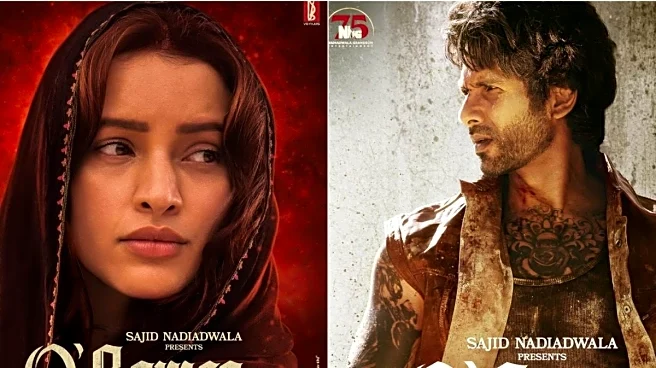
With their new film about to release, it feels opportune to chart how this explosive pairing spanning 17 years and four films—Kaminey (2009), Haider (2014), Rangoon (2017), and now O’ Romeo—has insistently intervened at moments when Kapoor’s career needed not rescue but reinvention.
When Kaminey detonated in 2009, Shahid Kapoor was at a crossroads. He was popular, bankable, and yet increasingly circumscribed by a screen persona built on romantic affability and emotional accessibility. Until then, his biggest hits were Ishq Vishk (2003), Vivaah (2006), and Jab We Met (2007), all of which cashed in on his boyish charm.
What Bhardwaj offered him in his crime thriller instead was rupture. Kaminey did not just expand Kapoor’s range; it dismantled his popular perception with relish. In playing twin brothers Charlie and Guddu—one stuttering, the other lisping—Kapoor embraced physical awkwardness, moral squalor, and narrative chaos, the kind of protruding, discomfiting rough edges that he’d stayed miles away from thus far. His double role in Kaminey didn’t just discourage vanity, it forced him to completely shed it.
The brilliance of Kapoor’s performance in the dark comedy lies in its refusal to court sympathy. Charlie is feral, reactive, almost ugly in his desperation; Guddu, meanwhile, is paranoid and brittle, his righteousness a flimsy shield. Bhardwaj’s hyper-stylised Mumbai—shot like a city on stimulants—demands an actor who can metabolise speed, noise, and threat without aestheticising them. Kapoor meets that demand head-on by leaning into abrasion. He does not smooth out the twins’ jagged contours or seek a unifying emotional centre. Instead, he allows them to remain fragmented, impulsive, and faintly ridiculous. It was the first time Kapoor appeared unconcerned with being liked—and it changed the trajectory of his career in ways inconceivable until then.
If Kaminey was a provocation, Haider (2014) was an act of intense escalation. After Maqbool (2003) and Omkara (2006), this audacious adaptation of Hamlet was the third and final part of Bhardwaj’s much-acclaimed Shakespearean trilogy. Set in the charged, fissured landscape of Kashmir, the political thriller placed Kapoor at the centre of a film that refused easy moral legibility. As Haider Meer, he delivers a performance that is deliberate and excessive, veering between operatic anguish and eerie stillness. What we see is not raw grief rendered cinematic; it is guttural grief allowed to metastasise.
What distinguishes Kapoor's work in Haider from the usual "career-best" rhetoric is its total embrace of instability. Bhardwaj does not position Haider as a tragic hero seeking justice, but as a man whose interior life has been scrambled by political violence and intimate betrayal. Kapoor plays him in accordance—his body loose-limbed and erratic, his voice oscillating between clarity and collapse.
Also Read: Shahid Kapoor's O' Romeo in legal trouble as petition seeks stay on release
Even the film’s most theatrical moments succeed spectacularly, largely because of Kapoor’s refusal to treat them as empty showcases devoid of madness or meaning. He adorns them with both, with such commitment, abandon, and ache, that he, along with Bhardwaj, turns Shakespeare malleable. Together, they root Hamlet so deeply in the mired socio-political tensions of Kashmir that it’s impossible to disassociate one with the other.
Here, Bhardwaj’s greatest contribution is trust. He trusts Kapoor with opacity, contradiction, and silence. In return, Kapoor offers a performance that absorbs Bhardwaj’s literary ambition without becoming museum-like. Haider did not merely earn Kapoor critical acclaim; it repositioned him as an A-list actor willing to stake his stardom on discomfort. Moreover, it whetted his risk-taking appetite, which has only accentuated with time, resulting in films as diverse as Udta Punjab (2016), Padmaavat (2018), Kabir Singh (2019), Jersey (2022), and Teri Baaton Mein Aisa Uljha Jiya (2024).
Rangoon (2017), often dismissed as the outlier in the Bhardwaj-Kapoor canon, is instructive precisely because it is uneven. Set during World War II, the romantic war-drama strains under its tonal and narrative ambitions. Yet Kapoor’s Nawab Malik is one of the film’s quiet strengths. Stripped of verbal flourish, he communicates through restraint—watchfulness, withheld emotion, physical stillness. If Haider is volcanic, Rangoon is tectonic. Even when the film falters, the Kapoor–Bhardwaj dynamic remains intact: a keen insistence on characters who resist simplification and performances that prefer layered interiority over soulless spectacle.
What ultimately defines their cinematic oeuvre is risk-taking. Bhardwaj writes roles that do not flatter; Kapoor chooses to inhabit them without negotiating their sharpness. Together, they reject the star system’s default setting, where image preservation trumps inquiry. Instead, their films function as recalibration points—explosions where Kapoor’s career veers away from cushioned complacency and toward creative volatility.
As O’ Romeo approaches, the big question is not if they’d be able to recreate Kaminey’s kinetic charge or Haider’s tragic heft. The anticipation lies elsewhere: in the possibility of another rupture. If their shared history tells us anything, it is that Shahid Kapoor is at his most compelling when Vishal Bhardwaj denies him comfort—and that Bhardwaj’s cinema, in turn, finds its most elastic vessel in Kapoor’s willingness to fracture and rebuild his own image anew each time.
In an industry that rewards consistency, this ever-evolving partnership has survived and thrived on reinvention. Kaminey and Haider did not merely revive Shahid Kapoor’s career; they permanently altered its grammar. With O’ Romeo, it will be exciting to see who Shahid Kapoor becomes next and where this film will take him.
Also Read: Hussain 'Ustara' Shaikh: The underworld figure at the centre of the 'O Romeo' controversy
With their new film about to release, it feels opportune to chart how this explosive pairing spanning 17 years and four films—Kaminey (2009), Haider (2014), Rangoon (2017), and now O’ Romeo—has insistently intervened at moments when Kapoor’s career needed not rescue but reinvention.
When Kaminey detonated in 2009, Shahid Kapoor was at a crossroads. He was popular, bankable, and yet increasingly circumscribed by a screen persona built on romantic affability and emotional accessibility. Until then, his biggest hits were Ishq Vishk (2003), Vivaah (2006), and Jab We Met (2007), all of which cashed in on his boyish charm.
What Bhardwaj offered him in his crime thriller instead was rupture. Kaminey did not just expand Kapoor’s range; it dismantled his popular perception with relish. In playing twin brothers Charlie and Guddu—one stuttering, the other lisping—Kapoor embraced physical awkwardness, moral squalor, and narrative chaos, the kind of protruding, discomfiting rough edges that he’d stayed miles away from thus far. His double role in Kaminey didn’t just discourage vanity, it forced him to completely shed it.
The brilliance of Kapoor’s performance in the dark comedy lies in its refusal to court sympathy. Charlie is feral, reactive, almost ugly in his desperation; Guddu, meanwhile, is paranoid and brittle, his righteousness a flimsy shield. Bhardwaj’s hyper-stylised Mumbai—shot like a city on stimulants—demands an actor who can metabolise speed, noise, and threat without aestheticising them. Kapoor meets that demand head-on by leaning into abrasion. He does not smooth out the twins’ jagged contours or seek a unifying emotional centre. Instead, he allows them to remain fragmented, impulsive, and faintly ridiculous. It was the first time Kapoor appeared unconcerned with being liked—and it changed the trajectory of his career in ways inconceivable until then.
If Kaminey was a provocation, Haider (2014) was an act of intense escalation. After Maqbool (2003) and Omkara (2006), this audacious adaptation of Hamlet was the third and final part of Bhardwaj’s much-acclaimed Shakespearean trilogy. Set in the charged, fissured landscape of Kashmir, the political thriller placed Kapoor at the centre of a film that refused easy moral legibility. As Haider Meer, he delivers a performance that is deliberate and excessive, veering between operatic anguish and eerie stillness. What we see is not raw grief rendered cinematic; it is guttural grief allowed to metastasise.
What distinguishes Kapoor's work in Haider from the usual "career-best" rhetoric is its total embrace of instability. Bhardwaj does not position Haider as a tragic hero seeking justice, but as a man whose interior life has been scrambled by political violence and intimate betrayal. Kapoor plays him in accordance—his body loose-limbed and erratic, his voice oscillating between clarity and collapse.
Also Read: Shahid Kapoor's O' Romeo in legal trouble as petition seeks stay on release
Even the film’s most theatrical moments succeed spectacularly, largely because of Kapoor’s refusal to treat them as empty showcases devoid of madness or meaning. He adorns them with both, with such commitment, abandon, and ache, that he, along with Bhardwaj, turns Shakespeare malleable. Together, they root Hamlet so deeply in the mired socio-political tensions of Kashmir that it’s impossible to disassociate one with the other.
Here, Bhardwaj’s greatest contribution is trust. He trusts Kapoor with opacity, contradiction, and silence. In return, Kapoor offers a performance that absorbs Bhardwaj’s literary ambition without becoming museum-like. Haider did not merely earn Kapoor critical acclaim; it repositioned him as an A-list actor willing to stake his stardom on discomfort. Moreover, it whetted his risk-taking appetite, which has only accentuated with time, resulting in films as diverse as Udta Punjab (2016), Padmaavat (2018), Kabir Singh (2019), Jersey (2022), and Teri Baaton Mein Aisa Uljha Jiya (2024).
Rangoon (2017), often dismissed as the outlier in the Bhardwaj-Kapoor canon, is instructive precisely because it is uneven. Set during World War II, the romantic war-drama strains under its tonal and narrative ambitions. Yet Kapoor’s Nawab Malik is one of the film’s quiet strengths. Stripped of verbal flourish, he communicates through restraint—watchfulness, withheld emotion, physical stillness. If Haider is volcanic, Rangoon is tectonic. Even when the film falters, the Kapoor–Bhardwaj dynamic remains intact: a keen insistence on characters who resist simplification and performances that prefer layered interiority over soulless spectacle.
What ultimately defines their cinematic oeuvre is risk-taking. Bhardwaj writes roles that do not flatter; Kapoor chooses to inhabit them without negotiating their sharpness. Together, they reject the star system’s default setting, where image preservation trumps inquiry. Instead, their films function as recalibration points—explosions where Kapoor’s career veers away from cushioned complacency and toward creative volatility.
As O’ Romeo approaches, the big question is not if they’d be able to recreate Kaminey’s kinetic charge or Haider’s tragic heft. The anticipation lies elsewhere: in the possibility of another rupture. If their shared history tells us anything, it is that Shahid Kapoor is at his most compelling when Vishal Bhardwaj denies him comfort—and that Bhardwaj’s cinema, in turn, finds its most elastic vessel in Kapoor’s willingness to fracture and rebuild his own image anew each time.
In an industry that rewards consistency, this ever-evolving partnership has survived and thrived on reinvention. Kaminey and Haider did not merely revive Shahid Kapoor’s career; they permanently altered its grammar. With O’ Romeo, it will be exciting to see who Shahid Kapoor becomes next and where this film will take him.
Also Read: Hussain 'Ustara' Shaikh: The underworld figure at the centre of the 'O Romeo' controversy


/images/ppid_a911dc6a-image-177063958173193498.webp)



/images/ppid_a911dc6a-image-177055563232085407.webp)