/images/ppid_59c68470-image-176882753527213255.webp)

/images/ppid_a911dc6a-image-177072016638512152.webp)
/images/ppid_a911dc6a-image-177072012220392505.webp)
/images/ppid_59c68470-image-177072004423273525.webp)
What is the story about?
Guitar virtuoso Marty Friedman's return to India isn't just another tour stop—it's a homecoming of sorts for an artist who has found a special connection with the country's music lovers.
“Our first show at the Weekender Festival (in 2019) was such an incredible experience, my band and I wanted to get back and play in other cities and play our full-sized show,” Friedman says, explaining what drew him back.
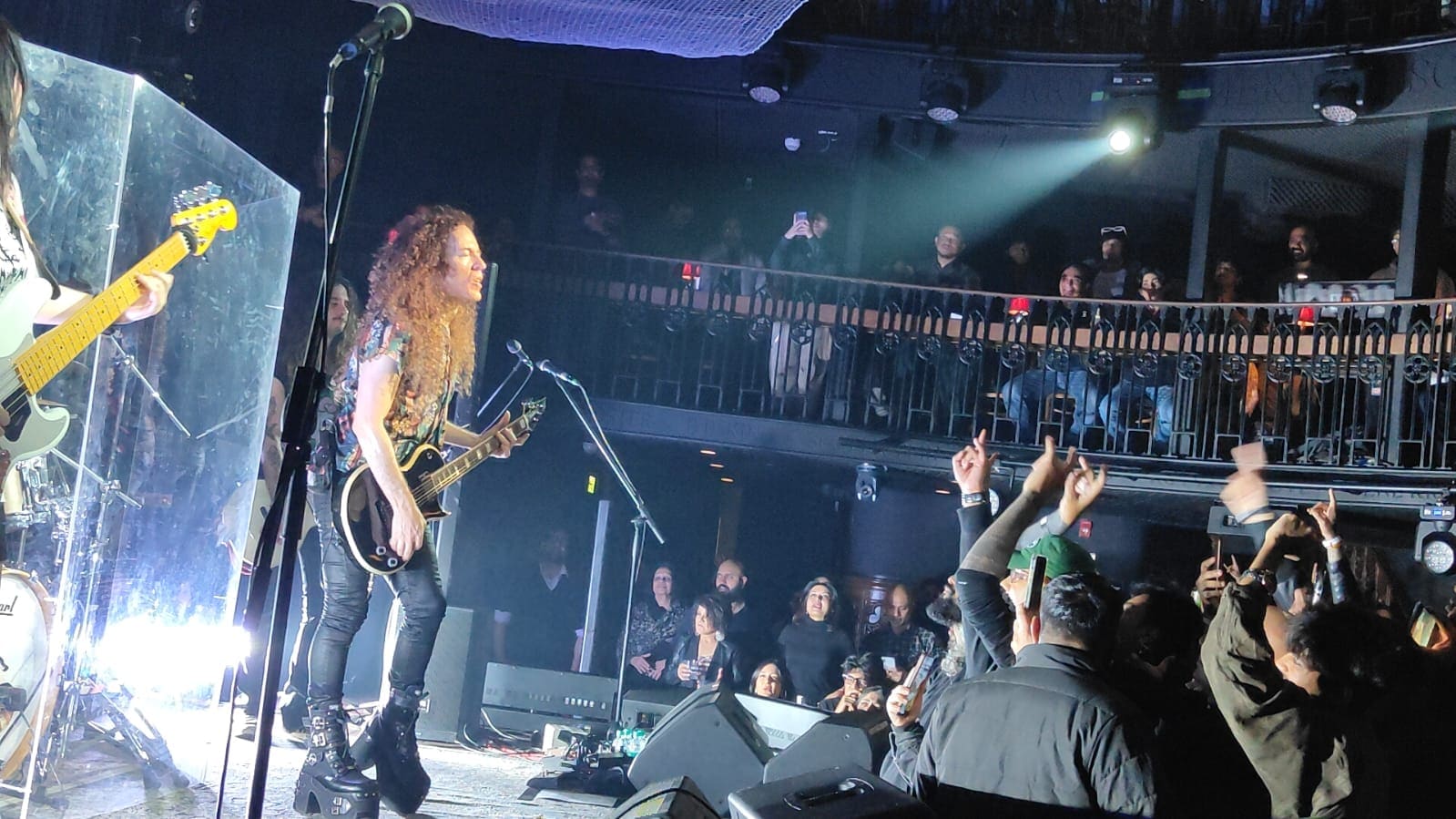
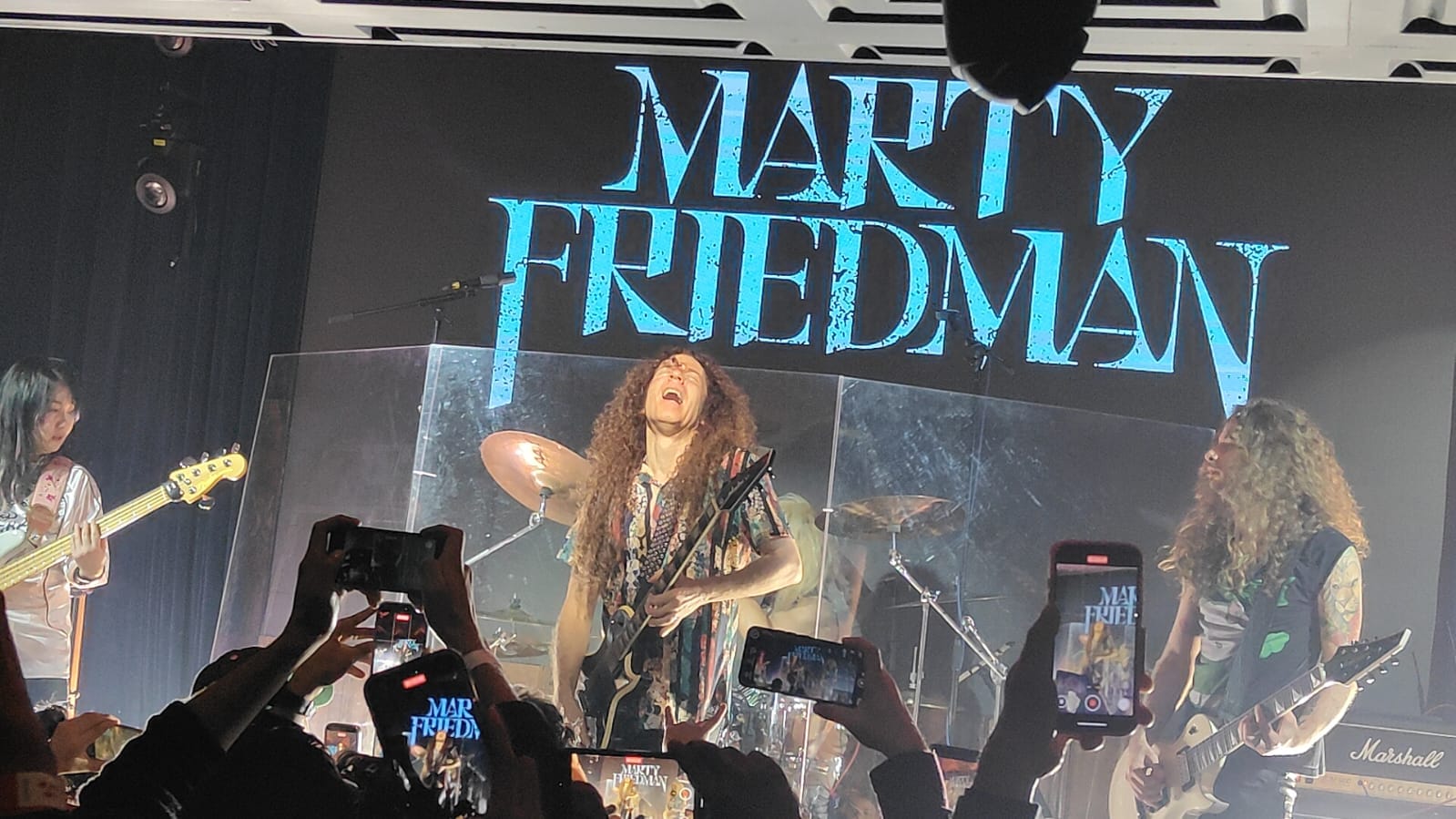
Friedman recently toured India with three shows in Mumbai, Delhi, and Bengaluru from January 16–18. The Delhi show was held at The Piano Man last Saturday, which was packed with metalheads and Friedman fans. Friedman’s set was a fine mix of love ballads and skull-crushing metal, including the surprise addition of the solo of
Tornado of Souls from Megadeth’s seminal 1990 album, Rust in Peace, which was also his debut with the thrash band.
What makes Indian audiences stand out?
According to Friedman, it's the country's linguistic diversity that creates a unique concert atmosphere. “The Indian audience was unique in the way that they have so many different languages in one country, so that when I tried to say several Indian words, the place just erupted,” he says.
India's musical advantage
Having spent significant time in Japan and exposed himself to various Asian music traditions, Friedman offers a fascinating perspective on what gives Indian musicians an edge in the global metal scene.
“Indian musicians have the benefit of growing up with complex rhythms and adventurous melodies, two things that have to be learned in the West. They are not built into our DNA. So when Indian rock and metal bands write music, they have a different and deeper well of expressions to work with than many other countries," he observes.
Friedman also drew parallels between Indian and Japanese music traditions, noting their distinctiveness: “Indian music is like Japanese music in the regard that you can identify the country after hearing just a few seconds of its traditional music. That's cool and kind of rare. I don't think I could identify Norwegian music even after hearing an hour of it”
The guitarist has been keeping tabs on India's rising talent. "My friend Keshav Dhar is a wonderful musician, as is Yogi from Pineapple Express. I like Bloodywood a lot, too. I can`t wait to hear more things from India," he shares. Friedman played a solo in Dhar’s band Skyharbor’s album Catharsis in 2011, which also featured Dan Thompkins from Tessaract. Later in 2014, Dhar and Skyharbor drummer Anup Sastry were a part of Steroidhead, which was a part of Friedman's 2014 album Inferno.
Megadeth's farewell and fond memories
Friedman was a part of thrash legends Megadeth from 1990 to 2000, during which the band produced some of its most intricate and influential work across albums Rust in Peace (1990), Countdown to Extinction (1992), Youthanasia (1994), Hidden Treasures (1995), Cryptic Writings (1997) and Risk (1999). With Megadeth announcing their farewell tour and final album later this year, Friedman reflects on watching the legendary era come to a close—a chapter he was instrumental in shaping during his decade with the band.
“I’m their biggest supporter, and I’d rather see them bow out gracefully than be out there and not be at their best. I loved playing in many countries with Megadeth. Unfortunately, we never played in India, so I was very glad that I finally could do that with my own band," he says.
Friedman last played live with Megadeth in 2023, on two occasions — in Budokan in Tokyo and at Wacken Open Air in Germany—where he reunited with fellow metal legend Dave Mustaine and played several of their classics such as “Symphony of Destruction” and “Tornado of Souls”.
Also Read: Processing A R Rahman's recent candour
Evolution of metal and technology
On the evolution of metal music over recent decades, Friedman maintains an optimistic view. “It’s always been good. The best thing is that more engineers know how to record it well. In the past, very few engineers could get the sounds that metal bands wanted, and those guys were always in demand, so often metal bands had to compromise by working with guys who specialise in pop or some other genre," he explains.
When it comes to artificial intelligence's growing role in music, Friedman sees opportunity rather than threat. “It couldn`t possibly be a threat. AI is like education; having it when you need it can only help what you are doing,” he states.
His own creative process has evolved significantly with technology. “I take a lot more time now than I used to. I make literally dozens of demos of any song I write. I live with them for a while and make updates, often for months, until I feel I have come up with the best version of the song,” Friedman reveals about his current songwriting approach, which differs markedly from his Megadeth days.
Advice for aspiring musicians
Drawing from his experience navigating both Western and Eastern music industries, Friedman offers practical advice for young Indian artists with global ambitions.
“Move to the music industry capital of your country, or the country you want to make music in. Live there. That is the top priority, because that is where all serious artists are. Meet as many people as you can and play music with as many people as possible. It’s very, very hard, but music is a desirable business, so you have to compete with many people who want the same thing. It`s best to be in an important city," he says.
Looking ahead
As for what lies ahead, Friedman is open to deeper collaboration with Indian artists. “I would love nothing more than to collaborate with a major Indian artist. If my tour of India leads to that, I’m thrilled. The main purpose, though, is to play for the Indian fans who may have supported me for a long time and thought I would never play in India. Thank you for waiting,” he concludes.
For Indian metal fans who have followed Friedman's illustrious career from his Megadeth days through his solo journey, this tour represented not just a concert series, but the fulfilment of a long-awaited promise from one of metal's most influential guitarists.
Also Read: How Charu Suri turned grief and exhaustion into Grammy-nominated Shayan
“Our first show at the Weekender Festival (in 2019) was such an incredible experience, my band and I wanted to get back and play in other cities and play our full-sized show,” Friedman says, explaining what drew him back.
Friedman recently toured India with three shows in Mumbai, Delhi, and Bengaluru from January 16–18. The Delhi show was held at The Piano Man last Saturday, which was packed with metalheads and Friedman fans. Friedman’s set was a fine mix of love ballads and skull-crushing metal, including the surprise addition of the solo of
Marty Friedman Live in Delhi
Marty Friedman Live in Delhi
What makes Indian audiences stand out?
According to Friedman, it's the country's linguistic diversity that creates a unique concert atmosphere. “The Indian audience was unique in the way that they have so many different languages in one country, so that when I tried to say several Indian words, the place just erupted,” he says.
India's musical advantage
Having spent significant time in Japan and exposed himself to various Asian music traditions, Friedman offers a fascinating perspective on what gives Indian musicians an edge in the global metal scene.
“Indian musicians have the benefit of growing up with complex rhythms and adventurous melodies, two things that have to be learned in the West. They are not built into our DNA. So when Indian rock and metal bands write music, they have a different and deeper well of expressions to work with than many other countries," he observes.
Friedman also drew parallels between Indian and Japanese music traditions, noting their distinctiveness: “Indian music is like Japanese music in the regard that you can identify the country after hearing just a few seconds of its traditional music. That's cool and kind of rare. I don't think I could identify Norwegian music even after hearing an hour of it”
The guitarist has been keeping tabs on India's rising talent. "My friend Keshav Dhar is a wonderful musician, as is Yogi from Pineapple Express. I like Bloodywood a lot, too. I can`t wait to hear more things from India," he shares. Friedman played a solo in Dhar’s band Skyharbor’s album Catharsis in 2011, which also featured Dan Thompkins from Tessaract. Later in 2014, Dhar and Skyharbor drummer Anup Sastry were a part of Steroidhead, which was a part of Friedman's 2014 album Inferno.
Megadeth's farewell and fond memories
Friedman was a part of thrash legends Megadeth from 1990 to 2000, during which the band produced some of its most intricate and influential work across albums Rust in Peace (1990), Countdown to Extinction (1992), Youthanasia (1994), Hidden Treasures (1995), Cryptic Writings (1997) and Risk (1999). With Megadeth announcing their farewell tour and final album later this year, Friedman reflects on watching the legendary era come to a close—a chapter he was instrumental in shaping during his decade with the band.
“I’m their biggest supporter, and I’d rather see them bow out gracefully than be out there and not be at their best. I loved playing in many countries with Megadeth. Unfortunately, we never played in India, so I was very glad that I finally could do that with my own band," he says.
Friedman last played live with Megadeth in 2023, on two occasions — in Budokan in Tokyo and at Wacken Open Air in Germany—where he reunited with fellow metal legend Dave Mustaine and played several of their classics such as “Symphony of Destruction” and “Tornado of Souls”.
Also Read: Processing A R Rahman's recent candour
Evolution of metal and technology
On the evolution of metal music over recent decades, Friedman maintains an optimistic view. “It’s always been good. The best thing is that more engineers know how to record it well. In the past, very few engineers could get the sounds that metal bands wanted, and those guys were always in demand, so often metal bands had to compromise by working with guys who specialise in pop or some other genre," he explains.
When it comes to artificial intelligence's growing role in music, Friedman sees opportunity rather than threat. “It couldn`t possibly be a threat. AI is like education; having it when you need it can only help what you are doing,” he states.
His own creative process has evolved significantly with technology. “I take a lot more time now than I used to. I make literally dozens of demos of any song I write. I live with them for a while and make updates, often for months, until I feel I have come up with the best version of the song,” Friedman reveals about his current songwriting approach, which differs markedly from his Megadeth days.
Advice for aspiring musicians
Drawing from his experience navigating both Western and Eastern music industries, Friedman offers practical advice for young Indian artists with global ambitions.
“Move to the music industry capital of your country, or the country you want to make music in. Live there. That is the top priority, because that is where all serious artists are. Meet as many people as you can and play music with as many people as possible. It’s very, very hard, but music is a desirable business, so you have to compete with many people who want the same thing. It`s best to be in an important city," he says.
Looking ahead
As for what lies ahead, Friedman is open to deeper collaboration with Indian artists. “I would love nothing more than to collaborate with a major Indian artist. If my tour of India leads to that, I’m thrilled. The main purpose, though, is to play for the Indian fans who may have supported me for a long time and thought I would never play in India. Thank you for waiting,” he concludes.
For Indian metal fans who have followed Friedman's illustrious career from his Megadeth days through his solo journey, this tour represented not just a concert series, but the fulfilment of a long-awaited promise from one of metal's most influential guitarists.
Also Read: How Charu Suri turned grief and exhaustion into Grammy-nominated Shayan