



Capex at Forefront
The cornerstone of the 2026 Budget is the significant allocation for capital expenditure (capex). The government has earmarked ₹12.2 lakh crore for this
purpose in fiscal year 2026–27. This represents a substantial 9% increase from the revised estimate of ₹10.9 lakh crore in the fiscal year 2025–26. Despite this increase, capex as a share of the Gross Domestic Product (GDP) remains stable at approximately 3.1%, indicating a consistent fiscal approach. This strategy reflects the government's commitment to infrastructure-led growth, which is designed to stimulate economic activity and provide long-term benefits. The consistent emphasis on capex, even in the face of global economic uncertainties, underlines the government’s confidence in its growth trajectory. The move is also viewed as a continuation of themes seen in recent budgets, specifically focused on fiscal consolidation coupled with increased infrastructure investment, as noted by industry leaders.
Fiscal Discipline Maintained
Alongside the emphasis on capital expenditure, the budget also underscores fiscal consolidation. Experts like Jairam Sridharan noted the continuation of these dual themes. This involves a gradual reduction of the fiscal deficit from the peaks seen during the pandemic. Manoj Shetty observed that the combination of sustained capital expenditure of ₹12.2 lakh crore and a declining debt-to-GDP ratio enhances the macro framework. This fiscal discipline provides comfort to long-term investors by creating a stable economic environment. The aim is to balance growth with financial prudence, ensuring that the economy remains resilient and sustainable in the long run. The anchoring of the fiscal deficit at 4.3% of GDP in FY27, as highlighted by Sanjay Agarwal, is a clear signal of stability and confidence from the government.
Growth-Oriented Approach
The 2026 Budget adopts a strategic shift towards bolstering domestic growth and productivity. Sakshi Gupta pointed out that, in contrast to the prior year's emphasis on consumption, this budget prioritizes manufacturing and services. This strategic recalibration aims to diversify the economic drivers and create more sustainable growth opportunities. Furthermore, the government aims to improve productivity and employment outcomes through reforms. The emphasis on supporting manufacturing and services reflects a broader economic strategy. This strategy aims to create a robust and diversified economy less vulnerable to external shocks. The focus on SMEs and manufacturing, particularly through initiatives such as the revival of 2,000 industry clusters and the ₹10,000 crore MSME Growth Fund, as highlighted by Shekhar Bhandari, underscores their essential role in long-term growth and job creation.
Infrastructure Boost
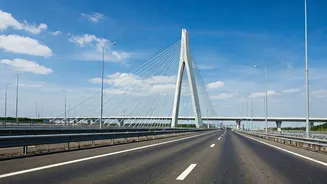
The government views infrastructure development as crucial for sustaining growth, particularly amid global instability. The outlay of ₹12.2 lakh crore in the 2026 Budget reinforces the emphasis on infrastructure-led growth. This includes grants-in-aid for the creation of capital assets, resulting in a projected 22.1% increase in effective capital expenditure, which reaches ₹17.14 lakh crore in FY27, from ₹14.04 lakh crore in FY26 (RE). This increase lifts effective capex to 4.4% of GDP. Finance Minister Nirmala Sitharaman highlighted that the capex allocation is the highest in a decade. This sustained commitment is designed to improve the country's infrastructure, boosting connectivity, and making it easier to conduct business. The objective is to foster economic development and increase productivity across multiple sectors.