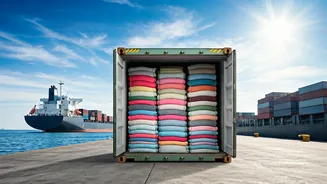

Tariffs' Economic Bite
The imposition of US tariffs has brought considerable economic repercussions for Indian textile exporters. The tariffs, implemented as part of broader
trade policies, have resulted in a notable decline in exports. Exporters are experiencing a reduction in their revenue streams and are forced to adjust their operational strategies to mitigate losses. These policies have inadvertently raised the costs for Indian textile manufacturers. This has put a strain on their profit margins. It has made it harder for them to compete in the global market. Furthermore, the tariffs have influenced the price structure of textiles. This has a direct impact on the competitiveness of Indian goods. The situation is further complicated by the fluctuations in currency exchange rates, which can either amplify or partially offset the impact of the tariffs. These multiple factors converge to create a challenging business environment for Indian textile exporters.
Reduced Export Volumes
A significant consequence of the US tariffs has been the marked reduction in the volume of textile exports from India to the US market. The increased costs due to tariffs have made Indian products less attractive to US buyers. This has led to a noticeable decline in order volumes. Exporters are struggling to find alternative markets to absorb their production. This has resulted in surplus inventory and storage costs, further affecting their profitability. The decrease in export volumes also has broader implications for the Indian economy. The textile industry is a significant contributor to employment. The decline in exports can lead to job losses and reduced economic activity within India. This has an impact on related sectors, such as raw material suppliers and transportation services. Exporters are now looking at diversifying their target markets. They are focusing on regions with favorable trade agreements or where tariffs are less restrictive to maintain some level of sales.
Cost and Competitiveness
US tariffs have undeniably increased production costs for Indian textile exporters. These duties add a direct cost to each unit exported, thereby reducing the profit margins for businesses. The higher costs make Indian textiles less competitive when compared to those from countries not affected by similar tariffs. The price increases can dissuade potential buyers, leading to a loss of market share to competitors who can offer more competitive pricing. Exporters have to carefully examine the cost structure to find avenues to absorb some of the tariff impact, without passing on the complete cost burden to consumers. This usually includes improving efficiency, optimizing supply chains, and negotiating better terms with suppliers. The challenges related to cost and competitiveness also force businesses to invest in technology and innovation to enhance their productivity. Ultimately, to sustain in the face of these challenges, companies are adopting various strategic approaches.
Strategic Adaptations Underway
To withstand the challenges presented by US tariffs, Indian textile exporters are implementing various adaptive strategies. Diversifying export markets is one common approach, with companies exploring opportunities in the European Union, Southeast Asia, and other regions where trade relations are more favorable. Another strategy involves product diversification and innovation, by which exporters are investing in producing high-value and niche products less affected by tariffs. They are also improving their overall operational efficiency through the adoption of new technologies and better supply chain management. This aids in cutting down costs and improving competitiveness. Additionally, some businesses seek to create strategic alliances and partnerships to leverage shared resources and expertise. Overall, the emphasis is on enhancing resilience through adaptability.
Future Outlook Uncertain
The future of Indian textile exports remains uncertain, significantly shaped by ongoing trade tensions and shifting global economic dynamics. The resolution of the US tariffs and associated trade policies will have a significant impact on future market access and export volumes. The prevailing economic landscape also plays a vital role in determining demand and consumer spending habits. The Indian textile industry must constantly adapt to changes. They need to innovate to stay competitive and maintain a strong presence in the global market. Exporters' ability to manage costs, create value-added products, and secure diverse markets will determine their long-term sustainability. The industry also looks to the government for further policy support in the form of trade agreements and economic incentives to mitigate the impact of tariffs and facilitate business expansion.