





Strategic Maharashtra Investment
Reports suggest Toyota is contemplating a major manufacturing expansion by building three new vehicle assembly facilities in Maharashtra. This potential
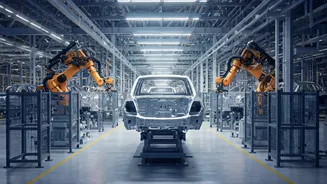
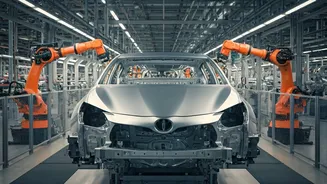
undertaking signifies a significant elevation of India's status within Toyota's worldwide strategic planning, moving it beyond a secondary market. The establishment of multiple plants in one state represents a substantial increase in production capability, aiming to create a manufacturing hub that leverages Maharashtra's existing advantages, including its port access, established supplier networks, and robust automotive industry infrastructure. Such a concentrated presence is designed to optimize logistics, streamline supply chains, and bolster capabilities for both domestic sales and international exports. This strategic cluster would focus on assembly operations capable of managing a diverse range of vehicles for various markets, indicating a broader shift in Toyota's global manufacturing alignment.
Recent Growth Drivers
Toyota Kirloskar Motor has experienced a period of robust growth in India over the past two years, achieving notable increases in vehicle dispatches. This success is attributed to a product lineup that resonates well with current consumer demands, particularly its utility vehicles like the Hyryder and Innova Hycross, with hybrid variants showing strong consumer appeal. The company's electrification strategy in India has been cautious, prioritizing hybrid technology for enhanced fuel efficiency and reduced reliance on charging infrastructure, a sensible approach given the uneven development of charging networks. Meanwhile, enduring models such as the Fortuner and Innova continue to dominate their respective segments, demonstrating sustained market leadership despite evolving competitor offerings. The synergistic collaboration with Maruti Suzuki has also been a crucial factor, enabling Toyota to broaden its vehicle offerings through shared platforms and joint development, thereby expanding its market share without a proportional increase in investment.
Addressing Production Gaps
Current production capacity constraints have demonstrably limited Toyota's growth potential in India. Its existing facilities in Bidadi are operating at near-maximum capacity, collectively producing around 320,000 units annually, leading to extended waiting periods for popular models. The necessity for increased production capacity is twofold: to satisfy the burgeoning domestic demand and to support the company's expanding export commitments. The proposed trio of plants in Maharashtra is specifically intended to alleviate these capacity bottlenecks. A significantly larger manufacturing base would empower Toyota to ramp up production of its high-demand vehicles and simultaneously introduce new models tailored to meet global market requirements, thus unlocking further growth opportunities.
Market & Global Trends
The timing of this potential expansion aligns perfectly with India's dynamic automotive market growth, fueled by rising incomes, increasing urbanization, and ongoing infrastructure development. The demand for sport utility vehicles, across various price points, continues to surge. Concurrently, global supply chains are undergoing a significant restructuring, prompting manufacturers to diversify production away from single-country dependencies. India presents an attractive proposition by combining cost competitiveness with substantial market growth potential, a combination that fits perfectly with these evolving global priorities. Toyota's keen interest in expanding its manufacturing presence in India is a direct reflection of these broader structural shifts in the automotive industry.
Flexible Powertrain Strategy
The planned powertrain approach for these potential new facilities is a critical element. Toyota advocates for a multi-faceted strategy encompassing hybrid vehicles, plug-in hybrids, and internal combustion engines optimized for cleaner fuels. This adaptable methodology aligns seamlessly with India's current policy landscape, which encourages electrification without imposing a singular mandatory path. By maintaining manufacturing flexibility, Toyota can effectively respond to evolving regulatory frameworks and fluctuating consumer preferences, avoiding premature commitment to a single technological pathway and ensuring long-term viability.
Economic Impact Potential
The establishment of large-scale manufacturing plants holds considerable promise for the local economy. Such ventures create direct employment opportunities and stimulate a broad ecosystem of ancillary industries, including suppliers, logistics providers, and service sector firms. Maharashtra, already a significant automotive manufacturing hub, would further solidify its position with the addition of new Toyota facilities. The development of supporting industries surrounding these plants would undoubtedly contribute to regional economic advancement and job creation, fostering a multiplier effect throughout the local economy.
Under Evaluation Status
It is crucial to note that the proposed plan for three new plants remains in the evaluation phase. Toyota has officially stated that no final investment decision, as approved by its board, has been made, pushing back on initial reports. The actual realization of this expansion hinges on several factors, including successful land acquisition, obtaining necessary regulatory approvals, and ultimately, making definitive investment commitments. The absence of a formal announcement underscores that internal assessments are still underway. Nevertheless, the sheer scale of this proposal clearly indicates the strategic direction Toyota is exploring for its operations in India.
Strategic Reorientation
In a broader context, this potential development signifies a significant recalibration of Toyota's strategy within the Indian market. The company has transitioned from a relatively cautious approach to a more assertive and ambitious posture. Its strong recent performance in India has instilled the confidence needed to consider substantial investments. The prospect of new manufacturing plants in Maharashtra represents the next evolutionary step in this strategic shift. If these plans come to fruition, they would dramatically increase Toyota's production capacity and cement India's role as a pivotal component of its global manufacturing and operational network.