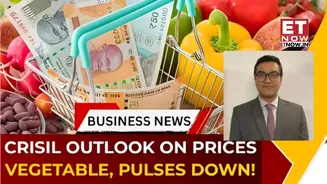


(Interview by Ashesha Adhvaryu) Pushan Sharma, Manufacturing Director at CRISIL Limited, has shared his views on CRISIL's latest Thali Index of November,
which shows a 13 per cent drop in vegetarian and non-veg meal costs, driven by falling vegetable and pulse prices. In an interview with ET Now, Pushan Sharma breaks down the reasons behind the decline, how long the relief may last, and what to expect as rabi harvest patterns shift. Pushan Sharma stated that the biggest reason for this decline is the three main head, which is tomato, onion, and potato. He said, "Tomato, onion, and potato – the three big drivers – have seen structural declines. Onion prices alone are down 53 per cent year-on-year and are currently hovering around Rs 25-26 per kg instead of the usual Rs 60-100 seen during the October-November lean period." He added that prices typically would breach about Rs 50-60, sometimes even going to Rs 100 per kg level. But this year, the onion prices are to the tune of around Rs 25-26 a kg. He said, "One of the reasons is the rabi harvest, which came in around March this year, was pretty high and the stored produce is abundant. The second, and very critical, reason is that a lot of the onions we produce are exported. Last year, we imposed duties on onion exports, and they were banned." "We've lost some of our traditional partners like Bangladesh, and we're seeing very low supply going to that market, creating an excess supply in the Indian market, which is one of the reasons putting pressure on onion prices," Pushan said. "Other than that, potato and tomato prices are also on the lower side. In addition, we're seeing a lot of pulse imports coming in. Canada and Australia have seen a bumper production for the pulse category, and despite a 30 per cent import duty on yellow peas, imports are still cheaper than domestic prices," he added. He mentioned that imports of red gram and black gram will remain unrestricted until March 2026, which is also driving down food costs. The rabi harvest, which contributes 60-65 per cent of India's onion production, is expected to be lower due to the negative price queue. "In the near term, over the next couple of months, one could say that the food inflation print and the thali costs will be subdued," Sharma said. "However, when the harvest starts happening from March onwards, prices could be higher due to lower supply and a lower base," he added. Sharma also discussed the possibility of government intervention, saying that it is possible but unlikely. "Pulse is a category where we're seeing significant imports. There have been duties put in place for yellow peas, but imports are still cheaper than domestic prices. Unless the government increases the duty, prices will remain rangebound and moderate in the near future," Sharma said. When asked if the benefit of falling prices is translating into real reduction in prices for consumers, Sharma said that it is happening for consumers preparing meals at home, but restaurants may see an improvement in margins. However, he expressed concern about the impact on farmers, saying that 50 per cent of India's population engaged in agriculture is feeling the heat from lower food inflation numbers, and their ability to spend is getting reduced.