





What is the story about?

Oil prices slipped on Tuesday, April 14, as hopes of more peace talks between the US and Iran eased concerns about further disruptions to energy supplies.
Global oil prices fall
The price of global benchmark Brent crude fell by about 1 per cent to $98.40 (£72.85) a barrel, while US-traded oil dropped by 1.7 per cent to $97.40.
U.S. West Texas Intermediate was at $97.76 a barrel, down $1.32, or 1.3 per cent by 2205 GMT, following a 1.5 per cent gain in the previous session.
Rs 18 per litre loss on petrol, Rs 35 on diesel: Sources
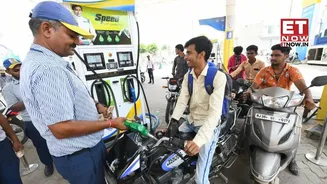
Sources, meanwhile, said the losses on petrol have widened to Rs 18 per litre while in diesel to Rs 35 as state-owned fuel retailers continue to keep pump prices frozen despite a sharp rise in input costs.
State-owned Indian Oil Corporation (IOC), Bharat Petroleum Corporation Ltd (BPCL) and Hindustan Petroleum Corporation Ltd (HPCL) have not changed the retail petrol and diesel price since April 2022, even as prices were deregulated more than a decade back, reported news agency PTI.
Global crude oil prices have witnessed steep fluctuations over this period - from above USD 100 per barrel after the Russia-Ukraine war, to easing to around USD 70 a barrel earlier this year, before surging again to about USD 120 last month after the US-Israel attacks on Iran triggered fresh supply concerns.
IOC, BPCL and HPCL incur Rs 2,400 crore per day
Industry sources further indicate that daily losses for the three major firms - IOC, BPCL, and HPCL - peaked last month at approximately Rs 2,400 crore. These losses have since come down to about Rs 1,600 crore per day following the government's decision to cut excise duty on petrol and diesel by Rs 10 per litre each. Rather than passing the price cut on to consumers, the companies retained the difference to help recover their substantial deficits.
In March, the losses wiped away all gains they made in January/February, the sources said, adding the three firms are most likely to post losses in the January-March quarter.
In a report on 'India Fuel Retail', global brokerage Macquarie Group said, "At spot petrol-diesel pricing of USD 135-165 per barrel, we estimate India's oil marketing companies lose Rs 18 and Rs 35 per litre on petrol and diesel sales (respectively)."
The report further stated that every USD 10 per barrel increase in crude adds roughly Rs 6 per litre to marketing losses.
Fuel prices may rise after the West Bengal and Tamil Nadu elections
The brokerage, in the report, also flagged a concern that there is a high likelihood of an increase in retail fuel prices after elections in key states like West Bengal and Tamil Nadu at the end of April. "We see risk of higher pump prices post state elections in April,” the brokerage noted in the report.
India remains highly vulnerable to global oil price swings
Importing roughly 88 per cent of its crude oil requirement in 2025, India remains highly vulnerable to global price volatility. Around 45 per cent of imports came from the Middle East, 35 per cent from Russia and 6 per cent from the United States. Despite the heavy reliance on imports, India maintains its status as a net exporter of refined petroleum products like diesel, gasoline, and aviation turbine fuel.
Although the government cut excise duty on fuels by Rs 10 per litre in March, central government levies have continued to trend downward. Currently, these levies stand at Rs 11.9 per litre for petrol and Rs 7.8 per litre for diesel.
The report highlights that even if excise duties were completely removed, it would not be enough to neutralise the losses faced by Oil Marketing Companies (OMCs) at current market rates.
In contrast to central levies, state-level VAT rates have shown little movement and remain largely unchanged.
The fiscal implications of additional tax cuts could be severe. With FY26 consumption projected at 170 billion litres, a full excise rollback could lead to an annual revenue loss of around $36 billion, potentially expanding the fiscal deficit by an estimated 80 basis points, the report said.
The contribution of fuel excise duties to government revenue has already declined to about 8 per cent in FY26 from 22 per cent in FY17, and now accounts for less than a fifth of the fiscal deficit, down from a peak of 45 per cent.
Higher crude prices also pose a risk to India's external balances. The current account deficit, which was near balance in mid-2025, is expected to widen to around USD 20 billion in the first quarter of 2026. A sustained USD 10 per barrel rise in crude could expand the deficit by roughly 30 basis points of GDP, assuming no policy response, the Macquarie report said.
Earnings visibility for OMCs remains uncertain, with every USD 1 per barrel change in crude prices impacting EBITDA by about 5 per cent. The sector's break-even crude price is estimated at USD 80-85 per barrel.
In light of these pressures, Macquarie Group said it prefers utilities over oil marketing companies in the near term.