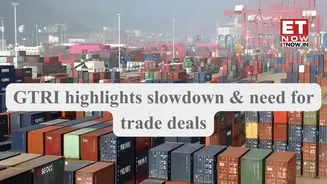







GTRI report 2025: India may fall significantly short of its $1 trillion export target for fiscal year 2026, as global challenges, weak demand, and rising
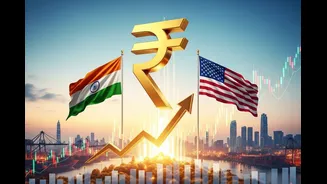
protectionism are impacting merchandise shipments, according to the Global Trade Research Initiative (GTRI). "We are almost there. Last year's exports of goods and services were about USD 825 billion," Shrivastava said in an exclusive interview with ANI. "This year, because there will be flat growth, almost no growth in goods exports, and growth in services exports, our total exports in FY26 will be around USD 850 billion. We will be short by USD 150 billion in reaching the target of USD 1 trillion." He said the target could be achieved only after India concludes major trade agreements. "That I think we may achieve once our trade deal with the US and EU comes. That is maybe next year, not this year," he added. The GTRI founder said recent trade data nevertheless points to early signs of diversification in India's export markets. "We have seen that between May and November, our exports to the US are down by 20.7 per cent," he said. "But during this time, our exports to the rest of the world increased by 5.5 per cent. That means diversification already started happening in a small way." However, he cautioned that market diversification alone would not be sufficient without changes in what India exports. "For more diversification, for more exports to these countries, we have to focus on diversifying our export basket also," Shrivastava said. "Right now, our export basket needs inclusion of more medium- to high-tech products." Shrivastava also offered a cautious assessment of multilateral groupings and global financial shifts. On BRICS, he said, "The BRICS is not an entity like Europe or ASEAN. It's a loose compilation of countries, and its agenda is largely driven by China." India, he added, "subscribes to a limited agenda, not all the agenda of the BRICS." On currency movements, Shrivastava said pressure on the rupee is influenced largely by global factors. "A large part of the depreciation, the ownership, rests with how the US tweaks its interest rates," he said, adding that stronger exports would help reduce pressure on the currency. He also called for a sharper push by India at the World Trade Organization. "Almost nothing has happened in the past 25 years in the WTO except a trade facilitation agreement," Shrivastava said, arguing that the body has drifted away from its core mandate. India should tell the WTO members to focus more on the trade agenda, which is the core part of the WTO." India, he said, should also protect its agricultural interests and build coalitions with countries that have similar interests. "India should initiate coalition-building efforts with like-minded countries like South Africa or Brazil to push for the core trade agenda," he said. Despite headwinds on the export front, Shrivastava said domestic fundamentals remain supportive of growth. "The domestic economy is working fine," he said. "The GDP numbers are telling; low inflation numbers are telling. The only pressure on the GDP will be the pressure on the export side." With agency inputs