
Speaking on the issue, NK Santoshi, Director General (Central Statistics), on December 23, Tuesday, said India’s current GDP estimates do not use double deflation, but the methodology will be incorporated in the upcoming series.
Ministry of Statistics and Programme Implementation (MoSPI) Secretary Saurabh Garg also said, “In the new series there will be a double deflation, no single
deflation in any.”
Double deflation is a statistical method used to calculate real value added by separately adjusting both output and intermediate inputs for price changes, rather than deflating gross output alone. Under this approach, the value of production and the cost of inputs are deflated using relevant price indices, and real value added is derived as the difference between the two, allowing a more accurate measurement of volume growth.
The method is considered particularly important in sectors where input costs and output prices move at different rates, such as manufacturing and services with complex supply chains. By capturing these divergent price movements, double deflation reduces distortions associated with single deflation methods and provides a more reliable picture of sector-wise and overall economic growth, especially in an economy undergoing structural change.
Santoshi explained that the changes are part of a broader effort to strengthen the credibility and robustness of official economic data. He said the government has been engaging extensively with the IMF, the World Bank and other stakeholders, holding several rounds of discussions on GDP and inflation data methodologies.
Five specific panels have been constituted to suggest the best possible approaches for base year revision, with the panels conducting 36 meetings so far.
Responding to IMF concerns on statistical discrepancies, Santoshi said the economic structure has undergone major changes over the years, with the emergence of new industries and products, rapid digitisation, and the introduction of GST, a new toll tax system and other policy measures.
He said these developments have altered data flows and measurement processes.
He also pointed to changes in consumer behaviour, including a decline in food consumption, and noted that nearly half of India’s economy remains in the informal sector, where data collection continues to be a challenge.
“What best we can do, we are trying to do,” he said, adding that new elements cannot be introduced in the middle of an existing statistical series.
Garg said, “Real time data available through GST, PFMS, this will help in better triangulation,” adding, “Will have capacity building workshops with states for better estimation of GST data.”
Addressing debates on whether India’s GDP is under- or over-estimated, Santoshi said official estimates are compiled using data from reliable sources.
On inflation data, Santoshi said surveys have been conducted across over 2,000 markets for the new Consumer Price Index (CPI) series, which will be based on the Household Consumption Expenditure Survey (HCES) 2023–24. Several new parameters have been added, and more granular data will be released.
He said the revised CPI series will be fully aligned with global standards following extensive consultations with the IMF and World Bank, and the changes will be reflected in the February 12 data release.
The government is also examining a move towards seasonally adjusted Index of Industrial Production (IIP) data, Santoshi said.
Garg said, “We are increasing the coverage of rural and urban markets in CPI series,” and added, “One area of concern was housing inflation index but some corrections are being done for both urban and rural data.”
Meanwhile, Chief Economic Adviser V Anantha Nageswaran said, “India GDP numbers are not overestimated,” adding, “We seem to be particularly fond of questioning our own estimates. We generally don’t hear too many murmurs when GDP data disappoints on the downside. It’s only when the GDP numbers surprise on the upside the murmurs start.”
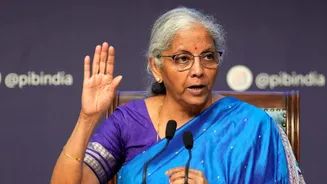
Earlier, on December 4, Finance Minister Nirmala Sitharaman said the IMF had appreciated India’s healthy economic performance and had not questioned the country’s growth figures.
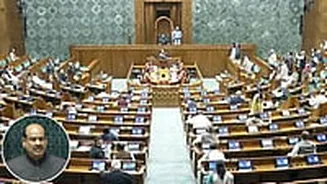
She told the Lok Sabha that while the IMF flagged the use of an outdated base year and assigned a ‘C’ grade to India’s national accounts, including GDP and Gross Value Added (GVA), the assessment was linked to methodological issues rather than the growth outcomes. Sitharaman said India will shift to a new base year of 2022–23 for national accounts from February 27, 2026.