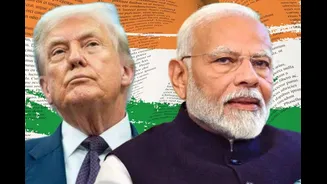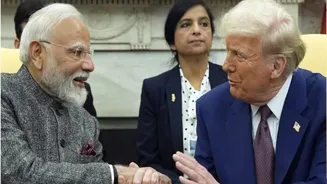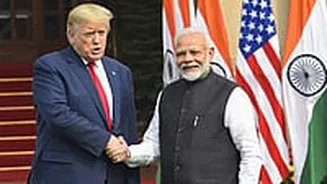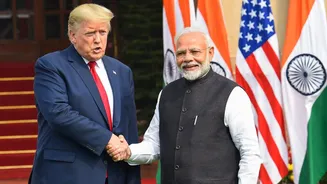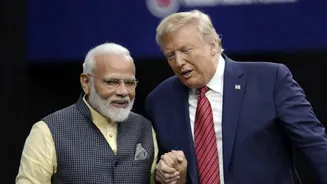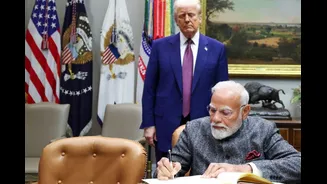

US President Donald Trump said India would stop buying Russian oil and instead “buy much more from the United States and, potentially, Venezuela.” Prime Minister Narendra Modi acknowledged the agreement in a post on X soon after, welcoming the tariff relief.
However, the Modi government has so far refrained from publicly affirming any formal commitment to end Russian oil purchases. No official directive has been issued to refiners or importers outlining a shift in crude sourcing, even as the tariff concessions are being celebrated.
Even if New Delhi eventually moves to “shut the tap” on Russian crude, a transition period will be required to honour cargoes already contracted. Two refining sources told Reuters that existing deals cannot be unwound at short notice, with Indian companies having already booked shipments scheduled to load in February and arrive in March.
In an exclusive interaction with CNBC-TV18, former foreign secretary Kanwal Sibal underscored this ambiguity, saying, “India will not stop buying Russian oil completely. Russian oil on spot market by non-sanctioned companies can still be bought.”
India’s oil import profile
India is the world’s third-largest crude oil importer and consumer. Crude imports rose 1.6% month-on-month in December to 21.59 million tonnes — their highest level since March — according to government data released on January 27.
Since Western sanctions followed Russia’s 2022 invasion of Ukraine, Moscow has emerged as India’s largest crude supplier. While Russian purchases have been declining as a share of the overall import mix, they continue to account for more than a third of India’s crude intake.
Russia remained India’s single largest supplier in 2025, exporting around 1.6 million barrels per day and accounting for roughly 34% of total imports, according to preliminary shipping and trade data from Kpler cited by industry sources and reported by The Economic Times.
Trade data also showed India’s Russian oil imports fell to a two-year low in December, while OPEC’s share of India’s imports climbed to an 11-month high.
By contrast, US crude accounted for a far smaller share of India’s imports in 2025 — about 318,000 barrels per day — while India has not received Venezuelan crude since May 2025, following earlier, limited purchases.
India has, however, significantly broadened its crude sourcing in the current fiscal year. The Economic Survey 2025-26 noted a marked increase in the number and diversity of supplier countries.
Between April and November, crude imports rose from Libya, Egypt, Brazil, the United States and Brunei compared with a year earlier, while shipments from Russia, Saudi Arabia, Iraq and Venezuela declined. The survey said the share of US crude rose to 8.1% from 4.6%, while the UAE’s share increased to 11.1% from 9.4%, alongside gains for Egypt, Nigeria and Libya.
Feasibility of a shift to US and Venezuelan oil
Analysts say that while India could legally import more crude from the US and Venezuela, market realities remain a constraint. US crude faces freight and logistical disadvantages due to long shipping distances, making it competitive only when prices are low enough to offset transport costs.
Venezuelan crude, which is heavier and higher in sulphur than grades typically processed by Indian refiners, is produced in limited volumes and has historically been attractive only when sold at steep discounts.
In an exclusive interaction with CNBC-TV18 just ahead of the trade deal announcement, Petroleum and Natural Gas Minister Hardeep Singh Puri said, “India has been buying oil from Venezuela for a long time, with our officials stationed there through ONGC.” He said that Prime Minister Modi had held a telephonic conversation with Venezuela’s president following the participation of a Venezuelan delegation at India Energy Week.
Puri also highlighted India’s operational readiness, saying: “Two to three Indian refineries are specifically configured to process heavy Venezuelan crude, and both PSU OMCs as well as private refiners have a history of purchasing oil from Venezuela.” He cautioned, however, that
What’s at stake
The agreement reflects Washington’s broader effort to curb Russian oil revenues that help fund the war in Ukraine, while expanding US energy exports. For India, which imports roughly 85-90% of its crude requirements, energy security and cost considerations are likely to remain decisive.
Any forced pivot away from discounted Russian barrels could raise India’s import bill by billions of dollars annually and put upward pressure on domestic fuel prices.
In a recent note, Moody’s has warned that a complete shift away from Russian crude could tighten supplies elsewhere, lift global oil prices and feed into higher inflation.
The ratings agency also noted that India is unlikely to halt all Russian oil purchases immediately, cautioning that an abrupt move could prove disruptive to economic growth.