








What is the story about?
India has more than halved its fiscal deficit from pandemic-era highs over the past five years, underscoring a sustained return to fiscal discipline, the
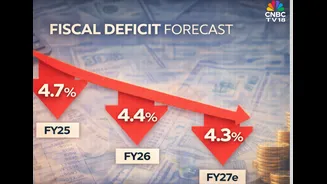
Economic Survey 2025–26 said on Thursday, January 29. The Survey noted that the Union government remains on course to bring the deficit down from 9.2% of GDP in FY21 to a targeted 4.4% in FY26.
The Centre reduced the fiscal deficit to 4.8% of GDP in FY25, marginally better than the budgeted 4.9%, and has set a further consolidation target of 4.4% for FY26. This marks a steady improvement from the elevated deficit levels seen during the peak of the pandemic.
As of November 2025, the Centre had utilised 62.3% of its budgeted fiscal deficit and 68.2% of the revenue deficit, indicating that it is well placed to achieve the FY26 target without slippage, the Survey said.
Credible consolidation supports growth
The Economic Survey highlighted that a predictable and credible fiscal trajectory over recent years has helped anchor macroeconomic stability, even as the government balanced consolidation with the need to sustain growth through higher capital expenditure.
It noted that the fiscal deficit has steadily declined from 9.2% of GDP in FY21 to 4.8% in FY25, while the revenue deficit has narrowed to its lowest level since FY09. This has freed up a larger share of resources for capital spending and signalled an improvement in the quality of government expenditure.
Follow live: Economic Survey 2026 Live Updates: 10-20% chance of 2008-like global crisis in 2026, warns CEA Nageswaran
The Survey also pointed to a sharp decline in the primary deficit-to-GDP ratio, suggesting that fresh borrowings are increasingly being used to service past interest obligations rather than fund current consumption.
Debt anchor over rigid deficit targets
On the fiscal framework, the Survey cautioned against a premature return to a rigid Fiscal Responsibility and Budget Management (FRBM) target of a 3% fiscal deficit, arguing that such a goal has historically been difficult to sustain. Since the FRBM Act was enacted in 2003, India has met the 3% target only once, which undermined fiscal credibility in the past.
Instead, the Survey underscored the importance of the government’s new debt anchor, which targets a debt-to-GDP ratio of 50±1% by March 31, 2031, offering both credibility and policy flexibility in a volatile global environment.
State finances remain a watchpoint
While the Centre’s fiscal position has strengthened, the Survey flagged emerging pressures in state finances. The combined fiscal deficit of states has edged up to 3.2% of GDP in recent years, with rising revenue deficits and unconditional cash transfers potentially crowding out growth-enhancing expenditure and influencing investor perceptions of India’s overall fiscal health.
The Survey added that sustained fiscal discipline has helped restore investor confidence, contributing to sovereign rating upgrades by multiple credit rating agencies in FY26, even as the government maintained a strong focus on capital expenditure.
Read more: Eco Survey 2026: Govt may consider amending definition of 'government company' for further disinvestment
The Centre reduced the fiscal deficit to 4.8% of GDP in FY25, marginally better than the budgeted 4.9%, and has set a further consolidation target of 4.4% for FY26. This marks a steady improvement from the elevated deficit levels seen during the peak of the pandemic.
As of November 2025, the Centre had utilised 62.3% of its budgeted fiscal deficit and 68.2% of the revenue deficit, indicating that it is well placed to achieve the FY26 target without slippage, the Survey said.
Credible consolidation supports growth
The Economic Survey highlighted that a predictable and credible fiscal trajectory over recent years has helped anchor macroeconomic stability, even as the government balanced consolidation with the need to sustain growth through higher capital expenditure.
It noted that the fiscal deficit has steadily declined from 9.2% of GDP in FY21 to 4.8% in FY25, while the revenue deficit has narrowed to its lowest level since FY09. This has freed up a larger share of resources for capital spending and signalled an improvement in the quality of government expenditure.
Follow live: Economic Survey 2026 Live Updates: 10-20% chance of 2008-like global crisis in 2026, warns CEA Nageswaran
The Survey also pointed to a sharp decline in the primary deficit-to-GDP ratio, suggesting that fresh borrowings are increasingly being used to service past interest obligations rather than fund current consumption.
Debt anchor over rigid deficit targets
On the fiscal framework, the Survey cautioned against a premature return to a rigid Fiscal Responsibility and Budget Management (FRBM) target of a 3% fiscal deficit, arguing that such a goal has historically been difficult to sustain. Since the FRBM Act was enacted in 2003, India has met the 3% target only once, which undermined fiscal credibility in the past.
Instead, the Survey underscored the importance of the government’s new debt anchor, which targets a debt-to-GDP ratio of 50±1% by March 31, 2031, offering both credibility and policy flexibility in a volatile global environment.
State finances remain a watchpoint
While the Centre’s fiscal position has strengthened, the Survey flagged emerging pressures in state finances. The combined fiscal deficit of states has edged up to 3.2% of GDP in recent years, with rising revenue deficits and unconditional cash transfers potentially crowding out growth-enhancing expenditure and influencing investor perceptions of India’s overall fiscal health.
The Survey added that sustained fiscal discipline has helped restore investor confidence, contributing to sovereign rating upgrades by multiple credit rating agencies in FY26, even as the government maintained a strong focus on capital expenditure.
Read more: Eco Survey 2026: Govt may consider amending definition of 'government company' for further disinvestment