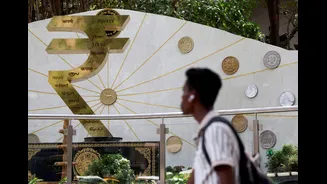

Arora said the rupee underperformed its peers due to weak domestic demand, tariff-related concerns and foreign exchange reserve accumulation by the central bank last year. He noted that strong intervention by the Reserve Bank of India (RBI) prevented a sharper fall.
“We think rupee has missed that window of broad dollar decline,” Arora said, adding that UBS expects the dollar to recover gradually from the current quarter. On this basis, UBS has pegged the dollar-rupee rate at 94 for the coming year.
Arora said a potential trade deal could support the rupee in the near term but is unlikely to change the broader trend. “That kind of support could be temporary,” he said.
Also Read | Weak rupee may push up edible oil and pulse prices in 2026, says Rassense CEO
He added that macro factors such as a deterioration in the current account balance, limited foreign direct investment flows and weak capital inflows are weighing on the currency. According to Arora, capital flows are running at their lowest levels in over a decade, making them a key driver of rupee movement.
If a trade deal materialises unexpectedly, Arora said the rupee could rebound to the 88–89 range, but gains beyond that may be limited. He pointed to large FX forward maturities and the central bank’s management of the currency as factors that could cap appreciation.
“The historical trend of higher highs and higher lows is likely to stay intact,” he said, referring to the dollar-rupee trajectory since 2019.
Arora also noted that the RBI has indicated that a 3–4% annual depreciation is not a concern, especially at a time when inflation remains low, and growth recovery is still uneven.
Arora said the rupee is being used as a shock absorber, particularly if tariff pressures persist. He noted that low inflation gives policymakers room to allow currency flexibility without significant spillover into equity markets.
Also Read | India to grow above 7%, rate cut room limited but rupee outlook improves: Citi India
Something has fallen doesn’t mean it’s cheap, he said, adding that on an inflation-adjusted basis, the rupee remains relatively elevated compared with the Chinese renminbi.
Looking ahead to 2026, Arora said the rupee may not see the same degree of underperformance as in 2025 but could still lag some peers. UBS is most positive on the Chinese renminbi, citing external balances and support from Chinese equities.
For the rupee, Arora said 94 remains the baseline, with the best-case scenario being a move towards the high-80s if growth improves and a trade deal is reached, while a weaker outcome could push the currency beyond 95 if global and trade risks intensify.
For the full interview, watch the accompanying video
Catch all the latest updates from the stock market here