







What is the story about?
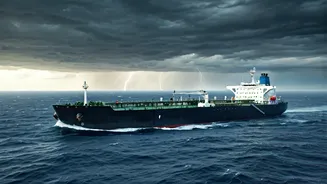
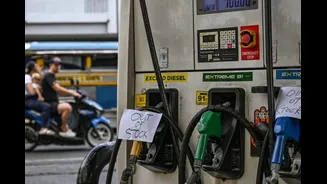
Global oil prices surged past $110 per barrel mark on Monday, March 9, as trading resumed after the weekend holiday as the US-Iran war and the subsequent collapse of passage of oil tankers through the Strait of Hormuz has led to Gulf countries cutting down production.
Brent Crude futures are trading 22% higher near the $115 per barrel mark, while the US Crude or West Texas Intermediate is trading 27% higher at $115.2 per barrel as well.
US Crude futures had surged 35% last week to register their biggest single-day gain since trading began on this contracts back in 1983. Brent prices had also surged 28% in the week gone by, the most since April 2020.
Kuwait, the fifth largest producer in the Organization of Petroleum Exporting Countries (OPEC+) cartel had announced production cuts on Saturday as a precautionary measure due to "Iranian threats against the passage of ships through the Strait of Hormuz". The size of the cuts though, were not detailed by the state-run producer Kuwait Petroleum, who has declared a Force Majeure to its clients.
Iraq, the second-biggest producer in OPEC has declined by 70% from its three major southern oilfields to 1.3 million barrels per day, Reuters reported quoting industry officials. The production count from these fields before the war breaking out, stood at 4.3 million barrels per day.
The United Arab Emirates (UAE), the third-biggest OPEC producer also said on Saturday that it is "carefully managing offshore production levels to address storage requirements," while the Abu Dhabi National Oil Company (ADNOC) said that onshore operations are continuing normally.
After a brief fall on Friday morning, oil prices began to surge towards the end of the day, as Qatar's Energy Minister, Saad al-Kaabi, in an interview to the Financial Times, warned that the continuation of the war in Iran could force Gulf countries to stop production and lead to oil prices surge to $150 a barrel.
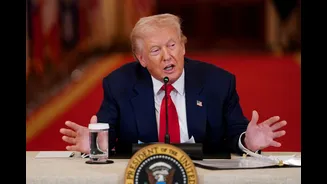
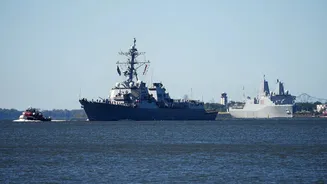
While there have been comments regarding the Trump Administration taking steps to ensure the safe passage of energy through the Strait of Hormuz, no concrete steps have been announced yet. US Energy Secretary Chris Wright told CNN in an interview that "we're not too long away before you see regular resumption of ship traffic through the straight."
"We’re nowhere near normal traffic right now. That will take some time. But again, worst case that’s a few weeks, that’s not months," he added.
Brent Crude futures are trading 22% higher near the $115 per barrel mark, while the US Crude or West Texas Intermediate is trading 27% higher at $115.2 per barrel as well.
US Crude futures had surged 35% last week to register their biggest single-day gain since trading began on this contracts back in 1983. Brent prices had also surged 28% in the week gone by, the most since April 2020.
Kuwait, the fifth largest producer in the Organization of Petroleum Exporting Countries (OPEC+) cartel had announced production cuts on Saturday as a precautionary measure due to "Iranian threats against the passage of ships through the Strait of Hormuz". The size of the cuts though, were not detailed by the state-run producer Kuwait Petroleum, who has declared a Force Majeure to its clients.
Iraq, the second-biggest producer in OPEC has declined by 70% from its three major southern oilfields to 1.3 million barrels per day, Reuters reported quoting industry officials. The production count from these fields before the war breaking out, stood at 4.3 million barrels per day.
The United Arab Emirates (UAE), the third-biggest OPEC producer also said on Saturday that it is "carefully managing offshore production levels to address storage requirements," while the Abu Dhabi National Oil Company (ADNOC) said that onshore operations are continuing normally.
After a brief fall on Friday morning, oil prices began to surge towards the end of the day, as Qatar's Energy Minister, Saad al-Kaabi, in an interview to the Financial Times, warned that the continuation of the war in Iran could force Gulf countries to stop production and lead to oil prices surge to $150 a barrel.
While there have been comments regarding the Trump Administration taking steps to ensure the safe passage of energy through the Strait of Hormuz, no concrete steps have been announced yet. US Energy Secretary Chris Wright told CNN in an interview that "we're not too long away before you see regular resumption of ship traffic through the straight."
"We’re nowhere near normal traffic right now. That will take some time. But again, worst case that’s a few weeks, that’s not months," he added.