







What is the story about?
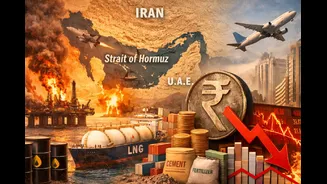
The ongoing war between the US, Israel and Iran in West Asia has resulted in India's tyre companies see a significant increase in their input costs, brokerage firm CLSA wrote in a note on Friday, March 6, consequently warning of a risk to the profitability of these companies, as a result of this cost increase.
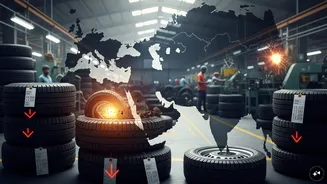
The war has resulted in a spike in the prices of key raw materials for tyre companies in India by 15% to 20%, CLSA's note stated.
Oil prices have surged rapidly since the onset of the war and are now on track for their biggest weekly surge since 2022.
CLSA noted that about 45% of the tyre industry’s raw-material basket is linked to crude oil, while another 45% is tied to natural rubber prices.
In addition to this, the depreciation of the Indian rupee, which stands at 91.62 against the US dollar as of Friday morning, is making imports of natural and synthetic rubber more expensive.
CLSA estimates that if Brent crude remains around $80 per barrel and domestic natural rubber prices stay near ₹220 per kg for the next three to six months, Indian tyre makers could face a 400 basis point hit to their projected gross margins for financial year 2027.
Also read: Iran Israel War News Live Updates
This estimate also factors in a staggered 4% price increase in the replacement market and full pass-through of costs to OEMs, according to CLSA, who also cautioned that the resultant margin compression could affect free cash flow generation and capital structure, particularly as tyre companies are either entering new capex cycles in FY27 or focusing on deleveraging after recent acquisitions.
As a result, the valuation multiples of these companies could be impacted, CLSA warned.
Shares of CEAT are trading 1.8% higher on Friday at ₹3,473, while those of MRF are trading 1.1% lower at ₹1,38,625.
The war has resulted in a spike in the prices of key raw materials for tyre companies in India by 15% to 20%, CLSA's note stated.
Oil prices have surged rapidly since the onset of the war and are now on track for their biggest weekly surge since 2022.
CLSA noted that about 45% of the tyre industry’s raw-material basket is linked to crude oil, while another 45% is tied to natural rubber prices.
In addition to this, the depreciation of the Indian rupee, which stands at 91.62 against the US dollar as of Friday morning, is making imports of natural and synthetic rubber more expensive.
CLSA estimates that if Brent crude remains around $80 per barrel and domestic natural rubber prices stay near ₹220 per kg for the next three to six months, Indian tyre makers could face a 400 basis point hit to their projected gross margins for financial year 2027.
Also read: Iran Israel War News Live Updates
This estimate also factors in a staggered 4% price increase in the replacement market and full pass-through of costs to OEMs, according to CLSA, who also cautioned that the resultant margin compression could affect free cash flow generation and capital structure, particularly as tyre companies are either entering new capex cycles in FY27 or focusing on deleveraging after recent acquisitions.
As a result, the valuation multiples of these companies could be impacted, CLSA warned.
Shares of CEAT are trading 1.8% higher on Friday at ₹3,473, while those of MRF are trading 1.1% lower at ₹1,38,625.