








What is the story about?
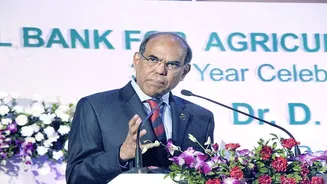
The current weakness in the Indian rupee is fundamentally different from past currency crises and is being driven by capital outflows rather than macroeconomic imbalances, former Reserve Bank of India Governor Duvvuri Subbarao said, underscoring the need for policy clarity—especially on taxation—to restore foreign investor confidence.
Speaking in an interview with CNBC-TV18 's Latha Venkatesh, Subbarao said India’s external position remains relatively strong, with the current account deficit at around 1%, far below stress levels seen during episodes such as the 2013 taper tantrum. “This time, the pressure is not coming from the current account. It is coming from the capital account,” he said.
Historically, sharp rupee depreciations were triggered by widening current account deficits that made India vulnerable to sudden reversals in global capital flows. In contrast, Subbarao said the present episode reflects sustained foreign investment outflows, even as headline macro indicators remain stable.
He attributed foreign portfolio investor (FPI) exits to a combination of high domestic equity valuations, rising participation by Indian retail investors crowding out foreign capital, and global reallocations towards markets linked to the artificial intelligence boom. “Investors are not leaving because they are afraid of India. They are leaving because there are attractive opportunities elsewhere,” he said.
Subbarao expressed deeper concern about trends in foreign direct investment, noting that while gross inflows have not collapsed, net FDI has weakened as overseas investors take advantage of favourable valuations to exit. “If India is truly the growth story of tomorrow, we should be asking why foreign investors are pulling money out and why domestic private investment is still not picking up,” he said.
While the RBI has the tools to manage rupee volatility, Subbarao cautioned against viewing currency defence in isolation. “I would worry less about the rupee moving down and more about the signals we are getting from capital flows,” he said.
On steps to revive foreign investor confidence, Subbarao said India does not need aggressive tax cuts but must improve predictability in its tax regime. He argued that uncertainty around tax interpretation and compliance, rather than tax rates themselves, is a key deterrent for foreign investors.
“Foreign investors want clarity on post-tax returns,” he said. “It’s not the rate that bothers them as much as the lack of stability and the compliance burden.” He suggested that the government lay out a clear medium-term tax roadmap, supported by detailed guidance and an empowered authority to respond to investor queries with certainty.
India taxes capital flows primarily to curb volatile short-term money and protect financial stability, Subbarao said, but added that greater transparency and consistency in tax administration would help attract long-term foreign capital without undermining macroeconomic safeguards.
Speaking in an interview with CNBC-TV18 's Latha Venkatesh, Subbarao said India’s external position remains relatively strong, with the current account deficit at around 1%, far below stress levels seen during episodes such as the 2013 taper tantrum. “This time, the pressure is not coming from the current account. It is coming from the capital account,” he said.
Historically, sharp rupee depreciations were triggered by widening current account deficits that made India vulnerable to sudden reversals in global capital flows. In contrast, Subbarao said the present episode reflects sustained foreign investment outflows, even as headline macro indicators remain stable.
He attributed foreign portfolio investor (FPI) exits to a combination of high domestic equity valuations, rising participation by Indian retail investors crowding out foreign capital, and global reallocations towards markets linked to the artificial intelligence boom. “Investors are not leaving because they are afraid of India. They are leaving because there are attractive opportunities elsewhere,” he said.
Subbarao expressed deeper concern about trends in foreign direct investment, noting that while gross inflows have not collapsed, net FDI has weakened as overseas investors take advantage of favourable valuations to exit. “If India is truly the growth story of tomorrow, we should be asking why foreign investors are pulling money out and why domestic private investment is still not picking up,” he said.
While the RBI has the tools to manage rupee volatility, Subbarao cautioned against viewing currency defence in isolation. “I would worry less about the rupee moving down and more about the signals we are getting from capital flows,” he said.
On steps to revive foreign investor confidence, Subbarao said India does not need aggressive tax cuts but must improve predictability in its tax regime. He argued that uncertainty around tax interpretation and compliance, rather than tax rates themselves, is a key deterrent for foreign investors.
“Foreign investors want clarity on post-tax returns,” he said. “It’s not the rate that bothers them as much as the lack of stability and the compliance burden.” He suggested that the government lay out a clear medium-term tax roadmap, supported by detailed guidance and an empowered authority to respond to investor queries with certainty.
India taxes capital flows primarily to curb volatile short-term money and protect financial stability, Subbarao said, but added that greater transparency and consistency in tax administration would help attract long-term foreign capital without undermining macroeconomic safeguards.