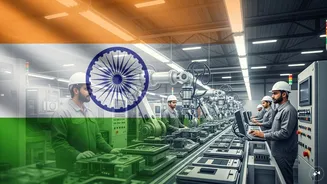

India’s manufacturing activity scaled a record high in the third quarter of FY26, reflecting sustained growth and improving sentiment across sectors, according
to the latest Quarterly Survey on Manufacturing released by industry body FICCI.
For Q3 FY26, about 91% of respondents reported higher or unchanged production levels, up from 87% in the previous quarter. Demand sentiment also strengthened, with 86% of firms expecting higher or stable domestic orders during the quarter, aided by recent GST rate cuts.
The 68th edition of FICCI’s survey assessed manufacturing performance during October–December 2025-26 across eight major sectors, including auto components, capital goods, chemicals, pharmaceuticals, electronics, machine tools, metals and textiles. Responses were drawn from both large companies and small and medium enterprises, with a combined annual turnover exceeding ₹3 lakh crore.
Capacity utilisation and investment
Average capacity utilisation across the manufacturing sector remained close to 75%, signalling sustained economic activity. While the outlook for investments and capacity expansion over the next six months remained steady, respondents flagged global and geopolitical factors, operational challenges and regulatory issues as key constraints to expansion.
Exports, hiring and costs
On exports, around 69% of respondents reported higher or stable export levels in Q2 FY26, while over 70% expected exports in Q3 FY26 to be higher or unchanged compared with the corresponding period last year.
Also Read: India urges start-ups to focus more on manufacturing, continue work on deep-tech
Hiring intent also improved, with 38% of respondents indicating plans to add to their workforce over the next three months, compared with 35% in the same quarter last year. The average interest rate paid by manufacturers stood at 8.9%, while more than 87% of respondents reported adequate access to bank funding.
However, production costs remained elevated. Nearly 57% of respondents reported an increase in production costs as a percentage of sales, driven primarily by higher raw material prices, currency depreciation and increased logistics, power and utility costs.
Sectoral trends and workforce availability
Based on expectations, electronics and electricals were seen as strong growth sectors, while capital goods, chemicals, pharmaceuticals, metals, machine tools, textiles and auto components were expected to post moderate growth.
Also Read: Processed food will contribute to 30% of agri exports: AP Das Joshi
On workforce availability, around 80% of respondents said they were not facing labour shortages, although the remaining firms highlighted the continued lack of skilled labour and the need for stronger efforts at both industry and government levels.