








What is the story about?
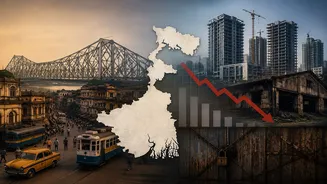
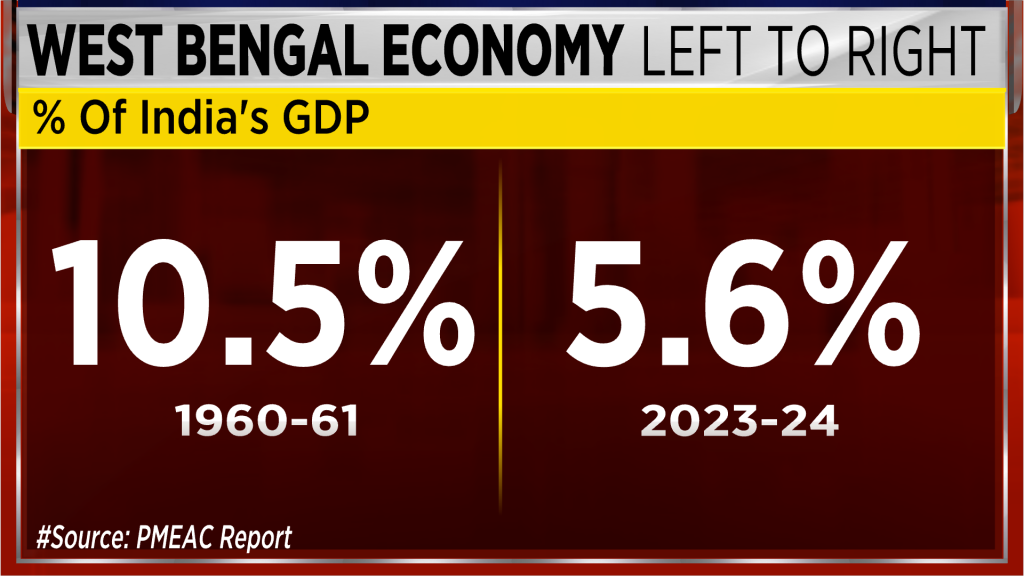
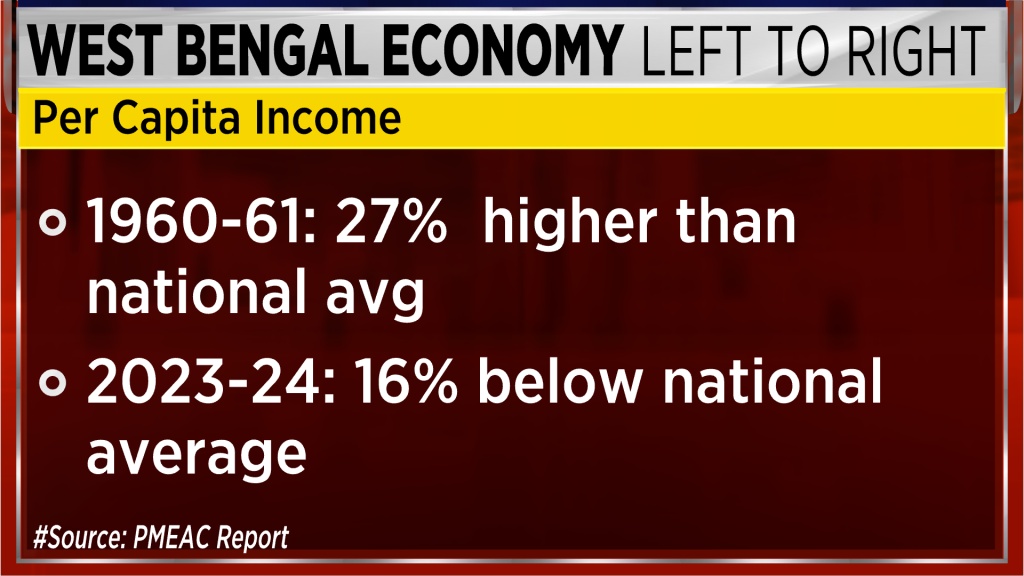
West Bengal contributed 10% of India's GDP in 1960. That share has now fallen to 5.6%, and per capita income has gone from 27% above the national average to 12% below it. Two leading economists argue the reason goes beyond the familiar left-versus-right debate. It includes land acquisition problems, entrenched corruption networks and a failure to industrialise.
Maitreesh Ghatak, Professor of Economics at the London School of Economics, said the decline appears less dramatic when adjusted for inflation, but acknowledged the broader trend is undeniable. “The decline is still there, but it’s just not as sharp,” he said.
Watch the entire discussion here
Also Read | West Bengal verdict raises industry hopes of growth, says RPSG Chairman Sanjiv Goenka
Ghatak also highlighted a paradox often ignored in political narratives around Bengal. According to him, the state actually saw improving per capita trends during a part of the Left Front era, largely because of agricultural gains. But that growth came at the wrong time.
Pointing to the missed industrial opportunity of the 1990s, he said the state “clearly missed the IT bus”, despite having strong universities, human capital and a major metro advantage.
Debajit Jha, Professor of Economics at Jindal School of Government and Public Policy, took the argument further by focusing on corruption and the investment climate. He identified two entrenched systems — the “syndicate raj” and “cut money” — as major drags on economic activity.
Explaining the impact of these informal networks, Jha described the syndicate system as “simple extortion”, where contractors and investors are forced to buy poor-quality materials at inflated prices from local groups. “Extraction always has a negative impact on investment,” he said.
The conversation repeatedly returned to one issue: land. Ghatak argued that Bengal’s industrial future cannot improve without resolving persistent land acquisition problems that have delayed infrastructure, housing and industrial projects for years.
Also Read | West Bengal election results: Four lessons from a transformative verdict
Warning against simplistic expectations from political change alone, he said, “unless somebody has a very good plan to deal with the land issue and curb the syndicate raj and the cut money business,” structural problems will continue regardless of which party is in power.
Jha agreed that governance reform is central to any recovery. According to him, restoring law and order is essential before meaningful industrialisation can happen. But he also noted the political complexity of dismantling corruption networks that sustain local employment structures in many regions.
Catch all the latest updates from the stock market here
Maitreesh Ghatak, Professor of Economics at the London School of Economics, said the decline appears less dramatic when adjusted for inflation, but acknowledged the broader trend is undeniable. “The decline is still there, but it’s just not as sharp,” he said.
Watch the entire discussion here
Also Read | West Bengal verdict raises industry hopes of growth, says RPSG Chairman Sanjiv Goenka
Ghatak also highlighted a paradox often ignored in political narratives around Bengal. According to him, the state actually saw improving per capita trends during a part of the Left Front era, largely because of agricultural gains. But that growth came at the wrong time.
Pointing to the missed industrial opportunity of the 1990s, he said the state “clearly missed the IT bus”, despite having strong universities, human capital and a major metro advantage.
Debajit Jha, Professor of Economics at Jindal School of Government and Public Policy, took the argument further by focusing on corruption and the investment climate. He identified two entrenched systems — the “syndicate raj” and “cut money” — as major drags on economic activity.
Explaining the impact of these informal networks, Jha described the syndicate system as “simple extortion”, where contractors and investors are forced to buy poor-quality materials at inflated prices from local groups. “Extraction always has a negative impact on investment,” he said.
The conversation repeatedly returned to one issue: land. Ghatak argued that Bengal’s industrial future cannot improve without resolving persistent land acquisition problems that have delayed infrastructure, housing and industrial projects for years.
Also Read | West Bengal election results: Four lessons from a transformative verdict
Warning against simplistic expectations from political change alone, he said, “unless somebody has a very good plan to deal with the land issue and curb the syndicate raj and the cut money business,” structural problems will continue regardless of which party is in power.
Jha agreed that governance reform is central to any recovery. According to him, restoring law and order is essential before meaningful industrialisation can happen. But he also noted the political complexity of dismantling corruption networks that sustain local employment structures in many regions.
Catch all the latest updates from the stock market here