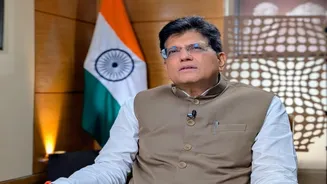

RBI Governor Sanjay Malhotra said benign inflation warrants lower real interest rates and backed a 25-bps rate cut to support demand. “Considering benign inflation, real interest rates need to be lower,” Malhotra said, voting for a 25-bps cut while supporting the neutral stance to “remain data-dependent and respond to evolving macroeconomic conditions.”
Malhotra said domestic activity remained “resilient in Q3,” though some high-frequency indicators suggest growth in the second half may decelerate compared with the first. Even so, he said real GDP growth is “poised to exceed 7%, above the initial 6.5% expectation, with healthy domestic prospects outweighing external concerns.” Growth is projected to stay strong in the first half of next year before moderating to 6.7-6.8%.
On inflation, the governor said headline inflation in the first half of FY2025-26 has been “softer than expected due to moderation in price pressures, particularly food.” Core inflation has remained rangebound, and excluding precious metals, has stayed low at 2.5-3.4% since 2024. “Low core inflation indicates minimal demand pressures,” he said, adding that favourable agricultural output, low food prices and benign global commodity prices could keep FY2025-26 headline inflation around 2%.
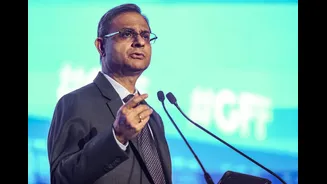
MPC member Saugata Bhattacharya said inflation data since October has come in even lower than forecasts, expanding policy space despite strong growth. He said inflation continues to undershoot projections and underlying inflation is likely to stay below target for months, with “no signs of capacity overheating” and household inflation expectations remaining well anchored.
Bhattacharya warned of a gradual growth deceleration, flagging October’s merchandise export contraction as “concerning” and noting that trade uncertainty is reflected in softer manufacturing PMI and sales indicators. At the same time, he said bank credit offtake is rising, especially to SMEs, signalling a moderate revival in private investment and activity.
“The current macro environment and forecasts suggest policy easing is appropriate to support growth,” Bhattacharya said, adding that the real policy rate is “slightly more restrictive than warranted” and the priority should be to overweight growth despite the impact on household savings. He voted to cut the repo rate to 5.25%, while backing the continuation of a neutral stance due to external uncertainty.
Deputy Governor Poonam Gupta said the global economy has held up well despite prevailing uncertainties and that “one could perhaps safely conclude global uncertainties have peaked.” She said the most crucial recent development has been “faster-than-anticipated CPI moderation,” adding that the economy is “not showing any signs of overheating,” which could also be interpreted as slack.
MPC member Dr Nagesh Kumar said India’s Q2FY26 GDP growth of 8.2% exceeded expectations despite external uncertainty, while inflation remained benign. With headline CPI falling to 0.3% in October 2025, Kumar said inflation is “too low for a developing country, suggesting a demand deficit,” and voted for a 25-bps repo rate cut to support growth while keeping the stance unchanged.
Another member, Indranil Bhattacharyya, said inflation has been sharply on the downside, falling to 0.3% in October, even as high-frequency indicators suggest the economy is holding up in Q3, though some leading indicators point to moderation ahead. He projected growth to slow to around 6.8% in the second half of FY26 and early FY27.
ALSO READ | Banks slash lending rates after RBI’s repo cut, pass relief to borrowers
Taken together, the MPC minutes underline a growing comfort with easing conditions, with policymakers signalling that while inflation risks have eased sharply, future moves will remain guided by incoming data and global developments.
ALSO READ | RBI may have spent $30 billion to shore up rupee in just four months