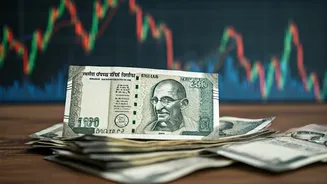









India’s foreign exchange reserves rose to a record high of ₹65.24 lakh crore ($709.41 billion) as of January 23, up from ₹63.73 lakh crore ($701.36 billion) a week
earlier, according to data released by the Reserve Bank of India on Friday, January 30.
As of January 23, foreign currency assets stood at ₹51.76 lakh crore ($562.89 billion), while gold holdings were valued at ₹11.32 lakh crore ($123.09 billion). Special drawing rights amounted to ₹1.72 lakh crore ($18.74 billion), and India’s reserve position with the IMF stood at ₹43,086 crore ($4.7 billion).
The increase of about ₹1.50 lakh crore ($8.05 billion) marks the highest level of reserves recorded so far, surpassing the previous peak of $704.89 billion set in September 2024.
The rise in reserves over the past two weeks reflects the central bank’s forex swap operations to infuse rupee liquidity into domestic markets, along with a valuation gain from higher gold prices.
Also Read: World Bank approves projects worth $776 million for improving education and farming practices in India
A higher reserve buffer strengthens the RBI’s capacity to shield the rupee from excessive volatility and speculative pressure. Notably, the rupee has underperformed its emerging market peers this year amid equity outflows and delays in a US trade agreement.
Analysts, cited by Bloomberg, said the rise in global gold prices has supported the overall reserves position, with the metal on track for its strongest monthly gain since 1982, up around 18% amid geopolitical tensions.
“The latest rise in reserves reflects a positive valuation effect from gold, but it also gives the RBI breathing space in an uncertain global environment,” Anubhuti Sahay, Head of India Economic Research at Standard Chartered Bank, told Bloomberg, adding that future reserve accumulation will depend on rupee pressures and the size of the RBI’s forward dollar book.
Also Read: India, Chile FTA talks will be closed soon; to open up critical minerals sector: Piyush Goyal