
Click here to read the full article.
“Before he was Scrooge he was Ebenezer,” claims the poster for “Ebenezer,” which seems a bit of a desperate lie. The character of Ebenezer Scrooge did, presumably, have a first and last name at all stages of his life,
both of them quite well-known to anyone even tangentially acquainted with Charles Dickens’ novella “A Christmas Carol” — of which Ti West’s handsomely produced, Gothically flavored new film is the latest in a countless string of adaptations. Other marketing materials at least acknowledge the familiarity — “The name you know, the story you don’t,” runs another tagline — while still positioning “Ebenezer” as some kind of origin story or alternative spin on an oft-told tale.
The biggest surprise of the film, however, is that it’s really no such thing. A mostly straightforward take, albeit with slightly grislier ghost effects than most viewers will be used to, it tweaks and pads the narrative here and there — but not in ways drastic or daring enough to justify all this revisionist framing. That’s more of a relief than it is a disappointment — an edgelord “Christmas Carol” wasn’t on anybody’s holiday wishlist — but you can see why the powers that be at Paramount may have been inclined to exaggerate matters a little. As it is, the most unique selling point of “Ebenezer” is the retro Hammer horror styling that one might expect from West, the indie-rooted genre classicist behind “The House of the Devil” and the “X” trilogy. Yet this PG-13 release also stops some way short of being an outright horror film, faithfully upholding Dickens’ sentimentally redemptive arc and meaning-of-Christmas message.
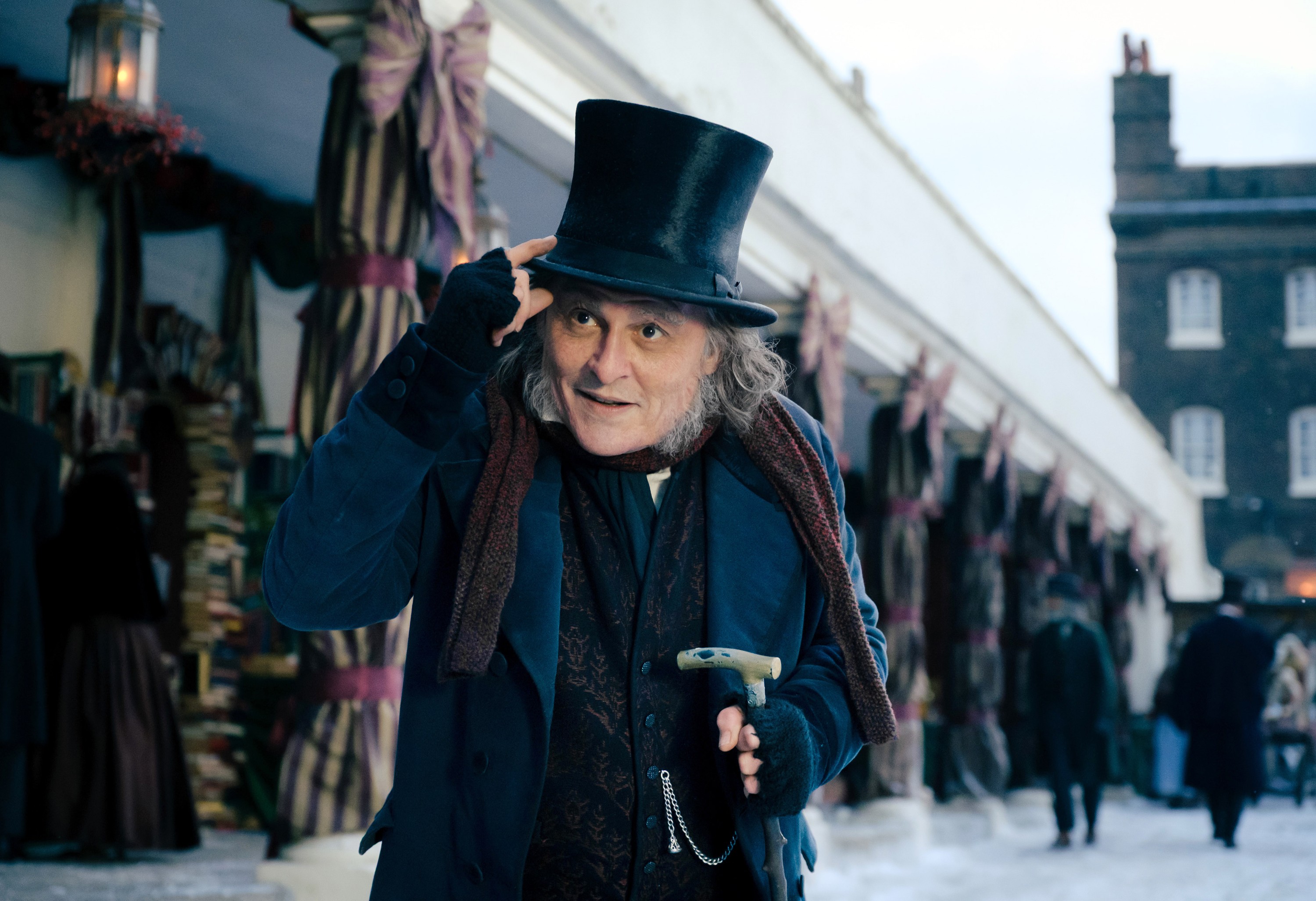
Too frightening for many children and too old hat for many adults, then, “Ebenezer’s” commercial prospects thus rest on its biggest gamble: the casting of Johnny Depp in the title role. Back from the international arthouse wilderness after eight years on the A-list blacklist, Depp returns to studio cinema to take on the kind of flamboyantly transformative, pantomime-style part that he used to do on the regular for the likes of Tim Burton and Gore Verbinski. Slathered in peaky old-age prosthetics, with a hunched, craggly demeanor and short, snarly vocal inflections, he makes for a perfectly solid, by-the-book Scrooge — with occasional moments of ripe inspiration in his line readings — without ever broaching the pained, soulful depths of, say, Alastair Sim’s gold-standard screen incarnation from 1951.
It’s perhaps canny that Depp has chosen for his comeback vehicle a character who hardly demands to be loved: How much viewers are individually rooting for the star himself may determine how much they share in the film’s warm-and-fuzzy payoff. For the most part, however, “Ebenezer” is a pretty chilly affair, beginning with a needless prologue that details just how Scrooge’s cantankerous business partner Jacob Marley (Ian McKellen) became Marley’s ghost one frosty Christmas Eve; jumping ahead seven years to a mood of near-identical misery in Scrooge’s loan office, as he grudgingly grants his put-upon clerk Bob Cratchit (Rupert Grint) the next day off, lends proceedings an additional layer of déjà vu.
From there we check off all the well-worn story points, as Scrooge spurns the seasonal requests of charity collectors and his earnest nephew Fred (Sam Claflin) alike, before taking to his bed so Marley can cue the phantom parade. Even if you’re shrugging through this with a been-there-done-that air, you may still be startled by the sheer freakiness of Andrea Riseborough’s appearance as the Ghost of Christmas Past: a wheezy, tulle-swaddled ghost bride with boiled-egg eyes and an eerie one-syllable-at-a-time manner of speech.
She’s sufficiently unnerving, in fact, to distract us from some light embellishment of the relationship between the young Ebenezer (Arthur Conti) and former fiancée Belle (Ellie Bamber) — which, along with a supposedly upbeat but bleakly capitalistic change in Cratchit’s professional standing, represents the greatest liberty taken by Nathaniel Halpern’s generally rote script. Tramell Tillman brings some compellingly surly energy to his Ghost of Christmas Present, here an ailing, antagonistic type with spirit-skin cracking like scorched earth; Daisy Ridley draws the shortest star-casting straw as Fred’s modern-minded wife Clara. It all ticks along efficiently enough, never exactly dragging — not least because you generally know exactly what’s coming next — but never stirring the heart in the way the best “Christmas Carols” do.
For viewers not invested in the Deppaissance, the rewards of “Ebenezer” are chiefly ones of atmosphere and craft — things that West, attentive to detail from the luridly scarlet, 1960s-style opening credits onwards, doesn’t skimp on. Production designer Eve Stewart is the film’s clear MVP, going heavy on the blackened timber and mildew in her dank, crooked re-creation of Dickensian London, well served by Checco Varese’s charred, coaly lensing; you can practically smell the sour rot here, everywhere from sidewalks to soft furnishings. Even when the film gives in to Yuletide cheer, it retains a frost-bitten edge, both visually and spiritually: This is one “Christmas Carol” where you sense, by the end, that the reformed Scrooge may just have held onto a cold, hard nugget of cruelty. A change of heart is for life, after all, not just for Christmas.