
Click here to read the full article.
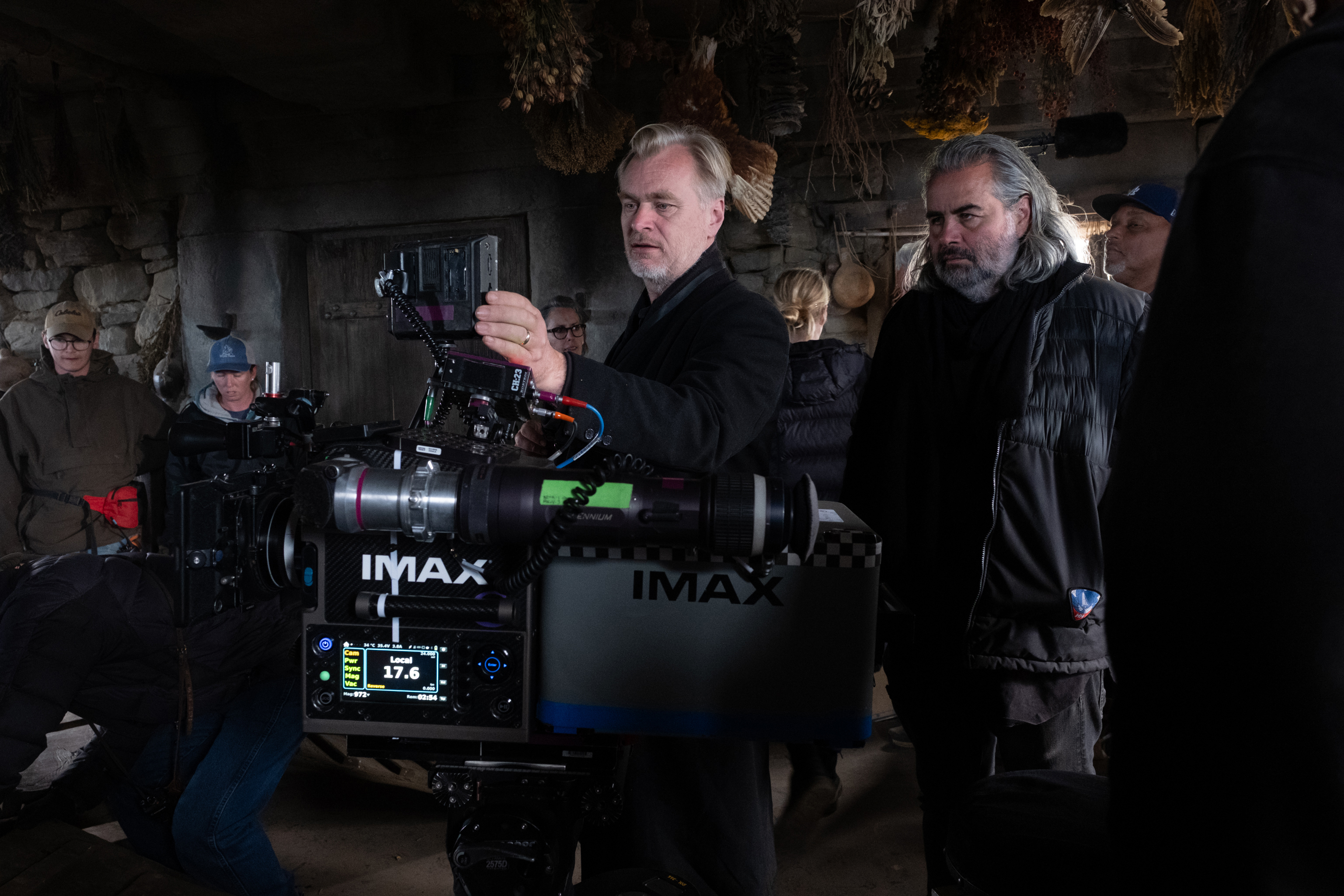
Casting director John Papsidera is no stranger to casting Christopher Nolan films. Ever since 2000’s “Memento,” Nolan has relied on Papsidera to cast his projects and find the right pieces of the puzzle through their
trusted shorthand. For Nolan’s adaptation of Homer’s epic poem “The Odyssey,” Papsidera had to assembling a huge cast to bring Homer’s epic poem to life. It wasn’t until Papsidera read the script that he realized it was Nolan’s adaptation of Homer’s work.
“I don’t get any heads-up,” Papsidera says, sharing insight into their collaborative process. “He loved to give me a pop quiz: ‘Who do you think? What do you think?’ And that’s how the process began.” Speaking at the SCAD Savannah Film Festival during a crafts panel on the film, Papsidera revealed, “He did talk about how he wanted Odysseus to be an American. We talked about the idea that he’s a worker among workers, an everyman.”
Papsidera continued, “We went through the usual suspects of actors we typically bring up. We started to coalesce around Matt [Damon], thinking it was a really great idea — different for Matt — and what he had done in ‘Oppenheimer’ was really special in that film.” With Damon in place as Odysseus, the rest of the cast began to take shape.
One crucial piece of the puzzle was finding the right actress to play Circe. In Homer’s poem, Circe is a beautiful temptress who toys with the soldiers for pleasure. In Nolan’s version, Odysseus and his men come across Circe, a witch who transforms Odysseus’ men into pigs.
Papsidera explained, “She appears one way and then turns into something else; that’s the witchlike quality of her. We talked about actresses, but Samantha [Morton] is brilliant. She’s a brave performer. I think all those things melded when we brought up the idea. Chris sparked to it because he’s always been a fan of Samantha. You just felt the sense that she was going to invent something remarkable for that chapter — something interesting, scary and still showing human vulnerability in the beginning.”
Joining Papsidera was the film’s production designer Ruth De Jong.
De Jong and Nolan scouted locations around the world. A fifth-century castle in Italy, perched approximately 1,030 feet above sea level, became Ithaca. She also designed multiple Trojan horses, each standing approximately 35 feet tall. The beaches of Essaouira, on Morocco’s Atlantic coast, served as the discovery site of the Trojan horse and the boat launch for Odysseus’s journey back to Ithaca. Troy, by the numbers, was a massive accomplishment — it covered more than 2.5 acres, or over 110,000 square feet, large enough to accommodate 2,000 extras and more than 60 structures.
For Circe’s part of the journey, De Jong said, “We absolutely did not want a Hansel-and-Gretel version in the woods. But we didn’t know where in the world Circe needed to land to work.” She explained that it wasn’t necessarily about using locations because they were Scotland or Morocco. “We were after the flora and fauna, the landscape and what the backdrop gave us. This just so happened to be Scotland.” De Jong continued, “Circe needed to be near the ocean. Odysseus and his men were hungry; they see smoke and go hunting. We settled on this cliff in the Scottish Highlands and constructed it right on the edge of the cliff. A few steps forward, and you’re straight down.” She added, “Chris and I grabbed onto the topography and I designed it all based on the craggy rocks that existed. We played with the idea that maybe she commandeered or took over this house we built — maybe someone else had been there previously. Maybe it was just a bunch of ruins that she had repurposed. We sculpted Athena’s head, added animals and just had a lot of fun with it.”
When it came to Circe’s costume, Ellen Mirojnick, the film’s costume designer, had a clear directive: like Calypso and Athena, Circe was a goddess. “Chris insisted that these goddesses were to be real — women who were independent and took care of themselves at all costs. There was nothing fantastical about it.”
Mirojnick explained that she sent a sketch to Morton. “She was so open, and in the sketch, we decided that her witchlike quality would be apparent. She’d be a female character, but her costume would indicate both male and female traits. There was leather, belts, and most importantly, she had different accouterments that she had collected from many people who had passed through her door. It rooted her in the past.”
Papsidera also discussed building out the family dynamic, including casting Tom Holland as Telemachus, Odysseus’ son and Anne Hathaway as Queen Penelope. “Anne was me,” he said. “Tom, we arrived upon. All of these people were the superheroes of their time. All of these characters needed to be larger than life. What we did in ‘Oppenheimer’ — giving faces to those scientists and not just letting them be anonymous — we did out of respect for the people in that atomic movement. Similarly, in ‘The Odyssey,’ these characters live in mythology, literature and people’s minds. To pay respect to that, we knew we had to cast them in a bigger way.”
He added, “When you boil down how many actors are really right for a role like Telemachus, you come to Tom pretty quickly. These characters, especially those Odysseus encounters on his journey, each have their own place and you want to meet them along the way and see who they are. It wasn’t about randomly casting names; it was about rooting the characters in reality while giving them the larger-than-life space they deserve as gods and goddesses.”
De Jong concluded the conversation by talking about the collaborative process with Nolan and described it as “playing basketball with Kobe Bryant.” She went on to say, “I love somebody who is going to the mat and not say, ‘That’s difficult.’ Every day was difficult on this job. Any one of us could go up to Chris and it’s open communication. Conversation is there, and it’s open.”