



What's Happening?
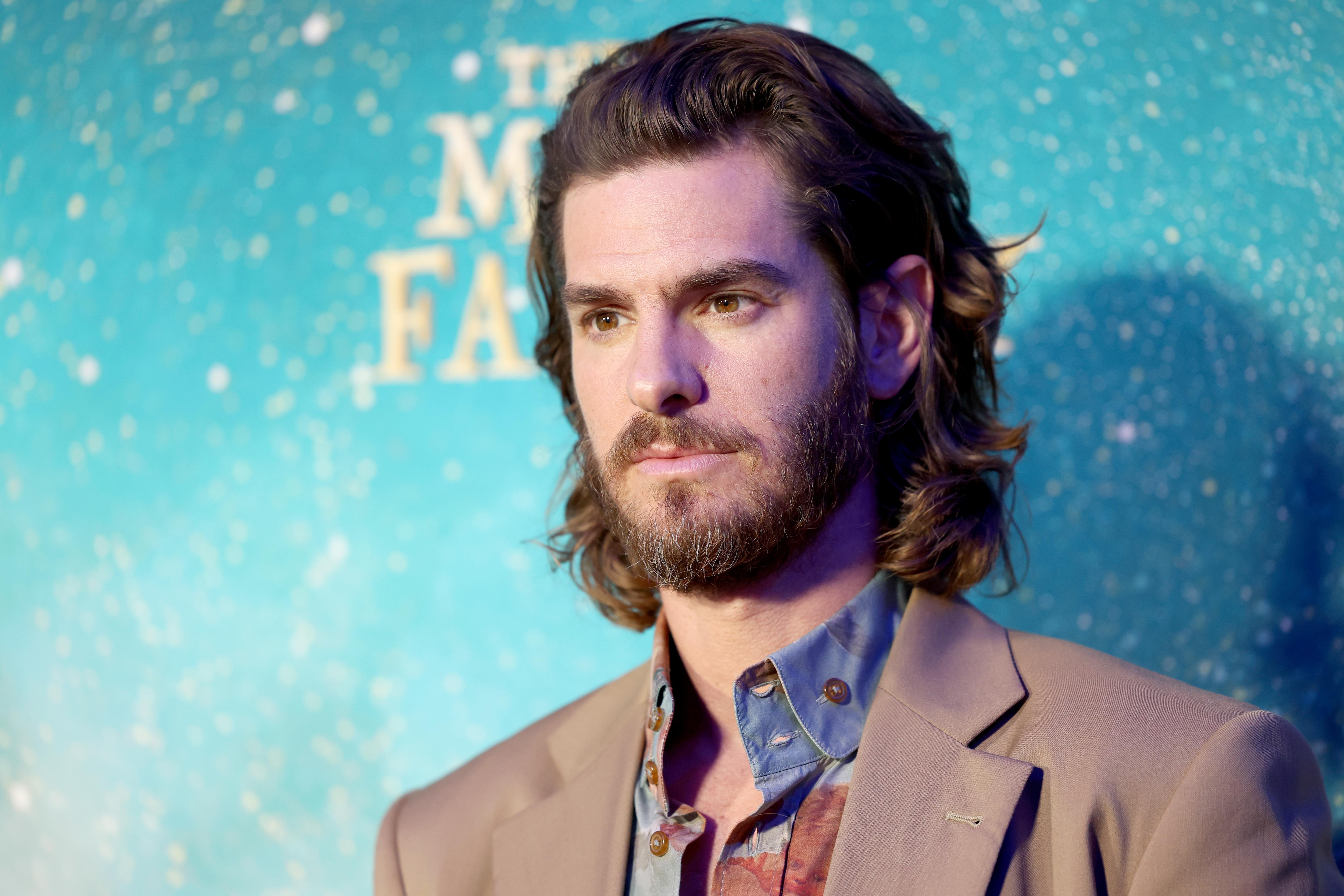
Actor Andrew Garfield has publicly refuted OpenAI CEO Sam Altman's story about an alleged encounter on the set of the movie 'Artificial.' Altman had previously told Vanity Fair that he saw Garfield, who
portrays him in the biographical comedy-drama, walking down the street dressed exactly like him, leading to a 'weird glitch of the simulation' moment and a wave between them. However, in a recent interview with GQ, Garfield denied the interaction, stating, 'I wasn't there.' He further clarified that he never had any interaction with Altman, had never seen him in real life, and did not even have a body double. Garfield acknowledged that filming did occur outside Altman's house, describing it as an 'eerie day,' but maintained that he never saw Altman and suggested Altman might have mistaken someone else for him. 'Artificial' chronicles the origins and internal power struggles of OpenAI and generative artificial intelligence, with Garfield starring as Altman.
Why It's Important?
This discrepancy between Andrew Garfield's and Sam Altman's accounts highlights a curious intersection of celebrity, technology, and perception. For the entertainment industry, it underscores the potential for miscommunication or differing recollections surrounding high-profile productions. For the tech world, particularly given Altman's role at OpenAI, it adds a layer of human fallibility to narratives often presented with precision. The film 'Artificial' itself aims to explore the complexities of AI development and the personalities behind it; this real-life disagreement, though minor, inadvertently mirrors themes of perception and reality that might be explored in the movie. It also draws attention to the public's fascination with behind-the-scenes stories and the often-unreliable nature of personal anecdotes, even from prominent figures.
What's Next?
The immediate consequence of Garfield's denial is likely to be increased public discussion and media attention surrounding the differing accounts. It may prompt further questions to both Garfield and Altman in future interviews, though it is unlikely to have any significant impact on the production or release of 'Artificial.' The incident could become a minor talking point in the film's promotional cycle, adding a layer of meta-commentary about the portrayal of real-life figures. For audiences, it might create a subtle intrigue about the film's accuracy or the nature of biographical storytelling. Ultimately, it serves as a reminder that even seemingly straightforward encounters can be subject to varied interpretations and memories.
Beyond the Headlines
This minor dispute touches upon deeper themes of narrative construction and the subjective nature of memory. Altman's initial description of the encounter as a 'weird glitch of the simulation' is particularly resonant given his work in artificial intelligence, hinting at how technology leaders might perceive reality through a lens influenced by their professional domain. Garfield's firm denial, on the other hand, grounds the situation in a more conventional understanding of factual recall. The incident subtly questions the reliability of personal narratives, especially when recounted by public figures, and how these narratives can be shaped by individual perspectives, expectations, or even subconscious biases. It also highlights the challenges inherent in creating biographical films, where the line between factual representation and artistic interpretation is constantly navigated.