
What's Happening?
Megyn Kelly has publicly accused actress Dakota Johnson of staging paparazzi photographs outside a gym, an allegation made during the November 13, 2026, episode of Kelly's talk show. Kelly's criticism
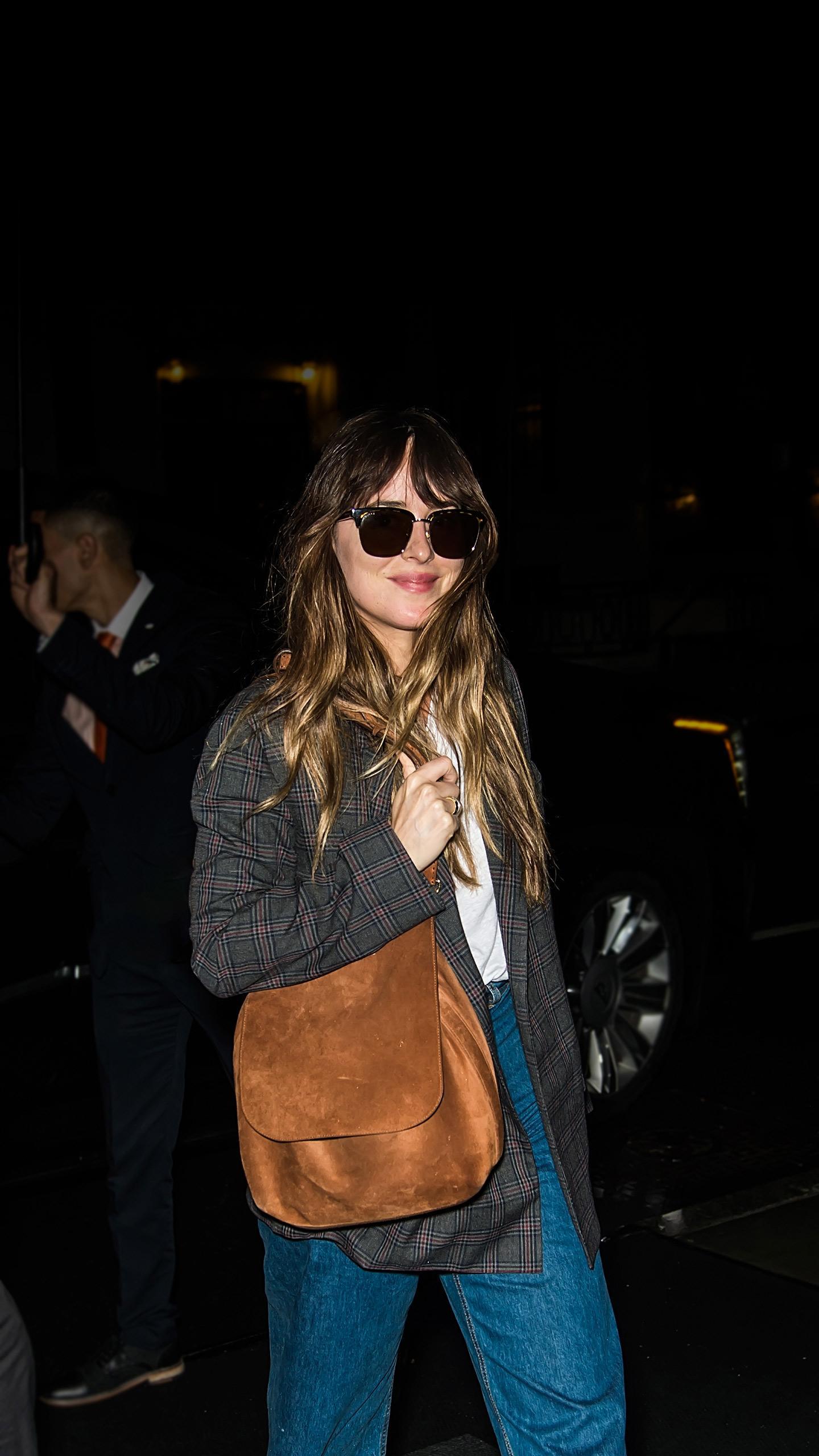
stems from recent photographs of Johnson leaving a workout session and an interview Johnson gave to Vogue for its October 2026 issue. In the Vogue interview, Johnson discussed her preference for privacy, stating she was 'obsessed with people not knowing' her whereabouts. Kelly interpreted the gym photographs, where Johnson was seen in a distinctive mauve outfit, sheer tights, a crop top, and sunglasses, as contradictory to her stated desire for privacy. Kelly suggested that the encounter was unlikely to have occurred without Johnson's involvement, implying a deliberate effort to attract attention. However, the source notes that Kelly provided no evidence to support her claim that Johnson arranged the paparazzi encounter, nor did it establish that Johnson contacted a photographer or was aware cameras would be present. Other reports described Johnson wearing dark leggings and a white T-shirt, making it unclear if Kelly and other outlets were referring to the same set of photographs.
Why It's Important?
This incident highlights the ongoing tension between celebrity privacy and public scrutiny, particularly in the age of pervasive media and social platforms. Megyn Kelly's accusation, while presented as an opinion without supporting evidence, contributes to a broader narrative where public figures are often scrutinized for perceived inconsistencies between their stated desires for privacy and their public appearances. For celebrities like Dakota Johnson, such accusations can impact public perception, potentially leading to questions about authenticity and media manipulation. The situation also underscores the power of media personalities like Kelly to shape public discourse around celebrity behavior, even without concrete proof. It raises questions about journalistic responsibility in reporting on such claims, especially when they lack verifiable evidence, and how such narratives can influence public trust in both celebrities and media outlets. The incident also touches upon the curated nature of celebrity images and the constant speculation surrounding their personal lives, often fueled by paparazzi culture and media commentary.
What's Next?
Without further evidence, Megyn Kelly's accusation remains commentary rather than a verified fact. It is unlikely that Dakota Johnson or her representatives will directly address Kelly's claims, as the source notes no response was included in related media accounts. The public discourse around Johnson's privacy and public appearances may continue, particularly as speculation about her personal life, including her rumored relationship with musician Machine Gun Kelly (MGK), persists. Media outlets may continue to report on Johnson's sightings and fashion choices, potentially drawing further comparisons to her stated desire for privacy. The incident could also prompt broader discussions within the entertainment industry about the ethics of paparazzi photography and the responsibility of media figures when making unverified claims about celebrities. Future public appearances by Johnson will likely be viewed through the lens of this controversy, with some observers potentially scrutinizing her actions for any perceived inconsistencies with her privacy statements.
Beyond the Headlines
This event delves into the complex ethical landscape of celebrity culture and media commentary. The accusation by Megyn Kelly, lacking concrete evidence, raises questions about the standards of journalistic integrity and the potential for media personalities to influence public opinion through speculative claims. It highlights the double-edged sword of celebrity: the desire for privacy versus the perceived need for public visibility to maintain a career. The incident also touches upon the performative aspect of celebrity life, where even seemingly candid moments can be interpreted as carefully curated. The public's consumption of such narratives often blurs the lines between genuine reporting and entertainment, making it challenging for audiences to discern fact from opinion. Furthermore, the focus on Johnson's attire in the gym photographs by Kelly underscores the societal pressure on women in the public eye to conform to certain images, even in casual settings, and how their appearance can be used to support or undermine narratives about their intentions.