
What's Happening?
David Remnick, editor at The New Yorker, authored an extensive profile on Leonard Cohen published on October 10, 2016. The article detailed Cohen's reflections on mortality and his readiness for death,
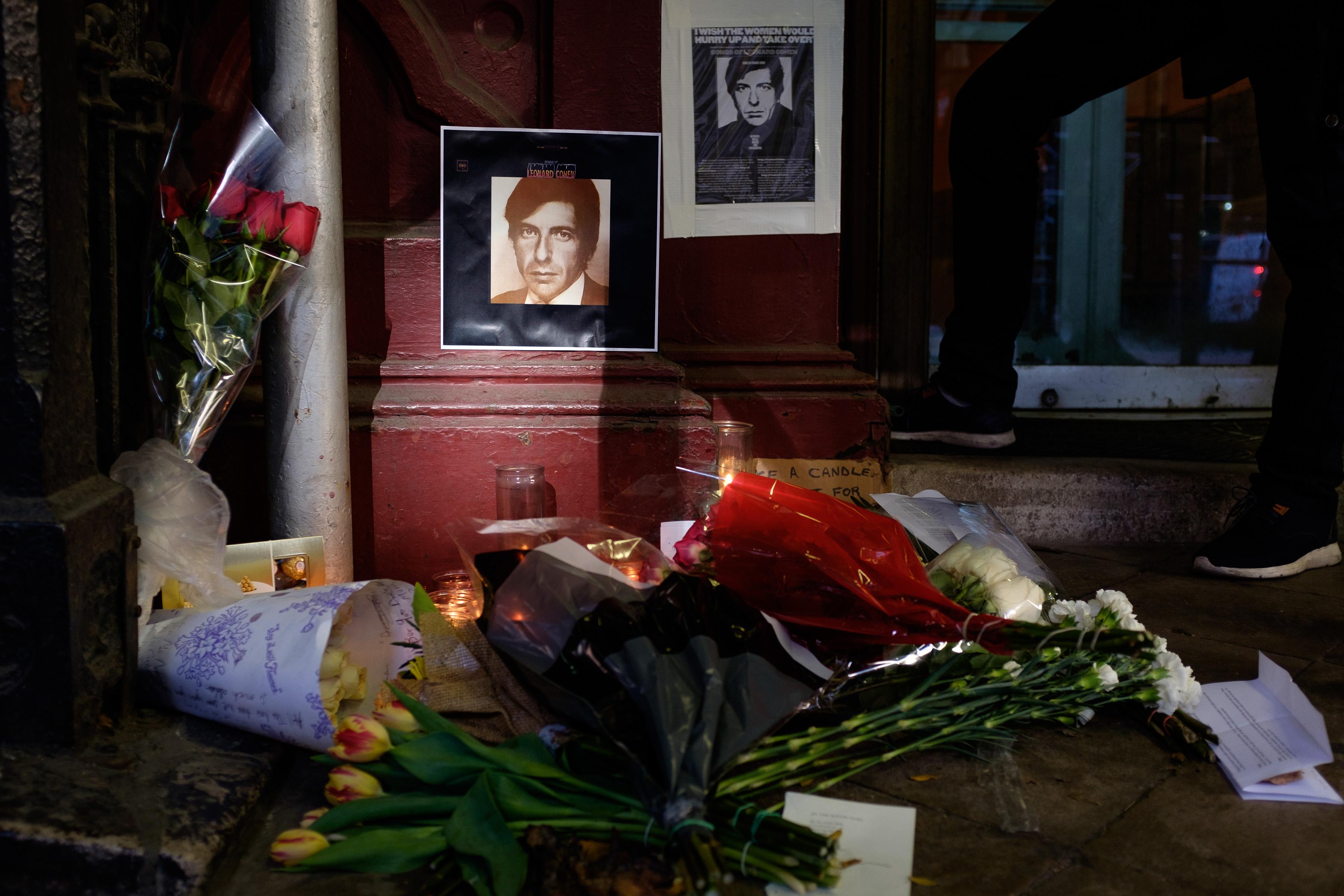
stating, 'I am prepared to die. I hope it's not too uncomfortable.' This statement sparked public concern regarding Cohen's health. Two days later, Cohen clarified his remarks, suggesting he might have exaggerated and humorously added that he intended to 'live forever.' Less than a month after the profile's publication, Cohen passed away in Los Angeles on November 7, 2016. The profile captured Cohen's artistic resurgence in his later years, particularly after a financial setback in 2004 that forced him to return to touring after a decade-long hiatus. Despite his age, Cohen delivered acclaimed performances and released a trilogy of albums, including 'Old Ideas' (2012), 'Popular Problems' (2014), and 'You Want It Darker' (2016), the latter released shortly before his death.
Why It's Important?
This profile by David Remnick offers a significant insight into the final chapter of a globally renowned artist's life, highlighting the profound impact of his work and his personal reflections on mortality. For fans and critics, it provides a poignant context to Cohen's last musical offerings, particularly 'You Want It Darker,' which is described as an artistic testament with themes of farewell. The article underscores the resilience of artists in the face of personal and financial adversity, as Cohen's return to the stage and subsequent creative output demonstrated a remarkable period of artistic plenitude. The narrative also touches upon the broader human experience of confronting aging and death, making Cohen's story resonate beyond his musical legacy. The financial challenges faced by Cohen, despite his success, also shed light on the vulnerabilities even established artists can encounter.
What's Next?
Following Cohen's death, his son, Adam Cohen, compiled and released a posthumous album titled 'Thanks for the Dance' in 2019, based on recordings his father had prepared. This release further extended Cohen's artistic legacy, offering new material to his audience. The ongoing appreciation and analysis of Cohen's work, particularly his later albums, will likely continue to be influenced by the insights provided in Remnick's profile. Future retrospectives, documentaries, and academic studies of Cohen's career will undoubtedly reference this period, examining how his personal circumstances and reflections on mortality shaped his final artistic expressions. The profile serves as a crucial document for understanding the depth and complexity of Cohen's creative process in his concluding years.
Beyond the Headlines
The profile delves into the deeper implications of an artist's relationship with their work and mortality. Cohen's candidness about death, followed by his humorous retraction, reveals a complex interplay between public persona and private contemplation. His financial struggles, which led to a late-career resurgence, highlight the often-unseen economic realities faced by artists, even those of his stature. This situation underscores the ethical considerations surrounding artist management and financial security. Furthermore, the article implicitly explores the cultural significance of an artist's 'final act,' where their last creations are often imbued with heightened meaning and serve as a legacy. Cohen's ability to transform personal hardship into profound artistic output offers a powerful narrative about resilience, creativity, and the enduring human spirit in the face of life's ultimate certainty.