



In author Suzanne Collins’ dystopian YA novel The Hunger Games, a reluctant teen revolutionary named Katniss Everdeen destroys a fascist government that broadcasts children fighting to the death for sport. The book makes pointed critiques of the fictional
Capitol’s ruling class, constantly juxtaposing government-created poverty, violence, and forced labor with a cadre of one percenters whose lives are focused on high fashion, merriment, and excess. It’s a moral lesson served on a platter for middle-grade readers: Look for the bad guys — they’re the ones in the sparkling ball gowns, fat and happy while the protagonists suffer.
In the close to two decades since Collins published The Hunger Games in 2008, the now five-novel series has grown into a cultural phenomenon with 100 million books sold and a blockbuster film franchise. Out Nov. 20, The Hunger Games: Sunrise on the Reaping, based on the 2025 book of the same name, is the latest adaptation of Collins’ world to the screen — a prequel charting the heartbreaking life of Haymitch Abernathy before he was Katniss’ drunk mentor and friend. (Joseph Zada stars in Sunrise on the Reaping; in the original films, an older Haymitch is played by Woody Harrelson.) With new stars and the return of original cast members Jennifer Lawrence, Josh Hutcherson, and Harrelson, Sunrise on the Reaping has been positioned as the dominant big-budget film of the Thanksgiving holiday, enjoying months of promotional stunts, lavish influencer parties, international installations, and couture-themed red carpets. It’s a blitz of glossy promotion for the sixth film in the franchise and the second in under three years. So why is it, after all this time, The Hunger Games franchise still hasn’t figured out that its marketing misses the entire point of its films?
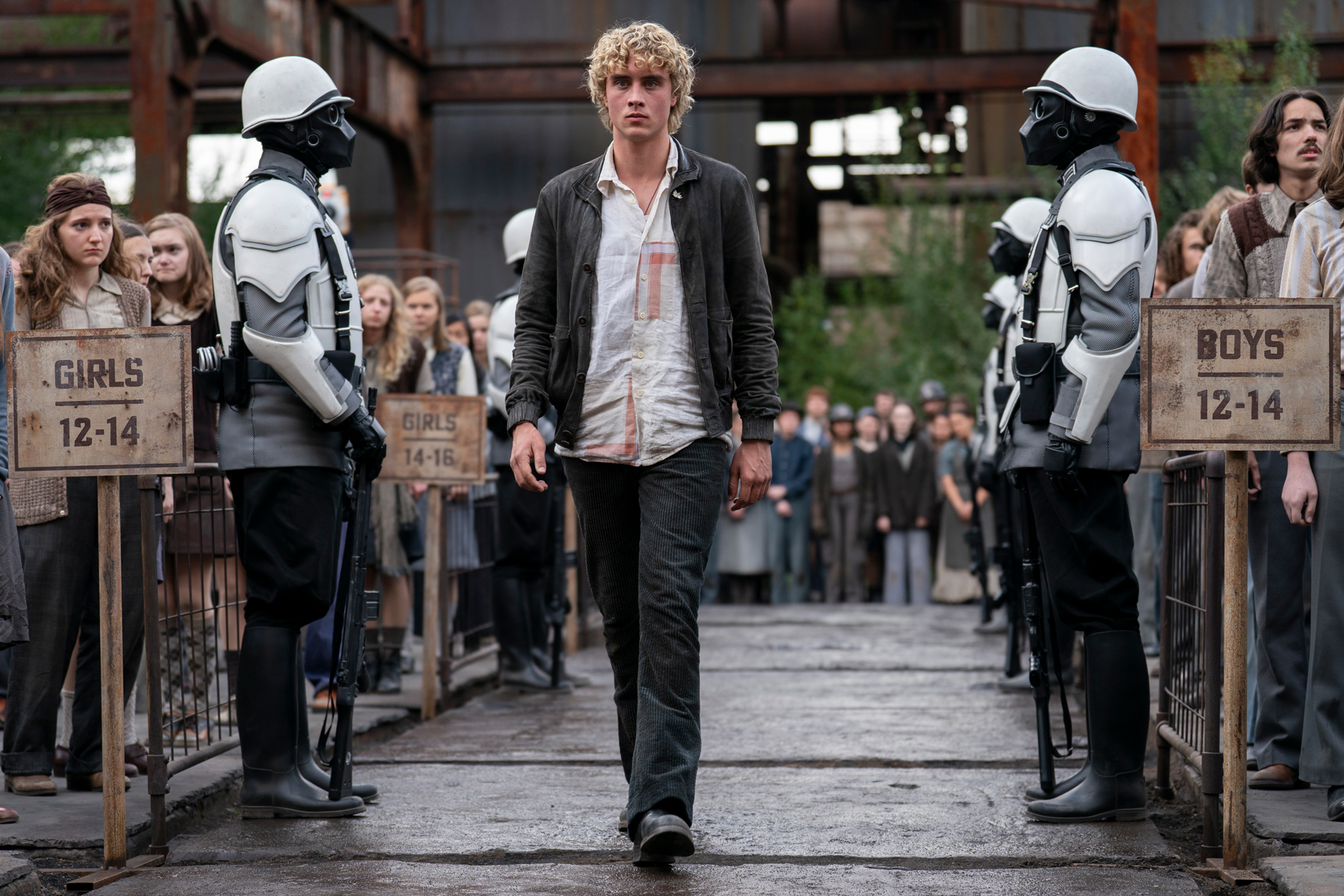
In Sunrise on the Reaping, Haymitch is chosen as one of District 12’s male tributes — sent with Maysilee Donner (Mckenna Grace), Wyatt Callow (Ben Wang), and Louella McCoy (Molly McCann) to the Capitol to fight to the death in a deceptively pastoral arena. But while citizens of Panem revel in the mental games of sponsors, allies, and grievous bloodshed, Haymitch is drafted to be the linchpin of a secret District rebellion. If Katniss is a symbol later in the series, Haymitch is a blunt weapon in his standalone film — a devastating and tragic example that revolution often requires sacrifices from people who will never see the fruits of their labor. But you wouldn’t be able to tell that from Sunrise on the Reaping’s pre-release campaign.
For Paris’ October Fashion Week, the studio behind the film, Lionsgate, held a Sunrise on the Reaping-themed costume exhibition at the sculpture garden of the Musée Rodin, a two-day experience titled “Elegance Is Authority: The Story, Style and Power of Panem.” Cast from the film attended the opening, complete with a six-course dinner incorporating themes for each of the 12 Districts, according to WWD. Outside the film’s promotional bubble, social media timelines were splashed with a viral video of a French orchestra playing the Hunger Games rebellion theme, “The Hanging Tree,” outside during the ongoing French student protests. (They only stopped when they were teargassed by police.) Cosmetics brand Stila was chosen as the official partner for the film and launched an accompanying makeup collection, including a “Sunrise Eyes Liqua-Play” shadow collection with shades “Maysilee,” “Lenore Dove,” and “Mags” named after women murdered by the Capitol. At this week’s New York premiere, attendees were encouraged to follow a “Make Them Remember You” theme for their attire — advice Haymitch gives to Katniss in the first film in an effort to help her survive. According to Vogue, people dressed in Capitol-inspired party outfits walked over to the official afterparty at the tony Metropolitan Club, which had been decorated with ice sculptures and Panem flags. Everything from television spots to posters, cast interviews, and fan events for the film has had this emphasis on spectacle and excess — a focus that completely ignores the story’s inherent social critiques.
Sunrise on the Reaping isn’t the only Hunger Games film that’s fallen into this trap. There’s a consistent pattern of tone-deaf or straight-up ridiculous promotional attempts across the franchise. In 2025, Lionsgate announced a Hunger Games merch collaboration with fast-fashion company Shein — which fans balked at, considering the books’ themes about child exploitation and labor rights stand in opposition to the clothing giant known for its brutal working conditions. In 2014, for Mockingjay — Part 1, the Hunger Games promotional team released a version of “The Hanging Tree” titled the “Rebel Remix” — EDM tones and synth added to make the dirge fit for radio play. “Are you, are you/Coming to the tree?” a sped-up version of Lawrence’s voice sings, calling for rebels to fight the Capitol and “Wear a necklace of hope/Side by side with me.” (Yeah, seems fun to dance to.) Perhaps the most notorious example happened in 2013, when makeup brand CoverGirl launched its Capitol Collection, inspired by the best and richest looks in Panem. The backlash was so immediate that it inspired one the most longstanding memes on Tumblr — a parody Katniss Everdeen makeup tutorial with the instructions “we’re going to use a black eyeshadow to represent the coal mines that her father was smashed to death in.”
When Collins published A Ballad of Songbirds and Snakes in 2020, her first Hunger Games book in a decade, she told her publishershe had returned to the story because she thought people were beginning to “lose sight” of the dangers of authoritarian rule and what it takes to slowly dismantle a democracy. It’s not a coincidence that younger generations are flocking back to dystopian stories — the ones publishers and studios alike were convinced were flagging — at the same time that they’re becoming more politically minded. Collins’ books and the films based on them present a fictionalized and desperate endpoint to totalitarian ideas; one that readers and moviegoers are treating as more important than ever. But in the promotion of these films, Hollywood not only misrepresents the message of its source material, but betrays a striking lack of faith in the rich world the series has built — and the viewers who believe in its power.
Click here to read the full article.