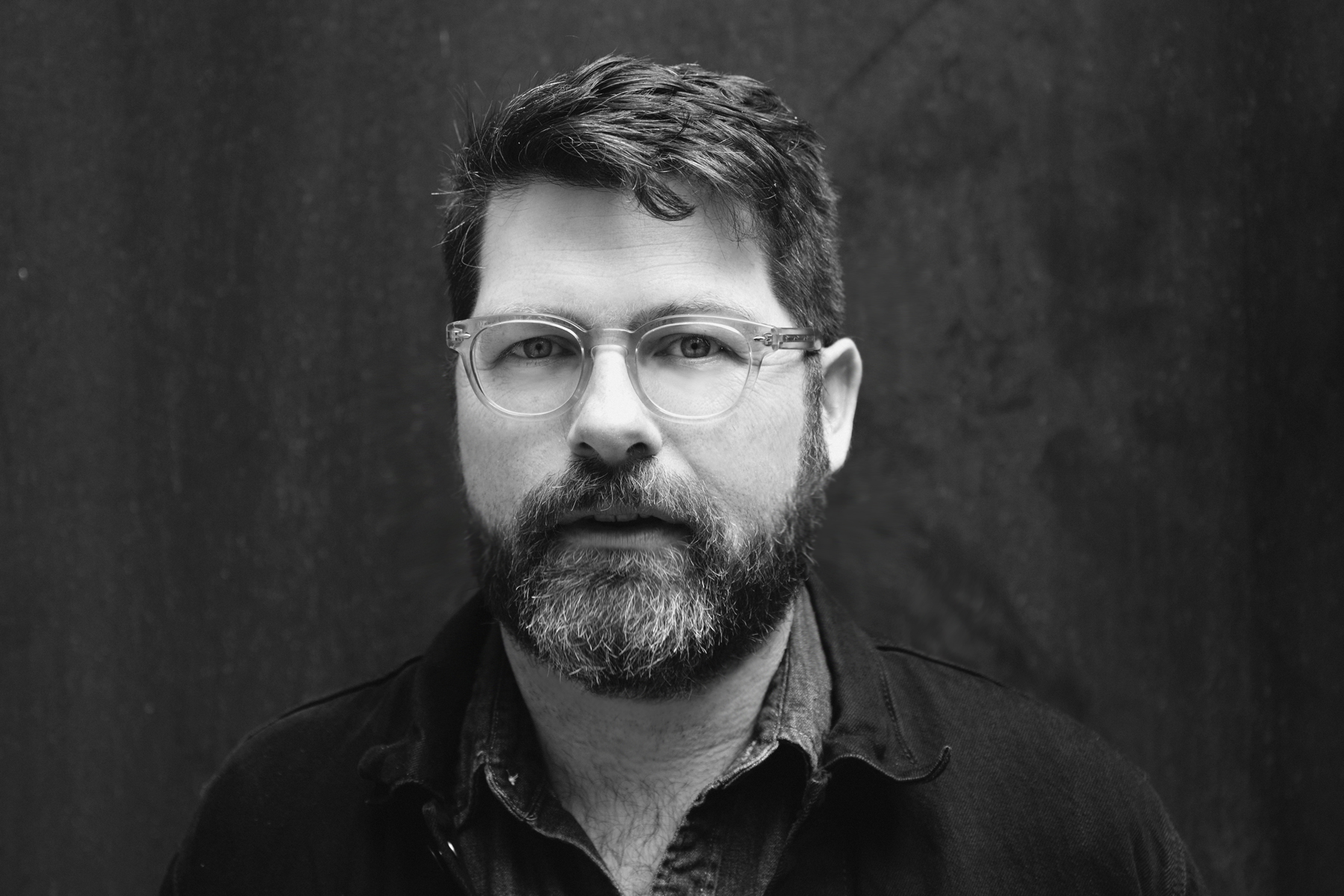

Colin Meloy hadn’t even finished writing Wildwood before movie studios came calling. It was 2010, and HarperCollins had just acquired the Decemberists frontman’s first fantasy novel, which featured illustrations from his wife, the visual artist Carson
Ellis. At that point, he’d only completed about a third of the draft. “We were already freaked out about the idea of it being a book,” Meloy says on a recent Zoom call from his home outside of Portland, Oregon. “The idea that it would then also be a movie was daunting, and we really wanted to pump the brakes on that.”
They relayed this concern to director Travis Knight, after the Pacific Northwest studio Laika (fresh off the success of the stop-motion classic Coraline) optioned Wildwood shortly after. “We just imagined that any movie would inevitably eclipse the book,” Meloy says. “So we were like, ‘Please, can it just be a book for a little bit, and then the movie comes out?’ And he was like, ‘Don’t worry about it. It’s going to take a very long time.’”
Knight was right: Wildwood took 16 years to complete. The film is a propulsive journey that stays extremely close to Meloy’s novel — even down to its 500-plus page length. With a 132-minute run time, it’s the longest stop-motion film ever made. “Travis did say it was going to be his masterpiece,” says Meloy, 52. “But I was like, ‘Oh yeah, I’m sure you tell that to everybody.’” He laughs. “It was cool to see him make good on that.”
Wildwood follows Portland teenager Prue McKeel (Peyton Elizabeth Lee), a sassy and strongwilled Portland teenager who is ordered by her parents to stay inside while she babysits her brother. Naturally she disobeys them, and has to go rescue him after he’s taken by a murder of crows. Joined by her schoolmate Curtis (Jacob Tremblay), they venture into the forbidden Impassable Forest, an enchanting yet dangerous world embroiled in a civil war. The film features a vengeful governess (Carey Mulligan), a Bandit King (Mahershala Ali), and an entire kingdom of talking animals (Tom Waits may or may not voice a coyote soldier).
Wildwood has drawn comparisons to The Lord of the Rings, The Chronicles of Narnia, and other epics — which isn’t surprising, considering that’s the kind of reading that most interested Meloy while growing up in Helena, Montana. “I was a very bookish kid,” he says. “I just would just absorb books, particularly from fifth grade to eighth grade.” He cites Ray Bradbury, Lloyd Alexander, Ursula K. Le Guin, and King as his favorites. “Those books and those ideas informed Wildwood,” he says. “You want to write the book that you would’ve wanted to read as a kid.”
The idea for Wildwood was born more than 25 years ago, when Meloy and Ellis were living in a warehouse in Southeast Portland around 2000. The two had met at the University of Montana — Meloy was studying creative writing, while Ellis was in the art department — and bonded over their love of folklore. They were working service-industry jobs, and Meloy (who wouldn’t release his first album with the Decemberists for another couple of years) was playing open mics, and they got the idea to collaborate on a fantasy novel. “Honestly, it was a pastime, something to do [so] that we could hang out together,” he says. “I would write, and she would draw.”
The quirky spirit of Portland is felt all over Wildwood, particularly in the beginning of the film (pre-crow-kidnapping). We see the wonderfully weird city in its 2010s glory, featuring staples like Powell’s Books, Voodoo Doughnut, and specialty coffee shops, as well as a cameo from one of Fred Armisen’s Portlandia characters, Spyke the cyclist. “There was this rising tide happening in Portland at that time, and the Decemberists were certainly part of that,” Meloy says. “It’s interesting to come back 16 years later, where that tide has definitely ebbed. Recovering from Covid and stuff, it’s been having a hard time. So it’s cool to give the celebration of the city to the world.”
Meloy and Ellis get their own cameos, too: He’s seen busking on the street, while Ellis is shown selling her artwork. Meloy says Laika tried to keep it a secret, but he eventually put it together during one of several visits to the studio. “Every once in a while somebody would let it slip,” he says. “They would be like, ‘Hey, I animated you today!’ and I’d be like, ‘What are you talking about?’” Meloy says even Prue McKeel is named after a real 12-year-old. “We actually just did a friends and family screening of the film here in Portland, and there were a couple McKeels there,” Meloy says. “I’m like, ‘I’m so sorry! I just stole your name and gave it to the main character!’”
Meloy wrote several new songs for the film, and sings the triumphant end credit anthem “The Better Part of Bravery,” which he admits was a challenge. He wrote a first attempt in 2023, but Knight said it wasn’t quite right. “I’m not used to taking notes for songs,” Meloy jokes. “And also, there was a certain bit like, ‘I think I nailed the thesis of the story, having been the guy who wrote it.’ But Travis was very thoughtful and coddled my ego a little bit.”
Plus, Meloy adds, he hadn’t seen the film yet. Closer to deadline, he introduced his and Ellis’ 13-year-old son to the 1986 fantasy film Highlander, and he found himself reading about the soundtrack afterwards. “I was doing some Wikipedia-ing, as you do, and learned that Brian May from Queen only wrote the classic ‘Who Wants to Live Forever?’ after he’d seen the film,” he says. “This light bulb went off.” He watched an early cut of the film, and wrote “A Better Part of Bravery” within a few days. “I have Brian May to thank for that song,” he says.
Next spring will mark the 25th anniversary of the Decemberists’ debut, Castaways and Cutouts. And though they’ve performed the album in its entirety before, Meloy isn’t particularly interested in any kind of anniversary tour. “I feel like I’ve been resistant to that over the years just for my own sanity,” he says. “We still play a lot of those songs. Aside from the fact that you feel like, ‘Oh, now we’re just going out there and retreading old work,’ it’s more just me needing variety on tour that I would be resistant to that. But we’ve done it, and I could definitely see us doing it again.”
As far as new Decemberists music goes, though, a follow-up to 2024’s As It Ever Was, So It Will Be Again won’t be coming anytime soon. He has several new book projects on the way, including the novel Casadia and a pair of Arthurian books — Mordred Rex and Kestrel Magus — that make up the Heir to Magic duology. “I am squarely in book world,” he says. “It’s my happy place. I’m not really drawn to writing songs right now. I think I’m just following my natural path. It was super fun to write those songs for Wildwood, and if that sort of thing came up — writing songs for other people or other projects… But writing for myself and for the Decemberists right now, it’s just not where my heart is. So it’s sitting on the back burner for now.”
There is, however, the possibility that Laika will adapt the other installments in the Wildwood trilogy: Under Wildwood (2012) and Wildwood Imperium (2014). “I would love it, [but] I have no idea if that will happen,” Meloy says. “If it was any other studio, maybe. But these movies are so labor-intensive, so long. I get it if they want to be like, ‘We did that.’ If they were banging out a movie a year kind of thing, it would probably be a totally different story.”
Either way, Meloy knows waiting 16 years for his characters to come to life on the big screen was definitely worth it. “One of the great things about making this movie happen at Laika is this tremendous pride, that I had some part in employing these legions of people with these very specific and super cool niche skillsets,” he says. “Making tiny clothes or machining armatures, and the patience to film two seconds over the course of a couple weeks… It’s been a real boon to the Portland creative community. I’m thrilled.”
Click here to read the full article.