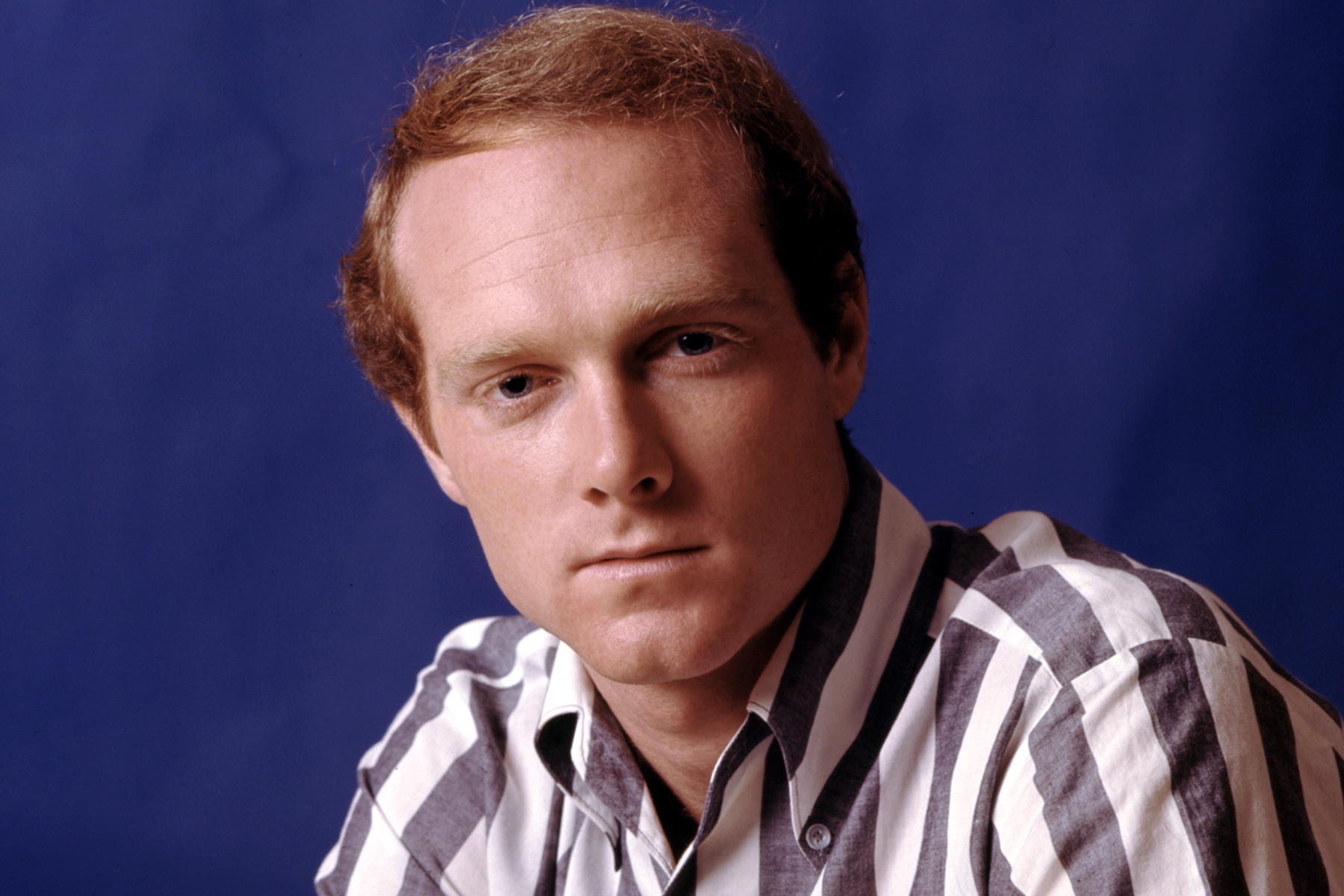

Mike Love, who helped define the Beach Boys’ sublime vocal mix with his reedy bass-baritone voice, and who kept the group’s brand alive for more than 50 years, has died at the age of 85.
Love’s representative Katie Altman confirmed his death in a statement
Saturday, “With great respect, I share that Mike Love died this evening, surrounded by family,. An American cultural icon, he will be remembered for his singular talent and inspiration to generations of musicians. We celebrate his remarkable contribution to American music and the joy he felt performing for his beloved fans.”
No cause of death was provided, but NBC Los Angeles reports that paramedics and the sheriff’s office responded to a medical emergency at Love’s Malibu home on Saturday at 5 p.m.
Love co-founded the Beach Boys in 1961 with his cousins Brian, Carl, and Dennis Wilson, and family friend Al Jardine. His voice defined many of the group’s most popular songs, including “California Girls,” “Surfin’ U.S.A.,” “Little Deuce Coupe,” and “Kokomo,” as well as songs like “Sloop John B” and “Wouldn’t It Be Nice,” on which he shared lead vocals with Brian Wilson. Love also earned a reputation as band villain due to his conflicts with Brian Wilson, a troubled visionary whose brilliant songwriting, arranging, and production made the group one of the most revered and important in rock history. “For those who believe that Brian walks on water,” Love wrote in his 2016 memoir, Good Vibrations, “I will always be the Antichrist.”
Love was born in 1941, and grew up in Baldwin Hills, a Los Angeles suburb, in a home saturated with music and the arts; his mother blasted opera recordings and staged musicals in their home with dozens of singers. He ran track at high school and hung out with his cousin Brian, with whom he was very close. At 19, Love worked at his father’s sheet-metal factory, and married his girlfriend after she became pregnant. He began making music more seriously with his cousins, and a group soon coalesced. Love and Wilson soon wrote their first song together, “Surfin’,” and recorded it with a local record company. It became a hit.
Love helped write other group hits, although Murry Wilson, the Beach Boys’ first manager and Love’s uncle, failed to give him due publishing credit. Love filed a suit in 1993 to get his name appended to 35 songs, among them “California Girls,” “I Get Around,” and “Surfin’ U.S.A.” (He was awarded more than $2 million in back royalties.)
Handsome, six feet tall, and outspoken, Love became something of the group’s frontman by default. His years with the Beach Boys were the stuff of legend. In 1968, bandmate Dennis Wilson invited him to a dinner that turned into an orgiastic acid trip with future murder-cult leader Charles Manson when he was still just a strange, charismatic music-business wannabe. (Love ate dinner, took a shower, and left.)
But Love’s aesthetic clashes with his cousin Brian defined his place in rock history. A mythic Salieri to Brian Wilson’s Mozart, Love disparaged and tried to discourage Wilson’s work on Pet Sounds, considered one of the greatest albums in rock history. Of Wilson’s esoteric sound effects, Love reportedly said to him: “Who’s gonna hear this shit? The ears of a dog?” Love’s belligerence during the making of Smile, the band’s fervently anticipated follow-up, allegedly led arranger Van Dyke Parks to quit, and the project was shelved for decades.
Love pushed back hard against the popular narrative that he played a role in Smile’s demise. “I never said anything bad about any of the tracks,” he told Rolling Stone in 2016 in a story whose subheading is “A Beach Boy asks, ‘Why am I the villain?’” “I admit to wanting to make a commercially successful pop record, so I might have complained about some of the lyrics on Smile, calling them acid alliteration, which even the guy who wrote them, Van Dyke Parks, couldn’t explain. But I wasn’t resistant to … I mean, crazy stupid sounds, like animals, farmyard sounds, did all that shit, laying in the bottom of an empty pool, singing up at the mic. I did all that stuff.
“It was a crazy time, people fucked up out of their minds on stuff,” he continued. “You do a lot of pot, LSD, cocaine, you name it, paranoia runs rampant, so, yes, Brian could have become extra-, ultrasensitive to attitudes, body language, or whatever. My psyche is mainly … except for the, maybe, moments of true frustration or anger, saying things in a way that’s been misconstrued. Maybe I’m cast in that light, which is unfortunate but maybe deserving. But can I be responsible? Should Mike Love take a beating for Brian’s paranoid schizophrenia?”
After Wilson withdrew from the group in the wake of mental health issues, Love increasingly took charge. It was an often litigious process. Love sued Wilson in 1992 for defamation over Wilson’s memoir Wouldn’t It Be Nice: My Own Story. In 1998, Love obtained an exclusive license to use the Beach Boys name, meaning Wilson could not perform in a band under the name without his permission. He sued Wilson again in 2005, when an image of the Beach Boys appeared in the promotional material for the Brian Wilson Presents Smile project. (Love once sued bandmate Al Jardine for using the band name as well. The pair agreed that Jardine would be unable to use “Beach Boys” in his touring name. “Mike just came down on me with a shitload of lawyers,” Jardine told Rolling Stone in 2025. “And pretty soon I was down about a million bucks. It was pretty devastating financially and emotionally. He showed me no mercy.”)
For years, Love performed under the band name as the sole original member alongside Bruce Johnston, who joined the band in 1965 to fill in for Wilson on the road after Wilson abandoned touring.
Love’s conservative leanings were anathema in the liberal world of rock & roll. He swore off drugs and alcohol during the height of the hippie era, when he began a lifelong meditation practice, discovering the discipline in 1967 through the teacher Maharishi Mahesh Yogi. (In 1968, Love spent time with him in India, along with John Lennon, Paul McCartney, George Harrison, and others.) Love gave money to Tipper Gore to help fund her crusade against “obscene” song lyrics in the Eighties, and he seemed to enjoy winding people up. When the Beach Boys were inducted into the Rock & Roll Hall of Fame in 1988, his acceptance speech was a tirade, which included barbed comments directed at the Beatles, a challenge to Bruce Springsteen, and the declaration that Mick Jagger had “always been chickenshit to get onstage with the Beach Boys.” (Love would later joke that he failed to meditate that day. Bob Dylan thanked Love later that night “for not mentioning me.”)
Yet Love kept the Beach Boys brand alive as a successful commercial enterprise for decades after Wilson had become unable to function in the group. The year of the band’s Hall of Fame induction also saw the success of “Kokomo,” co-written by Love, which became the group’s first (and only) Number One single without Wilson’s involvement, and the first in the 22 years since “Good Vibrations.”
Love reunited with Wilson and the other surviving members in 2012 for the Beach Boys’ 50th anniversary, recording an album (That’s Why God Made the Radio) and mounting a successful tour together. As it neared its end, Love announced that he would return to playing with his own version of the Beach Boys featuring Johnston, without Wilson and Jardine, resulting in a public feud. (At the time, Wilson said, “It sort of feels like we’re being fired.”)
“I cannot fire Brian Wilson from the Beach Boys,” Love said in response. “I am not his employer. I do not have such authority. And even if I did, I would never fire Brian Wilson from the Beach Boys. I love Brian Wilson. We are partners. He’s my cousin by birth and my brother in music.”
The “brothers in music” largely kept their distance in the final decade of Wilson’s life, coming together only a handful of times for special events like the 2023 CBS concert special A Grammy Salute to the Beach Boys, and the 2024 Disney+ documentary The Beach Boys, along with promotional events related to it.
When Wilson died in 2025, Love released a heartfelt statement. “Brian Wilson wasn’t just the heart of the Beach Boys — he was the soul of our sound,” he wrote. “From the first time we sang together as kids in my living room, I knew there was something otherworldly in him.”
Right around this time, Love’s own health went into decline. He continued to tour heavily, but was noticeably frailer and had great difficulty singing above a raspy whisper. “Losing my sister, Maureen, on the first anniversary of cousin Brian’s death, combined with my ongoing recovery from what started out as bronchitis, followed by Covid, has taken both an emotional and physical toll on me,” Love wrote to fans after an alarming series of gigs. “I feel stronger every day physically, but I am heartbroken emotionally.”
After canceling numerous shows in the summer and fall of 2026 so that he could “recharge,” Love reappeared onstage at Cincinnati’s PNC Pavilion on Oct. 10. He was so weak that he had to be carefully walked onto the stage, and he remained seated for the duration of the show, handing off all lead vocals to his bandmates.
“[Mike] is here tonight,” John Stamos, longtime Beach Boys special guest, told the crowd at the top of the evening. “He’s been going through some health issues. He’s had to cancel some shows. But he would not miss tonight. We sort of said ‘Stay home,’ but he was like, ‘No, I’m going to Cincinnati.’ … It’s what he loves the most. He loves the audience. He loves the music. He knows how important it is to all of you. We’re all here to support him and give him as much love as we can.”
The next night, they played what wound up being Love’s final show, at Nashville’s Ryman Auditorium. He was once again too weak to sing, but he clapped along with the music, and mustered the strength to briefly give one final message to his fans: “Thank you for showing up.”
Speaking to Rolling Stone in 2016, Love spoke of how the music he and the group created transcended everything else. “Despite the obvious dysfunctionality of the Beach Boys as a group of human beings,” he said, “to be able to take this music – all of these foibles and trials and tribulations, all of the unhappiness and self-destruction, the self-indulgent behavior – but if you take the music, that’s the story of it, right? The value of the music, and what it’s meant to so many people.”
Click here to read the full article.