






Forging Future Landings
The Indian Space Research Organisation (ISRO) is actively seeking collaboration with domestic industrial players to design and manufacture the essential
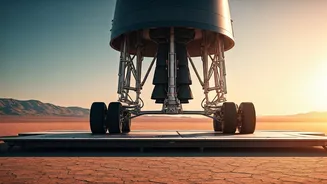
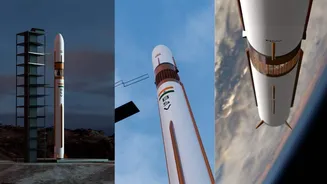
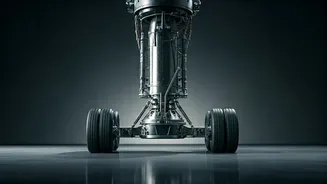
landing gear for its ambitious reusable rocket project. This strategic partnership is a pivotal move towards enhancing the economic viability of space launches. By inviting industry to contribute to the creation of key components for their vertical takeoff, vertical landing (VTVL) vehicle, ISRO is essentially seeking to replicate the success of reusable rocket technology seen globally, but with a distinctly Indian approach. This initiative underscores a commitment to innovation and self-reliance in space technology, aiming to make space exploration more accessible and sustainable for India.
A Phased Development Plan
The development of these vital landing legs for ISRO's reusable rocket program is structured across three distinct phases, all projected to be completed within a one-year timeframe. The initial phase, spanning four months, will focus on the fabrication of the preliminary hardware prototypes. Following this, the second phase involves rigorous testing of these prototypes and the subsequent creation of two additional, refined units. The concluding phase will see the production of two to four operational units, ready for integration into the VTVL vehicle. This systematic approach ensures that the technology is thoroughly vetted and refined at each stage, leading to a robust and reliable final product that meets ISRO's stringent requirements for successful vertical landings.
Boosting Cost-Effectiveness
The decision to involve industry partners in the development of landing legs for reusable rockets is multifaceted. Beyond merely distributing the development workload, ISRO's objective is to foster a more cost-effective and environmentally sustainable approach to space missions. By leveraging the manufacturing expertise and scale of Indian industries, ISRO anticipates a significant reduction in the overall cost associated with launching rockets. This collaboration also serves to accelerate India's progress towards achieving self-sufficiency in advanced space technologies, ensuring that future space endeavors are not only technically sound but also economically prudent, thereby opening up new possibilities for scientific research and commercial space activities.