





AI-Powered Martian Navigation
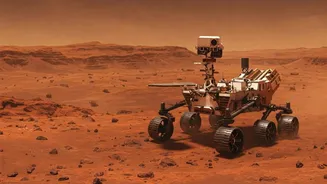
Imagine navigating the rugged Martian landscape, much like NASA's Perseverance rover. This simulation uses generative AI, specifically vision-language
models, to analyze orbital imagery. This allows for the creation of dynamic and safe routes, intelligently maneuvering around obstacles like rocks and sand dunes. Players can set objectives, such as locating subterranean water ice, and the AI will visualize optimized paths in real-time. This adds an exciting layer of challenge, with options for timed races and obstacle courses, making the exploration of Mars feel both realistic and engagingly gamified. It’s a testament to how AI can simplify complex exploratory tasks into interactive challenges.
Coordinated Base Operations
Beyond individual exploration, the simulation delves into the intricacies of base management using a multi-agent framework known as Agent Mars. This system is designed to mimic the coordination challenges of a real Martian outpost, accounting for factors like communication delays and limited resources. It simulates ninety-three distinct agents operating across seven command levels, ensuring that users grasp the complexities of managing a settlement. Players take on roles in critical situations, such as emergency responses or scientific expeditions, employing a propose-vote consensus mechanism. This collaborative approach not only adds a multiplayer dimension but also tests players' strategic decision-making skills in a simulated extraterrestrial environment.
Automated Construction & Planning
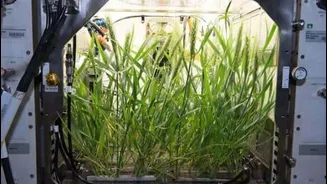
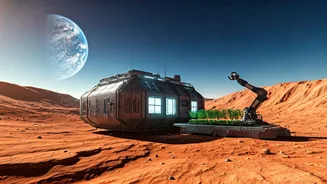
The simulation also tackles the monumental task of construction on Mars through AI-driven challenges. Inspired by concepts of autonomous 3D printing using Martian soil and robotic resource extraction, this feature brings to life the future of extraterrestrial building. The system leverages AI tools, akin to NASA's FAIMM program, to perform essential tasks like identifying suitable landing sites and detecting craters. These AI capabilities are instrumental in generating procedural layouts for Martian cities. Players can then optimize these habitats, considering crucial factors like radiation shielding and the placement of greenhouses, ensuring survivability and growth for their nascent colony.
Game Development & Mechanics
The underlying technology for this simulation is built upon robust game development platforms like Unity or Godot. Key AI functionalities are integrated through APIs, including Anthropic's Claude for visual analysis and Hugging Face's Transformers library for custom agent behaviors within Agent Mars. The simulation also incorporates elements inspired by modern space endeavors, such as SpaceX's refueling techniques, utilizing local water and carbon dioxide for spacecraft. This adds a strategic layer of cargo delivery and resource management. The game evolves from simple solo rover missions to complex colony-wide events, rewarding players for innovative strategies and effective utilization of AI assistance.