





Safe Passage Confirmed
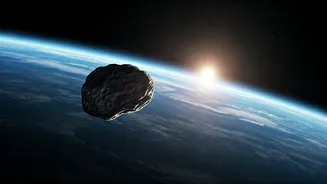
There's no need for alarm as a celestial visitor, the asteroid designated 2026 HJ1, is scheduled to pass our planet today. This rocky body, roughly the size
of a bus, will maintain a significant distance from Earth, approximately 643,736 kilometers away. To put that into perspective, this distance is more than one and a half times the average distance between the Earth and the Moon, ensuring there is absolutely no chance of any impact or collision with our home world. This reassuring update comes directly from NASA, a testament to their continuous efforts in tracking and analyzing near-Earth objects.
NASA's Vigilant Watch
Understanding the trajectory and potential threats from asteroids is a critical task for space agencies like NASA. They employ sophisticated telescope networks, specifically designed to observe and track these celestial bodies. These powerful instruments allow scientists to meticulously measure an asteroid's size, determine its speed, and precisely map its orbital path. While numerous small asteroids traverse our solar system unnoticed, NASA's ongoing, diligent monitoring system provides crucial early warnings. This proactive approach ensures that any object posing even a remote risk is quickly identified and analyzed, allowing for timely public updates and scientific preparedness.