




A Celestial Trio Appears
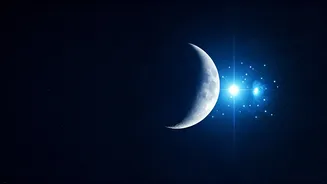
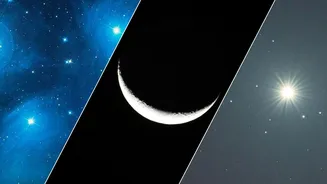
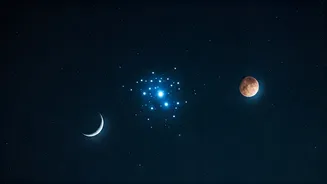
Tonight, the cosmos offers a breathtaking spectacle with the alignment of three prominent celestial bodies: the Moon, the planet Venus, and the Pleiades
star cluster. The Moon, appearing as a delicate 5% illuminated thin crescent, will be positioned remarkably close to Venus, famously known as the "Evening Star." The Pleiades, a visually striking aggregation of young stars, is readily discernible to the naked eye under favorable atmospheric conditions. This conjunction promises a beautiful visual treat for stargazers, showcasing the dynamic and ever-changing nature of our night sky through the dance of these familiar cosmic entities.
When and Where to Look
The window of opportunity to witness this celestial alignment is quite brief, lasting less than an hour before the trio dips below the western horizon. For observers in much of the Northern Hemisphere, including regions like India, the United States, Europe, and parts of Asia and Africa, the best viewing location will be low on the western horizon. The Moon will be a mere 11%-lit waxing crescent, presenting a faint yet discernible shape. It's crucial to remember that this is a fleeting event, so being prepared and looking in the right direction at the right time is key to not missing this unique celestial arrangement.
Spotting the Stars
The beauty of this particular cosmic event is its accessibility; no sophisticated telescopes or equipment are necessary for observation. Both the slender crescent Moon and the luminous Venus are bright enough to be easily spotted with the unaided eye. While binoculars aren't essential, they can enhance the experience, particularly in revealing the Pleiades as a concentrated, sparkling collection of stars. Venus will dominate with its brilliant shine, serving as a convenient landmark. The thin crescent Moon will be a delicate companion nearby, with the Pleiades appearing as a subtle, misty grouping, adding layers of wonder to the observable sky.