





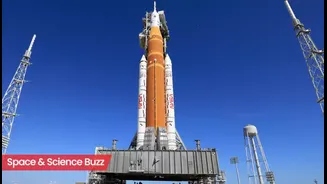
Launch Window Shift
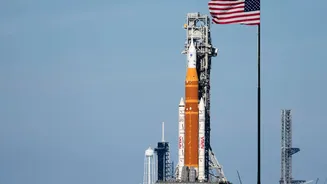
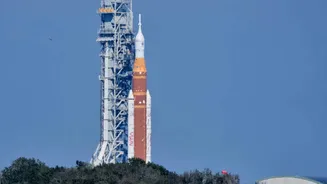
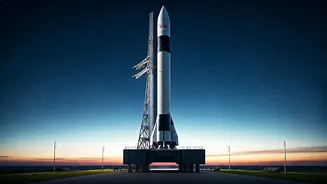
The much-anticipated Artemis II mission, which aims to send astronauts on a lunar flyby, has experienced a significant schedule adjustment. Originally
slated for a March 6 liftoff, the new launch window is now set for April. This postponement stems from a technical complication identified during a routine operational check on February 20, specifically an interruption in the flow of helium within the Space Launch System (SLS) rocket's interim cryogenic propulsion stage. This particular system plays a vital role in the rocket's functionality, enabling the purging of engines and the pressurization of fuel tanks. Despite successful dress rehearsals earlier in the month, this unforeseen issue necessitates a delay to ensure all systems are functioning optimally before embarking on such a critical and complex mission, highlighting the meticulous nature of space exploration.
Addressing the Glitch
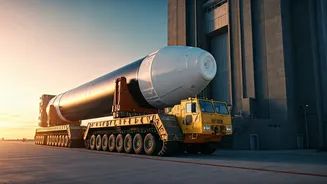
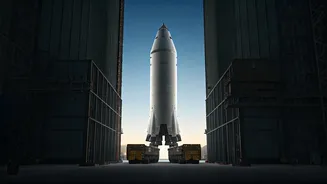
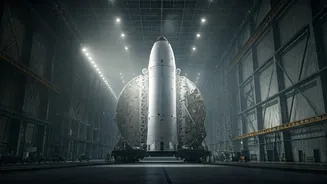
The engineering team is currently working diligently to resolve a critical issue impacting the Artemis II mission's Space Launch System (SLS) rocket. The problem centers on an anomaly in the helium flow within the interim cryogenic propulsion stage, a system integral to engine purging and fuel tank pressurization. Because of the intricate nature of this fault, repairs must be conducted within the controlled environment of the Vehicle Assembly Building (VAB). This means the colossal rocket must be returned to its hangar, making the original March launch date unfeasible. NASA officials have acknowledged the potential disappointment this delay might cause but stressed that such challenges are an inherent and expected part of the historical progression of spaceflight. The focus remains squarely on ensuring the mission's success through meticulous problem-solving and thorough remediation.
Mission's Prior Hurdles
The Artemis II endeavor has not been without its preceding challenges. The mission's initial launch window, spanning from February 6 to February 11, was postponed due to the discovery of minor hydrogen leaks during a wet dress rehearsal (WDR), along with other minor technical hitches. NASA's commitment to astronaut safety led to this initial delay, deeming the identified risks too significant to proceed. However, subsequent efforts proved more fruitful, with a second dress rehearsal conducted on February 19 successfully completing the liquid propellant loading sequence without any reported leaks. These earlier setbacks, while concerning, underscore NASA's rigorous approach to pre-flight checks and its unwavering priority on crew well-being, paving the way for the current adjustments.
Lunar Journey Ahead
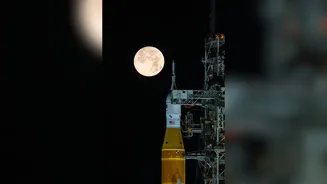
Once airborne, the Orion capsule undertaking the Artemis II mission is set to achieve a remarkable feat, venturing farther than any crewed spacecraft in history. This ambitious 10-day journey is scheduled to surpass the Apollo 13 record of 400,171 kilometers on its sixth day. The mission will conclude with the Orion capsule making a splashdown in the Pacific Ocean, off the coast of San Diego, California. While this particular mission does not involve a lunar landing—a task reserved for Artemis III—it is a pivotal step. This launch is crucial for demonstrating NASA's advanced capabilities and its determination to re-establish a human presence on the Moon, building upon decades of exploration and innovation.