







The 'Ghost Ship' Problem
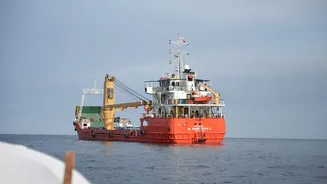
Maritime authorities are increasingly concerned about 'ghost ships' – vessels that operate outside of international norms, often to circumvent sanctions
imposed on nations like Russia, Iran, and North Korea. These ships are notoriously difficult to track because they deliberately disable their tracking devices or resort to fraudulent flag changes to obscure their origins and activities. The challenge lies in identifying these clandestine operations in the vast expanse of the ocean, where visual confirmation is limited and traditional tracking methods are easily thwarted. This deliberate obfuscation poses a significant risk to global maritime security and trade, necessitating advanced solutions to bring transparency to these shadowed corners of shipping.
AIRIS: Space's New Detective
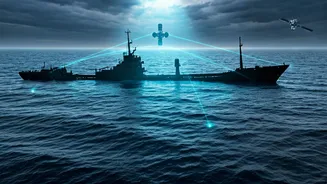
A collaborative effort involving Mitsubishi Heavy Industries, JAXA, and the University of Tokyo has yielded a sophisticated satellite system designed to combat this issue. At its core is an artificial intelligence named AIRIS, integrated into the RAISE-4 satellite. This AI performs real-time analysis of oceanic imagery, adeptly identifying ship shapes even when they are actively trying to remain concealed. The system is engineered for efficiency; it prioritizes and transmits only the most crucial data, such as cropped images and precise coordinates, back to Earth. This targeted approach significantly streamlines the process of tracking down these evasive vessels, offering a much-needed advancement in maritime surveillance capabilities.
Overcoming Maritime Hurdles
The deployment of this AI-driven satellite technology directly addresses the inherent complexities of maritime monitoring. Factors such as unpredictable and often chaotic ocean conditions, coupled with the inherent delays in traditional data transmission, have long hampered effective ship detection and tracking. By leveraging advanced AI for image analysis and optimizing data transfer, the AIRIS system on RAISE-4 aims to overcome these obstacles. Its ability to effectively 'see' through the challenges and quickly relay actionable intelligence promises to dramatically improve the success rate in identifying and monitoring vessels that engage in illicit activities, thereby enhancing overall maritime security and accountability.