






Orbital AI Hub
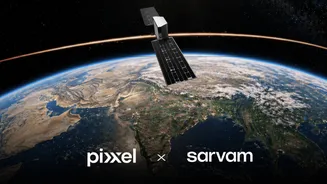
In a significant stride for space-based technology, a US-Indian private space firm has joined forces with an AI company based in Bengaluru. This collaboration
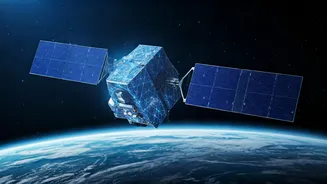
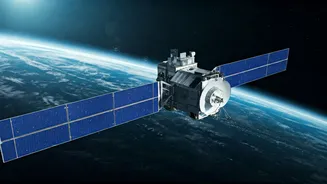
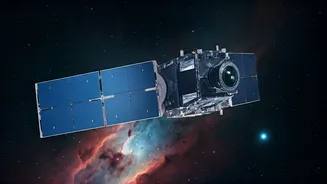
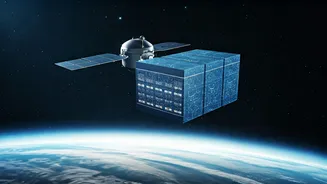
is set to establish India's pioneering orbital data center satellite, named Pathfinder. This development aligns with global trends as various nations are actively exploring similar advanced space computing concepts, especially in light of increasing global interest and energy-related limitations. The Pathfinder satellite is designed to carry powerful GPUs, enabling the training and inference of sophisticated AI models directly in orbit. Unlike conventional satellite processors that prioritize energy efficiency and resilience over raw computational power, Pathfinder will utilize hardware comparable to that found in terrestrial data centers, crucial for powering cutting-edge AI applications. This strategic move positions India at the forefront of this emerging technological frontier, offering unique advantages for complex data processing and AI development beyond Earth's atmosphere.
Space-Based Computing Power
The Pathfinder satellite, weighing approximately 200kg, is scheduled for launch into orbit by the close of 2026. Its primary function will be to house GPUs, specifically for the purpose of training and inferring Sarvam's advanced AI models. A key differentiator for Pathfinder is its hardware configuration; it will be equipped with processors similar to those powering current frontier AI models on Earth. This contrasts sharply with traditional satellite computing, which typically employs low-power edge processors that are optimized for longevity and survival in harsh space environments rather than for high-performance computation. By integrating terrestrial data center-grade hardware, Pathfinder aims to dramatically accelerate AI development and deployment in space, overcoming the limitations of existing space-based computing solutions and paving the way for more complex and demanding orbital applications.
Satellite Development & Operations
The entire lifecycle of the Pathfinder satellite, from its initial design and construction to its launch and ongoing operations, will be managed by Pixxel. This ambitious project will be developed at Gigapixxel, an upcoming facility envisioned by the company to significantly scale up satellite production, with the capacity to produce up to 100 units. Meanwhile, Sarvam will be responsible for the crucial tasks of training and inference of its language models, conducting these operations directly in orbit. A significant advantage of this approach is that the AI models and their inference platform will process data without any dependence on external cloud services or ground-based infrastructure. This self-sufficiency in processing is a major step towards decentralized and resilient space-based AI operations, reducing latency and enhancing data security and independence.
Real-Time Hyperspectral Insights
Beyond its capabilities for AI model training and inference, the Pathfinder satellite will also be equipped with a sophisticated hyperspectral imaging camera. This advanced sensor will be capable of capturing exceptionally high-fidelity hyperspectral data from Earth's surface. The collected data will then undergo direct processing in orbit, utilizing the foundation models that have been trained aboard the satellite. This integrated system allows for the identification of intricate patterns, the detection of subtle changes over time, and the generation of actionable insights in real-time. By dramatically reducing the time lag between data acquisition and the making of crucial decisions, this technology promises to revolutionize various sectors, offering unprecedented speed and accuracy in environmental monitoring, resource management, disaster response, and numerous other applications.