





AI's Physical World Leap
The leading mind at NVIDIA, Jensen Huang, has articulated a compelling vision for artificial intelligence: its next significant expansion lies within the
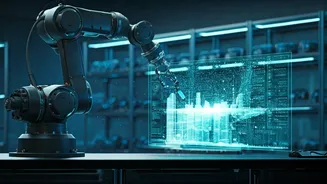
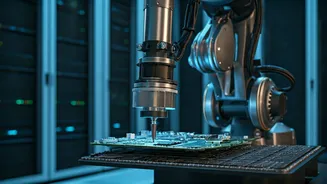
realm of tangible, physical industries. While AI has demonstrably excelled in handling purely digital tasks, its integration into sectors such as manufacturing, the intricate networks of logistics, the complex dynamics of transportation, and the groundbreaking field of life sciences is still in its nascent stages. Huang emphasizes that for AI to truly empower these vital industries, it must develop a more profound understanding and capability to interact with and influence the real world. This strategic shift signifies a move from abstract data processing to direct engagement with the physical environment, promising substantial advancements and efficiencies across a wide spectrum of industrial applications. The focus is on bridging the gap between digital intelligence and real-world operations, unlocking AI's potential to drive innovation and productivity in ways previously unimagined.
Digital Twins: Safe Innovation
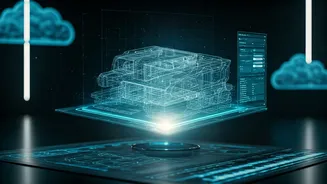
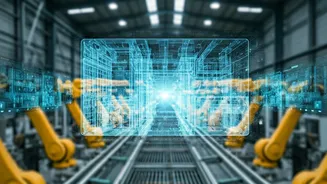
To facilitate AI's deeper engagement with the physical world, Huang champions the concept of "digital twins." These are not mere simulations, but extraordinarily detailed, three-dimensional virtual replicas of actual physical objects, ranging from complex machinery like a car to everyday items such as a perfume bottle. The critical advantage of employing these digital counterparts, Huang explains, is the ability for companies to rigorously test robotics, explore novel operational strategies, and refine product designs in a completely risk-free environment. This virtual testing ground eliminates the possibility of damaging expensive physical assets, incurring costly downtime, or disrupting ongoing production lines. Consequently, the widespread adoption of digital twins is expected to democratize automation, making sophisticated robotic integration and advanced manufacturing techniques more accessible to a broader range of businesses. This innovation is set to dramatically accelerate the pace of discovery and implementation of new ideas, fostering a culture of continuous improvement and driving significant progress throughout entire industrial ecosystems.