





Comet's Grand Voyage
The journey of Comet C/2025 R3 is a cosmic ballet, a dance across the vastness of space. Its trajectory is a key factor in predicting its visibility from
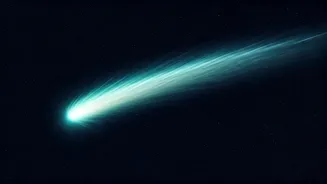
Earth. This comet, like others, orbits the sun, but its path and the way it reflects sunlight are what will determine how brightly it shines in our sky. The comet’s orbit is not a simple circle; it is an elliptical path that stretches and curves throughout the solar system. As it gets closer to the sun, the ice and dust within the comet begin to vaporize, creating a glowing coma and a tail that can stretch for millions of kilometers. Understanding its route helps astronomers anticipate when and where to look. They'll also be able to predict its approach and potential for a visible display. Keep an eye out for updates as scientists refine their forecasts, allowing you to prepare for this exciting celestial event.
Brightness Uncertainty Looms
One of the most intriguing aspects of Comet C/2025 R3 is the uncertainty surrounding its brightness. This unpredictability stems from several factors, including the comet's composition, its size, and how much gas and dust it releases as it nears the sun. Comets vary significantly in these characteristics. Some are made of more volatile materials that vaporize rapidly, leading to a brighter display, while others are more compact and less active. This makes predicting the comet's brightness a challenge. Furthermore, the amount of dust and gas ejected from the comet changes over time, influenced by the Sun's energy and other factors. As C/2025 R3 approaches the sun, this activity will intensify, making it even harder to accurately predict its brilliance. Astronomers will observe the comet over time to refine their predictions as the event approaches, but some level of uncertainty always remains, adding to the anticipation.
Prime Viewing Opportunities
Deciphering the optimal viewing window for Comet C/2025 R3 involves considering its position in the sky relative to the sun, the moon, and the viewer's location. The best time to observe a comet is when it is far from the glare of the sun, ideally during the dark hours before dawn or after dusk. Observers should also consider the phase of the moon. Bright moonlight can wash out the faint glow of the comet, so new moon phases are often ideal for viewing. Local factors such as light pollution from cities also play a role. Those in areas with minimal light pollution will have a better chance of seeing the comet's faint features. The exact timing of the comet's approach and visibility from India will depend on its orbital path. Checking astronomical resources and local weather forecasts will be critical for planning your viewing sessions. Early preparation, including identifying a suitable viewing spot and having the right equipment, will maximize your chances of witnessing this celestial event.
Significance and Impact
Comet C/2025 R3's significance extends beyond its visual appeal; it offers insights into the origins and evolution of our solar system. Comets are essentially icy remnants from the early stages of planetary formation. Studying their composition and behavior can reveal clues about the materials and processes that shaped our solar system billions of years ago. The comet's potential impact is not just scientific. It can inspire and motivate a sense of wonder and awe among the general public. Events like this spark interest in astronomy and space exploration, encouraging people to learn more about the cosmos. Also, Comets can bring new perspective on the history of the solar system, making this event important for understanding our place in the universe. Observing C/2025 R3 offers a chance to connect with the universe and appreciate the beauty of the cosmos.